We apply a documented decision framework to the recover-or-replace question on aging Raleigh commercial roofs - moisture survey, deck condition, warranty status, and capital horizon - and deliver a written recommendation the owner can take to a capital committee.
The replacement-versus-recover decision is the highest-stakes choice in commercial roof asset management, and in Raleigh it carries a specific risk that makes the analysis more demanding than most markets: the Triangle's annual rainfall volume. The Raleigh-Durham metro receives an average of 46 inches of rainfall annually, and in hurricane remnant years the figure can climb dramatically - the Florence remnant system in 2018 dropped more than 15 inches over parts of Wake County in 72 hours; the Helene remnant moisture in 2024 produced multi-day sustained saturation events that exposed latent insulation failures across the region. A recover applied over wet insulation traps that moisture in the assembly. It does not escape. It migrates laterally through the insulation board, accelerates deck corrosion if the building is steel-decked, and voiding the new warranty within a single post-storm event. I have seen recover decisions made on buildings with undocumented insulation saturation produce emergency replacement needs within three to four Triangle storm seasons.
I apply a structured four-part decision framework to this question on every aging Raleigh building I assess. The framework is not a sales tool for a larger project. I have recommended recovers on buildings where a replacement would have generated significantly more revenue. The recommendation follows the field data - the cores, the deck inspection ports, and the warranty documents. Owners across the Triangle commercial market, from the Fayetteville Street office corridor to the Triangle research corridor campus owners to the retail corridor properties along the I-440 Beltline, use this analysis as a capital planning input because the recommendation reflects what the investigation actually found.
The deliverable is a written report with supporting data: moisture survey results with the full core log, deck condition findings with inspection photographs, warranty status documentation, capital horizon analysis, and a preliminary cost comparison between the recover and replacement options at current Raleigh pricing.
The Four-Part Decision Framework for Raleigh Buildings
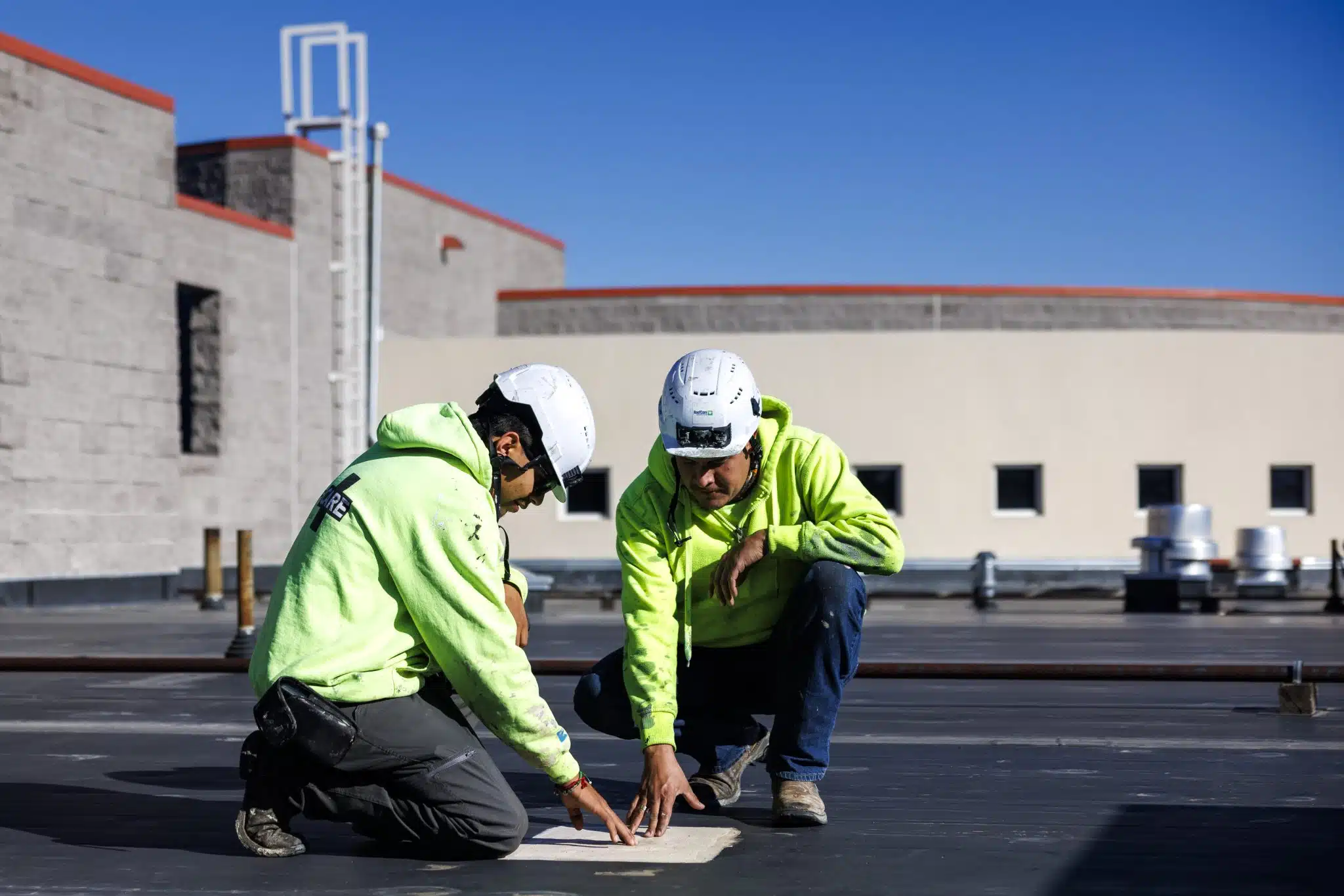
Part 1 - Moisture distribution: I core the existing roof system at a density of one core per 2,000 to 3,000 square feet of roof area, with additional cores at all reported leak locations, at drain fields and drain-adjacent zones, at parapet-adjacent areas, and at any zone where a prior infrared scan indicated suspected saturation. Each core is measured with a calibrated moisture meter and photographed. If more than 20 to 25 percent of the roof area is wet - which is the recover-warranty eligibility threshold for most major manufacturers - I recommend replacement. Between 20 and 25 percent, the distribution pattern matters: concentrated wet areas that can be surgically removed and replaced during a recover scope are materially different from diffuse saturation across the field. I document both quantity and distribution.
Part 2 - Deck condition: Wet insulation that has been wet through multiple Raleigh storm seasons can compromise the deck below it. On the steel-deck commercial buildings that represent the majority of Wake County construction from the 1980s forward - including the large-footprint buildings in the I-40 western corridor warehouse market and the downtown mixed-use corridor and North Hills office corridors - I pull inspection ports at wet core locations and at any visible deck deflection points. The Triangle's high cumulative rainfall means that buildings with leaky roofs and undocumented moisture histories need deck inspection before any recover recommendation is finalized. On older buildings with plywood or OSB decks - the strip retail and smaller commercial buildings along Falls of Neuse Road, Wake Forest Road, and Capital Boulevard - I assess for rotted sheathing at wet core locations and at drain sump perimeters.
Part 3 - Warranty status: An active manufacturer warranty on the existing system is a material factor in the recover decision. Some manufacturer warranty programs provide warranty term credit toward a new warranty when the existing system is still in-warranty at recover time. I document the existing warranty status, remaining term, and the manufacturer's stated recover-warranty policy for the specific membrane type on the building. Raleigh owners who do not know they have an active warranty carrying credit value sometimes leave it on the table by replacing rather than recovering - particularly owners who acquired the building in the recent active Triangle commercial transaction market and did not receive complete warranty documentation at closing.
Part 4 - Capital horizon: Recover extends asset life typically 10 to 15 years depending on the recover system selected. The capital horizon analysis asks: when does the owner plan to sell, refinance, or schedule the next major capital event? For Downtown Raleigh Class A properties where refinance cycles are driven by REIT investor holding periods, for North Hills office buildings with tenant lease expiration triggers that drive capital planning windows, and for Triangle research corridor campus owners with multi-building portfolio replacement schedules, the capital horizon is a real and specific planning input. If the horizon is 8 years and a recover extends asset life 15 years, the recover is the right call. If the horizon is 22 years and a recover will need replacement at year 15, a full replacement now may be more capital-efficient than two mobilization events in the same planning window.
Triangle-Specific Factors in the Raleigh Recover Decision
Post-hurricane assessment gaps: Buildings in Wake, Durham, and Orange Counties that experienced water intrusion during the 2018 Florence remnant event or the 2024 Helene remnant event without a comprehensive post-storm moisture survey may carry residual insulation saturation that a visual inspection does not detect. For Raleigh commercial buildings where the last documented moisture survey predates 2018, I increase core density and focus additional cores at drain-adjacent and parapet-adjacent zones where saturation from sustained rainfall events is most commonly found.
Drain and ponding history: The Triangle's high annual rainfall and the flat terrain through the Downtown, North Hills, and Cary commercial corridors make ponding a chronic concern on Raleigh commercial roofs. Buildings with documented ponding history - visible from aerial imagery or from the ring staining around undersized drain sumps that I document on most post-storm inspection walks - carry an elevated probability of insulation saturation even when exterior membrane condition appears acceptable. I assess ponding history and drain performance as part of every replacement-versus-recover evaluation.
NC energy code compliance at recover time: IECC 2021 for North Carolina requires minimum R-value on low-slope commercial roofs that most pre-2015 Wake County commercial buildings do not currently meet. A recover that does not add insulation to current code does not trigger compliance at recover time under most Wake County and City of Raleigh interpretations - but lender requirements, energy disclosure obligations at refinance or sale, and some ownership transfer agreements do require documentation of code status. I note the applicable requirement and confirm the jurisdiction's current interpretation before the recover option is presented.
What the Written Report Contains
Core log: Core location keyed to the roof zone diagram, layer description including membrane type, cover board, insulation type and measured thickness, any prior recover layers, vapor retarder presence and condition, and deck type and condition, moisture reading at each layer, and photograph of each core. The core log is the primary data source for the moisture distribution assessment and the document a manufacturer needs to evaluate recover-warranty eligibility for the specific building.
Deck condition summary: Inspection port findings with photographs and a map of all locations assessed. Conditions affecting the recover recommendation are called out explicitly with a statement of whether the condition is localized and repairable during recover, or diffuse and requiring full replacement. For steel-deck buildings where deck replacement would add significant cost to the project scope, I include the deck finding prominently in the executive summary.
Warranty status documentation: Existing warranty document obtained from owner records or reconstructed from the manufacturer's warranty desk using building location and approximate installation date, remaining term, manufacturer's stated recover-warranty policy, and any warranty credit available if the recover path is chosen.
Recommendation and rationale: A clear written recommendation - recover, selective recover with targeted replacement at wet zones, or full replacement - with the data points that drive it. When the data produces a borderline case, I present both options with the factors that would tip the decision either way and let the owner make the call with full information. The recommendation is mine; the decision is theirs.
Preliminary cost comparison: Installed cost range for the recover option versus the replacement option at current Raleigh pricing, with a reference to the life-cycle cost analysis engagement if the owner wants the full 30-year NPV model.
Frequently asked questions
How many cores do you pull on a typical Raleigh commercial building?
One core per 2,000 to 3,000 square feet as the baseline distribution, plus additional cores at all reported leak locations, drain fields, parapet-adjacent zones, and any areas where prior inspection indicated suspected saturation. On a 100,000 sq ft building, I typically pull 35 to 55 cores. For buildings with undocumented post-storm histories from the 2018 or 2024 hurricane remnant events, I increase density in drain-adjacent and lower-roof zones where saturation from sustained rainfall is most commonly concentrated. The complete core log is delivered with every report.
Can we do a recover if part of the roof is wet?
Yes, in many cases. If wet areas are concentrated under 20 to 25 percent of total area, a selective recover scope often makes sense: remove and replace wet insulation at the affected zones, recover over the dry areas. This increases recover cost modestly but avoids full replacement capital. I call this out explicitly in the recommendation when the distribution pattern supports it and I deliver a separate cost estimate for the selective recover option alongside the full replacement estimate.
Do you recommend a specific manufacturer for the recover system?
No. I specify by performance requirement and document which manufacturers offer a recover warranty over the existing membrane type on the building. Manufacturer recover-over-existing warranty policies vary: some will issue a new NDL warranty over a recovered system in good condition; others will not. The report documents which manufacturers qualify for the specific existing system and on what conditions.
How long does the replacement-vs-recover assessment take for a Raleigh building?
Site visit for core pulls and deck inspection: one field day for buildings up to 150,000 square feet. Report delivery: five business days from site visit. If an infrared scan is included - recommended for buildings with reported leaks across a wide area or with undocumented storm histories - add one additional site visit and two to three business days to the report timeline. For North Hills high-rise buildings or Downtown Raleigh office towers with crane and access coordination requirements, the site visit scheduling window may be longer.