Raleigh's 1960s through 1980s commercial building stock carries a large inventory of built-up roofing systems that have never been fully replaced. We pull cores, document insulation saturation, and deliver a written condition report and scope recommendation - based on what the data shows, not what drives the largest project.
Built-up roofing was the dominant commercial flat-roof system in the Triangle from the 1950s through the late 1980s. The older warehouse and manufacturing buildings along Western Boulevard and Capital Boulevard, the 1960s and 1970s commercial blocks in downtown Raleigh near the Warehouse District, the early office development on Glenwood Avenue south of I-440 - much of this inventory was originally built on BUR systems with gravel ballast, bitumen plies, and base sheet. Some of these roofs received coal-tar maintenance applications over the decades. Some received modified bitumen recover systems in the late 1990s. Most have never had a comprehensive moisture assessment.
We do not install new BUR. New BUR construction has no commercial market in the Triangle today, and the hot-kettle logistics, fume management, and curing requirements make it economically noncompetitive against current single-ply and modified bitumen alternatives. What we do is assess existing BUR systems honestly: pull cores in representative locations, document insulation moisture condition, evaluate membrane felts and flood coat, assess gravel ballast distribution, and produce a written recommendation on whether repair, recover, or replacement is the correct scope.
The honest assessment is the point of the engagement. BUR assessment gets done wrong more often than almost any other roofing evaluation in the Triangle market. Contractors who want the replacement contract will overstate deterioration on visual inspection alone. Property managers who want to defer capital will understate saturation that would fail an honest core pull. Our assessment protocol produces the same documentation regardless of what it shows: core pull data keyed to the zone diagram, moisture percentages calculated from actual cores, written condition rating for each roof component, and a scope recommendation the owner can use for competitive bidding - including from contractors other than us.
How BUR Systems Fail in the Triangle Climate
Insulation saturation from moisture infiltration: Raleigh's 46-inch annual rainfall and high summer humidity create chronic moisture infiltration risk in aging BUR systems. Water enters through cracked bitumen, failed parapet flashings, and seam separations at penetrations. Once inside the insulation assembly - fiberglass or perlite board in most Triangle commercial BUR systems - moisture accumulates without escaping in summer because the ambient humidity gradient prevents drying. Core pulls on Triangle BUR roofs regularly show 30 to 50 percent saturation on buildings that appear visually serviceable from the roof surface. Saturated insulation contributes nothing to thermal performance and drives interior ceiling and wall damage before it produces obvious roof failure.
Flood coat oxidation and alligatoring: The exposed asphalt flood coat on gravel-ballasted BUR systems oxidizes with UV exposure, developing the deep surface cracking pattern known as alligatoring. Alligatoring indicates that the bitumen has lost the flexibility needed to accommodate thermal cycling without cracking further - a critical failure mode given Raleigh's 130-degree annual temperature swing between January minimums and July rooftop surface temperatures. On older BUR systems in the Capital Boulevard and Western Boulevard commercial corridors, we regularly observe alligatoring at a stage where the underlying membrane felts remain serviceable. The surface condition alone does not drive the replacement decision; the core pull data does.
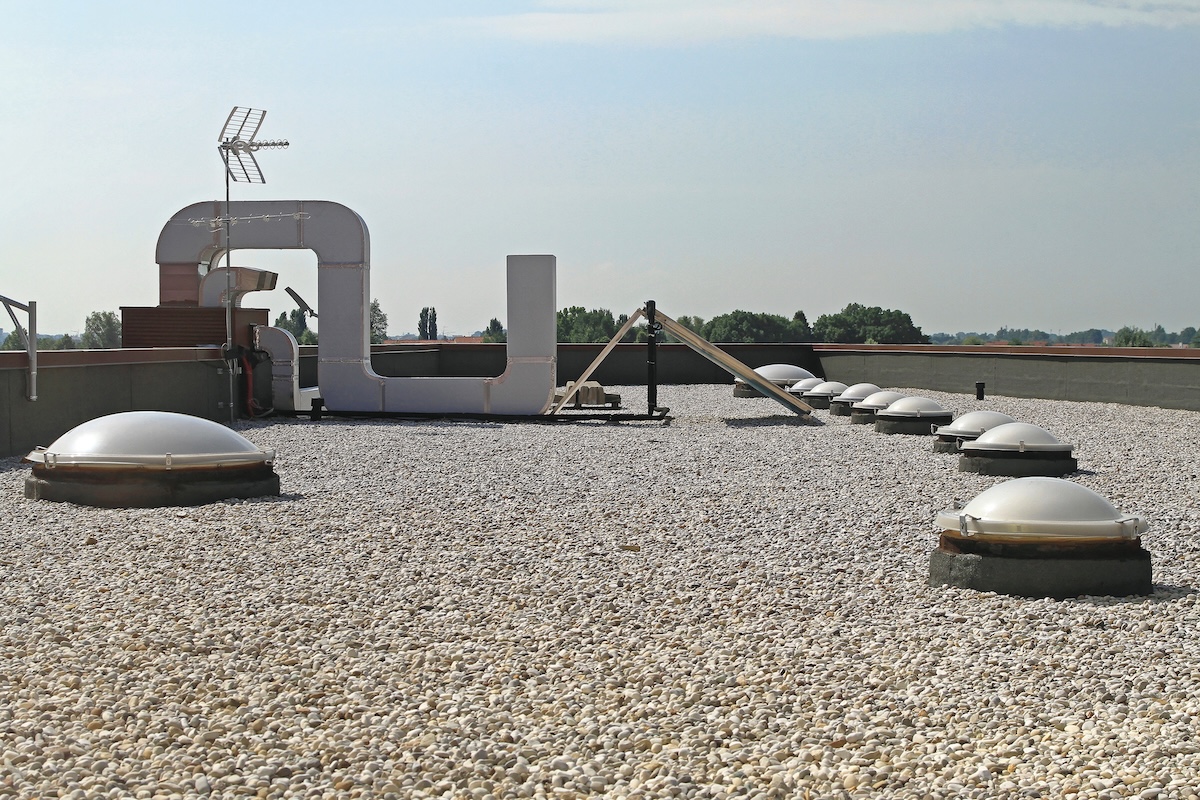
Gravel ballast displacement: The Triangle's summer thunderstorm cycle produces high local wind velocities that progressively displace gravel ballast from perimeter zones and high-exposure areas of BUR roofs. Once the flood coat is exposed - particularly at southwest-facing parapet perimeters where derecho-type straight-line wind events hit first - UV degradation accelerates dramatically. We map gravel displacement patterns during inspection as a proxy for wind exposure and parapet loading; the pattern often identifies the exact locations where flashing failures will develop next.
Parapet flashing failure at Downtown Raleigh commercial buildings: The 1970s and 1980s commercial building stock in the Warehouse District and the downtown mixed-use corridor corridor typically features tall parapets with metal cap flashing over BUR base flashings. Raleigh's summer heat and periodic winter freeze-thaw cycles crack the base flashings at parapet reglets and counterflashing pockets. Water enters behind the parapet flashing, saturates wall insulation, and produces interior wall staining that building managers often treat as a plumbing problem before the roofing source is identified.
BUR Assessment Protocol
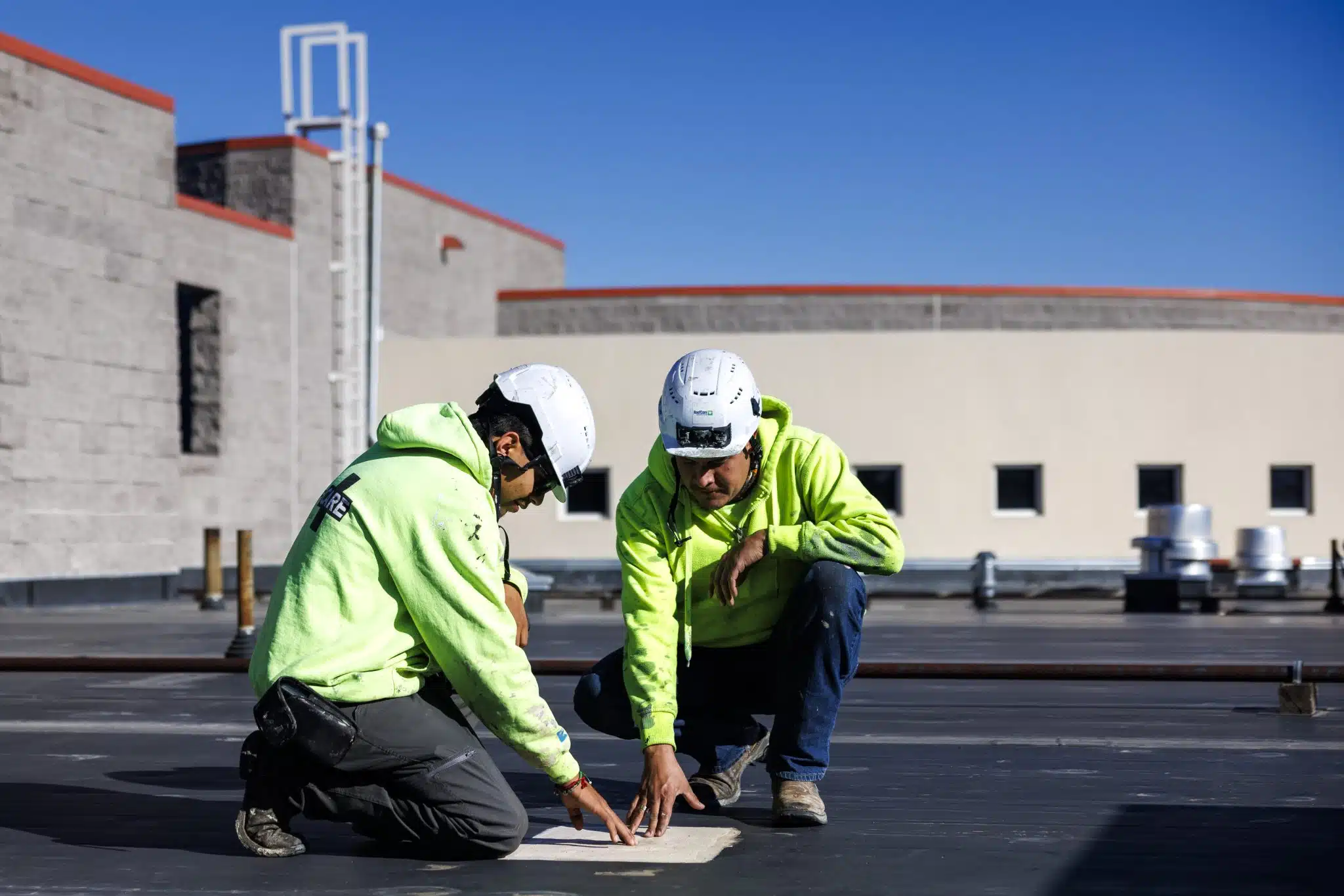
Core pulls: Minimum 5 cores on roofs under 20,000 square feet, scaled to 10 to 15 cores on larger buildings, distributed across field areas and suspected saturation zones. We photograph every core and key each photo to the zone diagram. The core section shows membrane felts, insulation board condition, and moisture presence. We calculate saturation percentage from the core data and apply a consistent threshold: over 25 percent wet cores means replacement is the correct scope; under 25 percent opens the recover option with targeted insulation replacement at wet areas.
Infrared thermal scan: On large-footprint BUR buildings - 50,000 square feet and above, common in the older warehouse and industrial inventory along US-1 south and I-40 west - we offer infrared thermal scan as an add-on to core pull protocol. Infrared identifies wet insulation by its thermal signature difference from dry areas, producing a saturation map that allows targeted core pull verification. For a 150,000-square-foot industrial building on the US-1 corridor, an infrared scan often narrows the core pull count needed for a defensible moisture map from 30 to 10 targeted pulls.
Written condition report: Every BUR assessment produces a written report including: core pull data table, saturation percentage calculation, membrane condition rating, flashing condition rating, drain condition rating, and scope recommendation. The report is written to be used for competitive bidding - it specifies what the replacement or recover should include in enough detail that multiple Raleigh-area contractors can price against the same scope.
Replacement Paths for Aging Triangle BUR Systems
Full tear-off and TPO replacement: The most common replacement path for Triangle commercial BUR in the current cycle. Tear-off removes felts, flood coat, and gravel down to the deck. New polyiso insulation specified to North Carolina energy code, with tapered insulation designed against the existing drain layout and documented ponding patterns, is installed over the clean deck. 60-mil or 80-mil TPO - mechanically attached or fully adhered based on deck condition and building exposure - carries 20-year NDL manufacturer warranty on qualifying assemblies.
Modified bitumen recover over sound BUR: Where core data shows dry insulation and the deck is confirmed sound, a modified bitumen SBS recover over existing BUR is a viable alternative to full tear-off at roughly half the replacement cost. The gravel surface must be embedded, swept to a smooth substrate, or the recover system must be mechanically attached over it. Combined assembly height must be checked against existing curb heights and parapet conditions before the scope is committed - a standard pre-scope measurement we take on every recover candidate.
Single-ply recover over smooth BUR: Where the existing BUR surface is smooth - cold-process or coal-tar BUR without gravel - TPO or EPDM recover with tapered polyiso is sometimes achievable without full tear-off, subject to dry insulation confirmation and sound deck. The existing ponding patterns from the BUR era must be documented and corrected in the new insulation design. Raleigh's rainfall intensity makes a recover that carries over the original ponding patterns a scope that will produce callbacks.
Frequently asked questions
Is built-up roofing still installed on new commercial buildings in Raleigh?
Rarely, and effectively not at all for new construction. The hot-mopping logistics, equipment requirements, and fume management make new BUR installation noncompetitive against TPO, modified bitumen, and EPDM for comparable service life. The entire BUR market in the Triangle is assessment, repair, and replacement of the existing inventory - primarily the 1960s through 1980s commercial building stock that predates the single-ply era.
How do I know if my Raleigh building's BUR system needs replacement versus repair?
Core pull data is the only honest answer. A BUR surface that looks marginal may have dry insulation and be a legitimate recover candidate. A surface that looks serviceable may have 40 percent saturation and need full replacement. Visual assessment of BUR by any contractor cannot substitute for core pulls. We pull cores, show you the data, and make a recommendation based on what we find - not based on the project size we want to close.
My building has had multiple BUR patches applied over the years. Does that affect the replacement decision?
Patch history often complicates the recover option more than it affects the replace decision. Repeated patches with incompatible materials - asphalt over coal tar, cold-process over hot BUR - create adhesion problems for any recover system. If the patch history is complex and the new system cannot achieve adequate adhesion to the existing substrate, full tear-off is the only path to a warranted installation. We document patch history during inspection and flag incompatibility risks before any recover scope is proposed.
Do you handle BUR replacement on large industrial buildings along the I-40 and US-1 corridors?
Yes. Large-footprint BUR replacement on industrial buildings in the southwest Wake County and Johnston County markets - buildings of 100,000 to 400,000 square feet - is a significant part of our work. These projects require detailed pre-construction staging plans, sequenced tear-off and daily dry-in to protect active operations below, and sometimes multi-season project scheduling for facilities that cannot absorb a full roof disruption in a single mobilization.