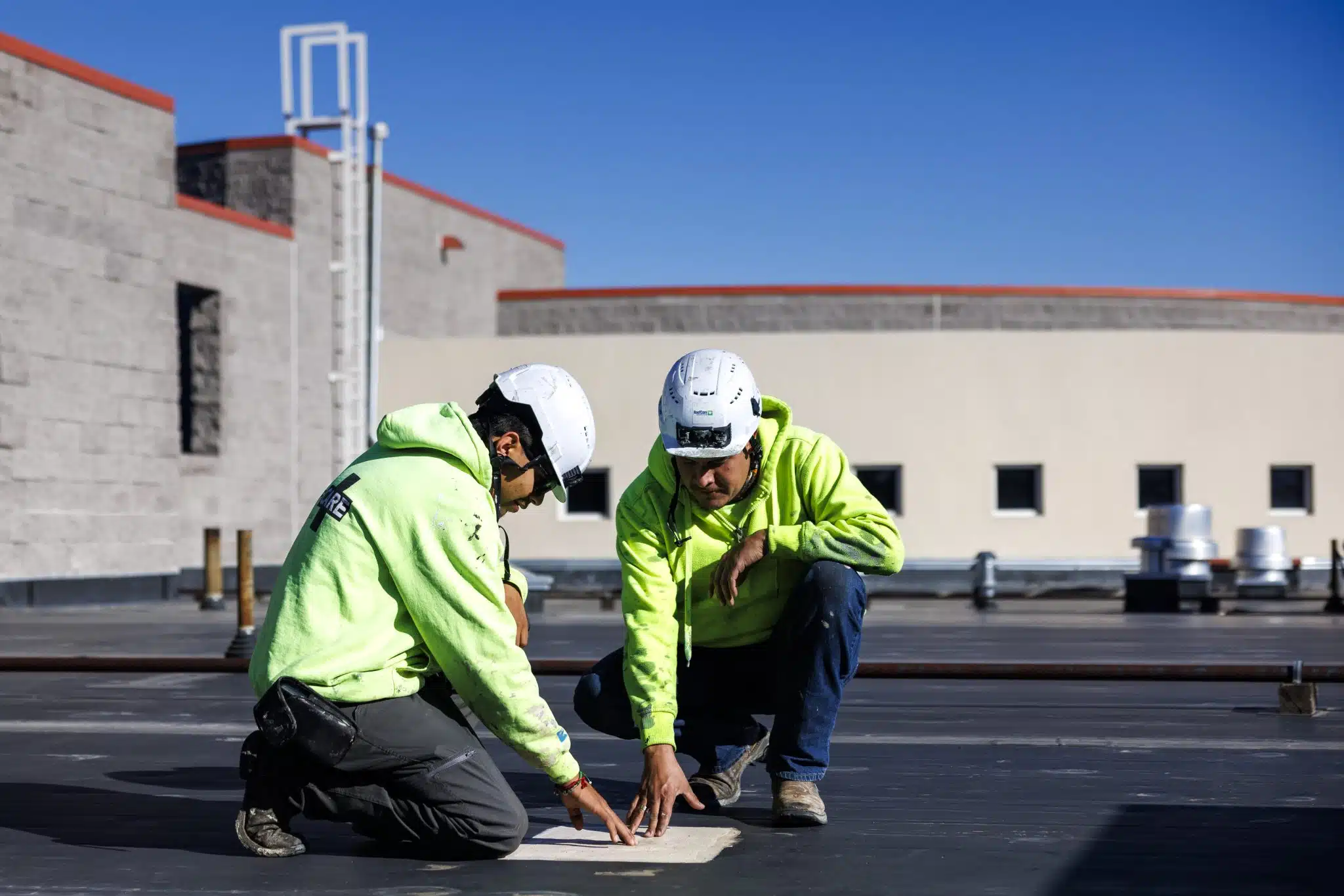
The standard commercial roof inspection in the Raleigh market runs about ninety minutes, produces a few photos on a cell phone, and ends with a contractor quote. That is not what we do.
Our commercial roof inspections begin with a pre-walk review of whatever documentation exists - prior inspection reports, active warranty documents, manufacturer spec sheets, previous repair records. We want to walk the roof knowing what we are looking for, not discovering the building's history by accident. The inspection itself follows a systematic zone pattern documented on a pre-drawn roof diagram. Every penetration, every seam transition, every flashing detail, every drain, and every area of visible ponding or past repair gets photographed and logged to its location on the zone map.
The deliverable is a written inspection report: condition rating by zone, specific deficiencies noted with photo references, drainage assessment, warranty status if applicable, and a repair-or-monitor recommendation for each finding. For Triangle research corridor campus owners and Downtown Raleigh office tower property managers carrying multi-building portfolios, that documented baseline is the foundation of a defensible capital plan - not a gut-feel replacement schedule.
What a Raleigh Commercial Roof Inspection Covers
Membrane condition: We assess seam integrity, surface erosion, blister formation, and UV degradation across the full roof field. In the Triangle's humid subtropical climate, heat-welded TPO seams experience thermal cycling stress from the swing between summer surface temps above 160F and winter ice storm loading events - the January 2022 ice storm is the recent reference point that accelerated latent failures on roofs that had been performing adequately for years prior.
Flashing and perimeter details: Parapet wall flashing, edge metal termination bars, counterflashing at HVAC curbs, drip edge at roof-to-wall junctions - these are the locations that fail first and fail most expensively. We document every flashing transition on the zone diagram and note any separation, lifting, or sealant failure.
Drainage: We assess every drain's condition and clearance, document ponding locations and estimated depth at 72-hour post-rain if we have prior survey data, and identify any drain sumps that have settled or corroded. Raleigh's flat commercial terrain - particularly through the Downtown core and the North Hills to Midtown corridor - makes drainage engineering a primary failure vector. We have documented ponding failures across this city after Hurricane Florence in 2018 and Hurricane Helene's remnant moisture in 2024 that trace back to drains that were partially blocked for years before the rainfall event that turned a maintenance item into a major loss.
Penetrations and equipment curbs: Every HVAC unit, exhaust fan, pipe penetration, and conduit sleeve gets checked for curb height, flashing integrity, and sealant condition. Triangle research corridor campus buildings and a Raleigh research campus research facilities often carry unusually dense penetration patterns given the specialized lab ventilation systems - these buildings get more inspection time on penetration details than a typical office building.
Post-Storm and Insurance-Grade Inspections
The Triangle's storm exposure is significant. The Piedmont's position relative to Atlantic hurricane tracks means the region periodically receives multi-day rainfall events from inland-tracking storm remnants. Hurricane Florence in September 2018 dropped more than 15 inches of rain over parts of Wake County over 72 hours. Hurricane Helene's remnant moisture in late September 2024 produced multi-day sustained rainfall that exposed latent roof failures across the Raleigh market at scale.
Post-storm inspections carry a higher documentation standard than routine condition assessments. The inspection must distinguish pre-existing condition from event-related damage - that distinction determines what a claim covers. We document both, separately, in the inspection report. Photo timestamps, storm event date comparison, and condition notes that describe the failure mechanism all matter in a claim context.
If your building's roof has not been formally inspected since the 2024 Helene event, that is a gap worth closing before the next storm season. Undocumented storm damage that is not repaired can void manufacturer warranty coverage - specifically, most NDL warranties require prompt reporting and repair of storm-related membrane failure.
Scheduled Inspection Programs
A single inspection is a snapshot. Most commercial roof warranties require documented semi-annual or annual inspections to remain valid - the inspection requirement is written into the warranty document, and failure to We run scheduled inspection programs for commercial building owners across Raleigh who want to stay inside their warranty window without having to manage the scheduling themselves.
For portfolio owners managing multiple Wake County commercial assets, scheduled inspection programs can be structured as a single engagement covering all buildings on a defined rotation. We deliver consolidated reporting by portfolio, which simplifies the facilities management oversight load for REIT asset managers and institutional owners at Raleigh campus or regional institution with large campus portfolios.
Inspection scheduling is coordinated around the building's operational calendar - tenant activity, HVAC maintenance windows, and any planned capital work that might alter the roof's condition before the next inspection date.
Frequently asked questions
How often does a commercial roof in Raleigh need to be inspected?
Most commercial roof manufacturer warranties require a minimum of two inspections per year - one in spring after winter loading season and one in fall before the hurricane remnant rainfall season. Beyond warranty requirements, we recommend a post-storm inspection after any event that drops more than three inches of rain or produces sustained winds above 50 mph. Raleigh buildings in the I-440 Beltline that were not inspected after the September 2024 Helene event should treat that inspection as overdue.
What does your commercial roof inspection report include?
A written condition assessment by roof zone, photo log keyed to the zone diagram, drainage status, penetration and flashing condition summary, warranty status if we can access the warranty document, and a prioritized repair or monitor recommendation for each identified deficiency. We deliver the report in PDF with the zone diagram as an attachment - formatted to be attached to your facilities management system records directly.
Can you inspect a building I do not currently have roofing records for?
Yes. Many building acquisitions and portfolio transfers arrive without complete roofing documentation. We walk the roof, assess what we find, and produce a baseline condition report that gives you a starting point - membrane type and approximate age, estimated remaining service life, active deficiencies, and a recommended capital horizon. This type of baseline inspection is particularly common for commercial buildings acquired through the active Wake County investment sales market.