The Triangle's two defining storm events - Hurricane Florence in 2018 and Hurricane Helene's remnant rainfall in 2024 - both demonstrated that Raleigh commercial roofs fail not in a single gust but under days of sustained moisture loading. We assess that failure pattern and document it for repair and for insurance.
Raleigh sits far enough inland that most Atlantic hurricanes have weakened to tropical storm or post-tropical systems by the time they reach Wake County. What remains is rainfall - often extreme, sustained rainfall that loads flat commercial roofs in a way that wind-driven storm events do not. Hurricane Florence's remnant system in September 2018 dropped more than 15 inches over parts of Wake County across a 72-hour window. Hurricane Helene's remnant moisture in late September 2024 produced multi-day sustained rainfall that exposed latent failures in commercial roofs across the Triangle at a scale we had not seen since Florence.
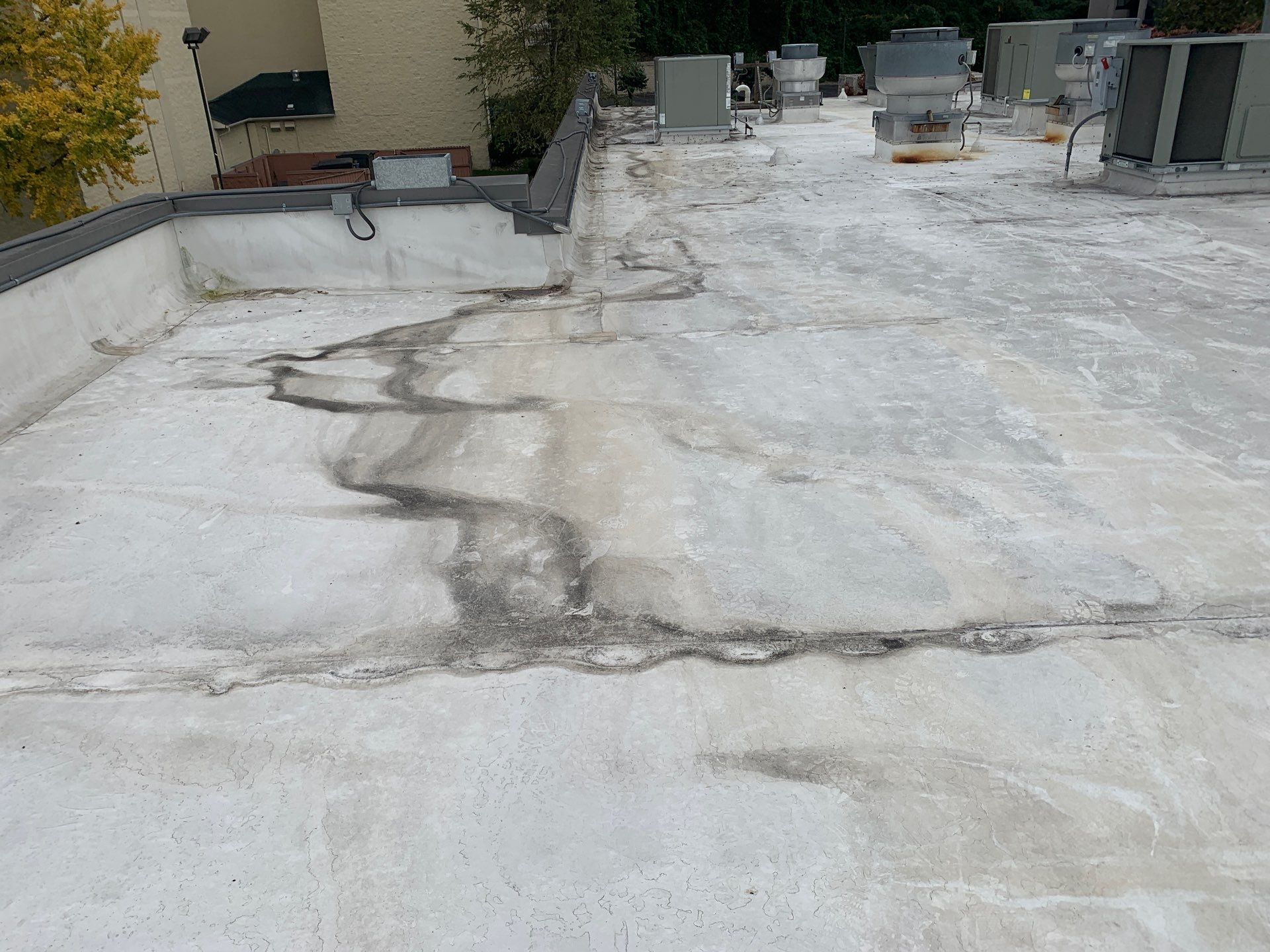
The damage pattern from these events is different from hail or wind damage, and it requires a different assessment approach. The primary failure modes are seam separation under sustained hydrostatic loading, drain surcharge and interior overflow, parapet flashing delamination at corners and inside angles, and insulation saturation that renders the roof system structurally compromised even when the membrane surface looks intact. None of those failures are visible from the ground. All of them require a roof walk with moisture cores, a drain performance check, and a photo-keyed zone diagram to document accurately.
We have walked hundreds of Raleigh commercial roofs after both Florence and Helene. The scope of damage visible on a typical post-hurricane roof walk is consistently larger than what facility managers expect - and the documentation we produce from those walks is what makes the difference between a claim that settles at repair scope and one that gets denied as pre-existing maintenance deferred.
The Raleigh Hurricane Damage Pattern
Florence and Helene both demonstrated the same failure sequence on Raleigh commercial flat roofs. First, sustained rainfall overwhelms drain capacity on roofs where drains are partially clogged or undersized - ponding exceeds six inches on roofs that nominally drain well under normal rainfall. Second, hydrostatic pressure at seams and flashings exceeds what adhesive or weld deterioration can hold, and water enters the roof assembly. Third, that water migrates laterally through the insulation board joints before it reaches the interior membrane and becomes visible as an interior drip. By the time a building manager sees a stain on the ceiling tile, the insulation layer may have absorbed water across an area five to ten times larger than the visible interior damage.
The secondary failure mode specific to the Triangle's sustained rainfall events is parapet flashing failure at corners. Raleigh commercial buildings built in the 1990s and early 2000s commonly used base flashing that was adhered rather than mechanically fastened. Extended moisture softens the substrate, the adhesive bond relaxes under the thermal and moisture cycling, and inside corners - where two parapet walls meet - pull away from the wall. That opening is invisible from a ground-level inspection and becomes active on the second or third consecutive rain day, not the first.
Post-hurricane documentation for insurance purposes must distinguish pre-existing condition from event-related damage. Adjusters are trained to identify maintenance-deferred conditions - clogged drains, prior repairs that were never closed out, membrane that was already at end of service life. Our assessment separates those pre-existing items from the event-triggered failures. That distinction matters for the claim; adjusters can defend repairs they can tie to the event date. They cannot defend repairs that look like deferred maintenance regardless of what caused the final failure.
Assessment and Documentation Protocol
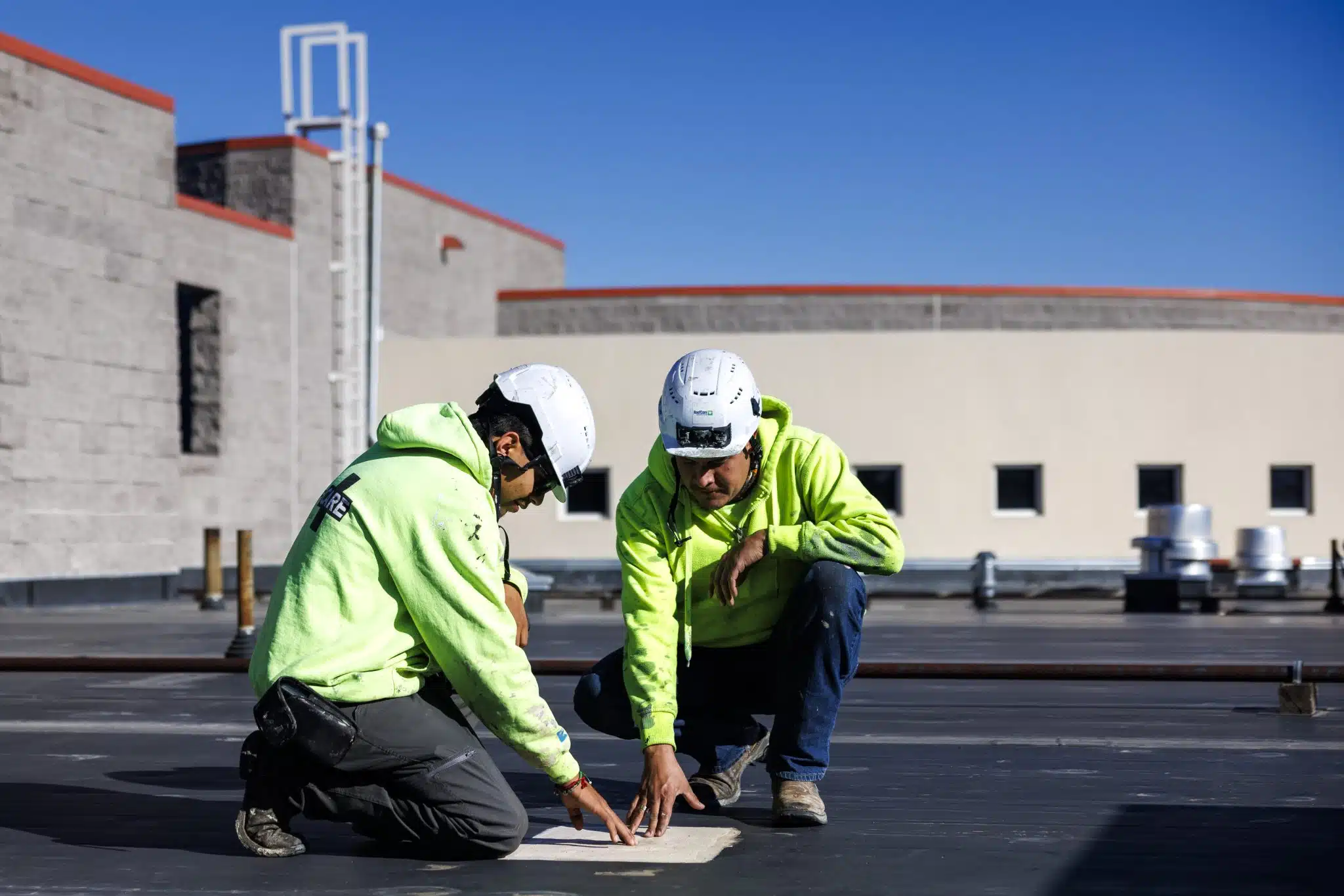
Every post-hurricane assessment we do starts with a roof walk within 48 to 72 hours of the event window closing - before secondary rain events mask the evidence. We photograph every drain, every parapet inside corner, every penetration, every field seam we can probe, and any location where ponding is visible or can be inferred from debris rings. Each photo is keyed to a zone diagram of the roof. The report that comes out of that walk identifies each damage location by zone, describes the failure mode, states whether the failure is event-related or pre-existing, and quantifies the repair scope.
Moisture core sampling follows the initial photo assessment. We pull cores at the locations of suspected insulation saturation - typically in low areas, near drains, and at the locations of interior ceiling damage if the building has active interior leaks. Core results are photographed and logged by zone. A moisture survey using infrared or capacitance scanning can extend coverage beyond the core locations when the suspected saturation area is large.
The final documentation package includes the photo-keyed zone diagram, the moisture core results log, the written damage assessment distinguishing pre-existing from event-related, and a repair scope with line-item quantities. That package is structured to support an insurance claim submission directly - it is the document your adjuster needs to write the estimate. We deliver it in both PDF and digital formats and will present it to your adjuster by phone or in a site meeting if your claim requires that.
Emergency Dry-In and Repair Scope
Where a post-hurricane assessment identifies active water intrusion - a drain that is still surcharging, a parapet flashing that is actively open, a seam separation that is still wet - we provide emergency dry-in as part of the post-assessment mobilization. Dry-in covers the active entry point, not the full repair scope; it stops the interior damage from progressing while the insurance documentation is completed and the permanent repair scope is negotiated.
Permanent repair scope on a hurricane-damaged Raleigh commercial roof typically involves: drain clearing and functional confirmation, seam repair at identified separations with manufacturer-compatible sealant and reinforcing membrane, parapet flashing replacement at failed inside corners and end walls, penetration flashing replacement where the existing flashing delaminated, and targeted insulation replacement at zones where moisture cores confirmed saturation. In cases where moisture survey shows saturation across more than 25% of the roof area, we recommend replacement rather than repair and document that recommendation with supporting data.
We do not carry a public adjuster license and we do not represent insureds in claims negotiations. What we provide is the documented scope and unit pricing that a licensed adjuster or public adjuster uses to prepare the estimate. That separation protects you - we are the technical witness, not the negotiator.
Frequently asked questions
How soon after a hurricane event should I have my Raleigh commercial roof assessed?
Within 48 to 72 hours of the event window closing if possible. Secondary rain events - common in the days following a tropical remnant system - can mask drainage evidence and make it harder to distinguish event-related seam failures from pre-existing conditions. Early documentation also gives your insurance carrier a clean date-of-loss tie to the event. Call 919-372-4890 directly; post-storm mobilization is a priority queue.
Does my commercial property insurance cover hurricane remnant rainfall damage in Raleigh?
Most commercial property policies cover water intrusion damage tied to a named storm event, but the documentation burden is on the insured to demonstrate that the damage was event-related rather than deferred maintenance. That is what our assessment documentation addresses. Policy terms vary; we recommend you pull your policy's water damage and storm damage exclusions before the assessment walk so we can tailor the documentation to your specific coverage language.
Can you assess multiple buildings across a portfolio after a major storm?
Yes. For portfolio owners with multiple Wake County buildings - office parks along Glenwood Avenue, industrial facilities in the Garner or Knightdale corridors, or multi-building campus accounts - we can stage a multi-building assessment sequence in the days following a major event. Contact us with your building count and addresses and we will schedule the sequence in order of reported damage severity.