Most denied or under-settled commercial roof insurance claims in Raleigh fail on documentation, not on the merits of the damage. We produce adjuster-ready documentation - photo-keyed zone diagrams, written scope with pre-existing versus event-related distinction, and event date tie-in - that changes that outcome.
Commercial property insurance claims for roof damage in Raleigh are more frequently denied or under-settled than building owners expect, and the reason is almost always documentation quality rather than the absence of legitimate damage. Adjusters work from the documentation they receive. An insurance claim supported by a phone photo of a ceiling stain and a roofer's verbal estimate produces a different outcome than a claim supported by a photo-keyed zone diagram, a moisture core sampling log, a written scope distinguishing pre-existing wear from event-related damage, and weather data tying the damage to the event date. We produce the second type of documentation.
Our position in the insurance claim process is specific: we are the technical documentation provider, not the claim representative. We do not hold a public adjuster license and we do not negotiate with insurance carriers on behalf of building owners. What we do is produce the professional roofing assessment documentation - the technical record of what the roof looked like within the event window - that your adjuster, your public adjuster, or your attorney uses to present and negotiate the claim.
We have produced post-event documentation for commercial roof insurance claims following Hurricane Florence's 2018 remnant rainfall, Hurricane Helene's 2024 remnant moisture event, the spring 2023 and spring 2024 hail events in Wake County, and multiple wind and ice storm events across the Triangle. The documentation format we use is structured to
What Adjuster-Ready Documentation Includes
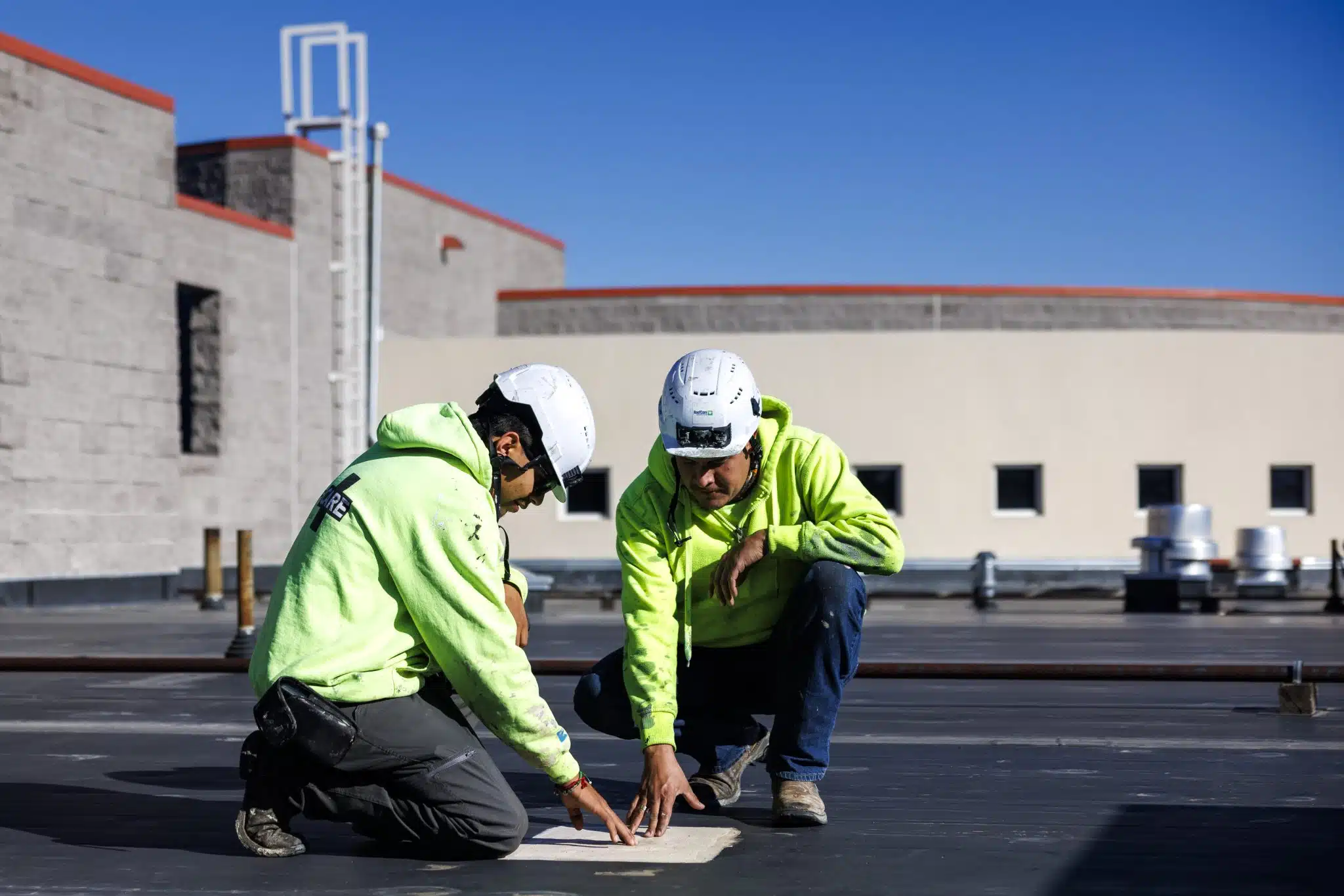
A complete commercial roof insurance claim documentation package includes the following elements, produced in a consistent format that an adjuster or public adjuster can work from without further clarification. First: a roof zone diagram with every identified damage location marked, numbered, and keyed to the photo log. The diagram is drawn to scale for larger roofs and always includes compass orientation, building name and address, and assessment date.
Second: a photo log with high-resolution photographs keyed to each zone diagram number. Each photo is captioned with zone number, damage description, and any measurement reference where relevant. Photos are taken and delivered within the event window - typically within 48 to 72 hours of the event for storm damage, within 24 hours of fire marshal clearance for fire damage.
Third: a written assessment narrative that describes each damage location by failure type, states whether the failure mechanism is consistent with the claimed event or with pre-existing condition, and where the failure is event-consistent, states the mechanism of causation. This narrative is the document that an adjuster uses to justify the scope to the carrier's review team. It needs to be specific, technically accurate, and written by someone who can defend it in a coverage dispute.
Fourth: weather event data. For storm claims, we pull NWS surface observation data, storm reports, and radar-derived hail size estimates for the event date and the building's Wake County location. For named storm events - Florence, Helene - we include the NHC advisory track and the NWS Wake County post-event impact summary. This data ties the damage documentation to the event date with official records that the carrier cannot contest on factual grounds.
Distinguishing Pre-Existing Condition from Event Damage
The single most contested element in commercial roof insurance claims is the pre-existing-versus-event-related distinction. Insurance carriers look for evidence of deferred maintenance or pre-existing deterioration to reduce or deny coverage. A membrane that was already at end of service life, a drain that was already partially clogged, a parapet flashing that was already showing adhesion failure - all of these items are candidates for exclusion on the basis that the event did not cause the damage, it merely exposed a pre-existing failure.
Our written assessment addresses this explicitly. For each identified damage location, we state whether the damage mechanism is consistent with an event-related sudden failure or with progressive deterioration. Where a failure shows evidence of both - a parapet flashing that had partial adhesion loss pre-existing, with the final separation occurring during the event - we document both conditions separately and describe what the pre-existing condition contributed versus what the event contributed. That nuanced documentation is more useful to an adjuster than a blanket claim that all damage is event-related, because the adjuster can build a credible claim position from honest technical documentation.
We are also candid when an assessment shows that the primary damage is pre-existing rather than event-related. If a roof walk after a reported hail event shows membrane that is at end of service life with minor hail marking but no functional impact damage, we report that finding accurately. That transparency protects you - it prevents your insurance carrier from using a contested claim to recategorize you as a high-risk insured. It also gives you accurate information for the capital decision that the roof's actual condition requires.
Working with Public Adjusters and Coverage Counsel
Commercial property insurance claims that involve contested coverage or significant dollar amounts often involve a public adjuster retained by the building owner or coverage counsel engaged by the owner's risk manager. We work alongside public adjusters and coverage counsel regularly on Raleigh and Triangle commercial roof claims. Our role is technical documentation provider; their role is claim strategy and carrier negotiation.
The documentation we provide is structured to be accessible to non-technical claim professionals - adjusters, attorneys, and risk managers who are not roofing specialists. The zone diagram is visual and self-explanatory. The photo log is organized by zone to match the diagram. The written narrative uses plain language to describe technical failure modes without requiring the reader to have roofing expertise. We are available to present our findings by phone or in a site walk with the public adjuster or carrier adjuster if the claim requires it.
For major loss events - the Florence and Helene remnant rain events, the periodic large hail outbreaks across Wake County - we have experience in multi-building claim documentation programs where a portfolio owner needs consistent, comparable documentation across multiple affected buildings. We can stage a multi-building documentation sequence and produce individual claim packages for each building in a consistent format that supports portfolio-level claim management.
Frequently asked questions
How quickly after a storm event should insurance claim documentation be produced for a Raleigh commercial roof?
The sooner the better, for two reasons. First, surface evidence of storm damage - membrane bruising from hail, displacement patterns from wind uplift - is most visible in the days immediately after the event, before UV exposure and thermal cycling begin to alter surface conditions. Second, insurance carriers' claims handling timelines favor early documentation. For a Florence-scale or Helene-scale event where thousands of claims are being filed simultaneously across Wake County, early documentation keeps your claim in the active queue. We prioritize post-event assessment calls; call 919-372-4890 directly.
Does having professional documentation actually change insurance claim outcomes for Raleigh commercial buildings?
In our experience, yes - materially. Claims supported by photo-keyed zone diagrams, written technical assessments, and weather data tie-in settle differently than claims supported by informal roofer visits and verbal estimates. We cannot promise specific claim outcomes - we are not adjusters or public adjusters - but the documentation we provide gives the claim advocate the technical record that changes the conversation with the carrier.
What does insurance claim documentation cost, and is the cost recoverable in the claim?
Our assessment fee is based on building size and complexity. For many claims, the assessment cost is recoverable as a direct claim expense - particularly for larger commercial claims where the building owner retained a public adjuster. Confirm with your adjuster or coverage counsel whether assessment documentation fees are a recoverable line item under your policy. We deliver an itemized invoice that your adjuster can include in the claim submission.