Full-system tear-off and replacement on Raleigh commercial flat roofs - scoped against your capital horizon and closed out with manufacturer warranty documentation that holds up over time.
Most commercial roof replacements in the Triangle get scoped reactively. The roof leaks, someone calls three contractors, and the lowest bid wins. That replacement runs the same membrane on the same insulation against the same parapet detailing - and then leaks again in eighteen months. We do not work that way.
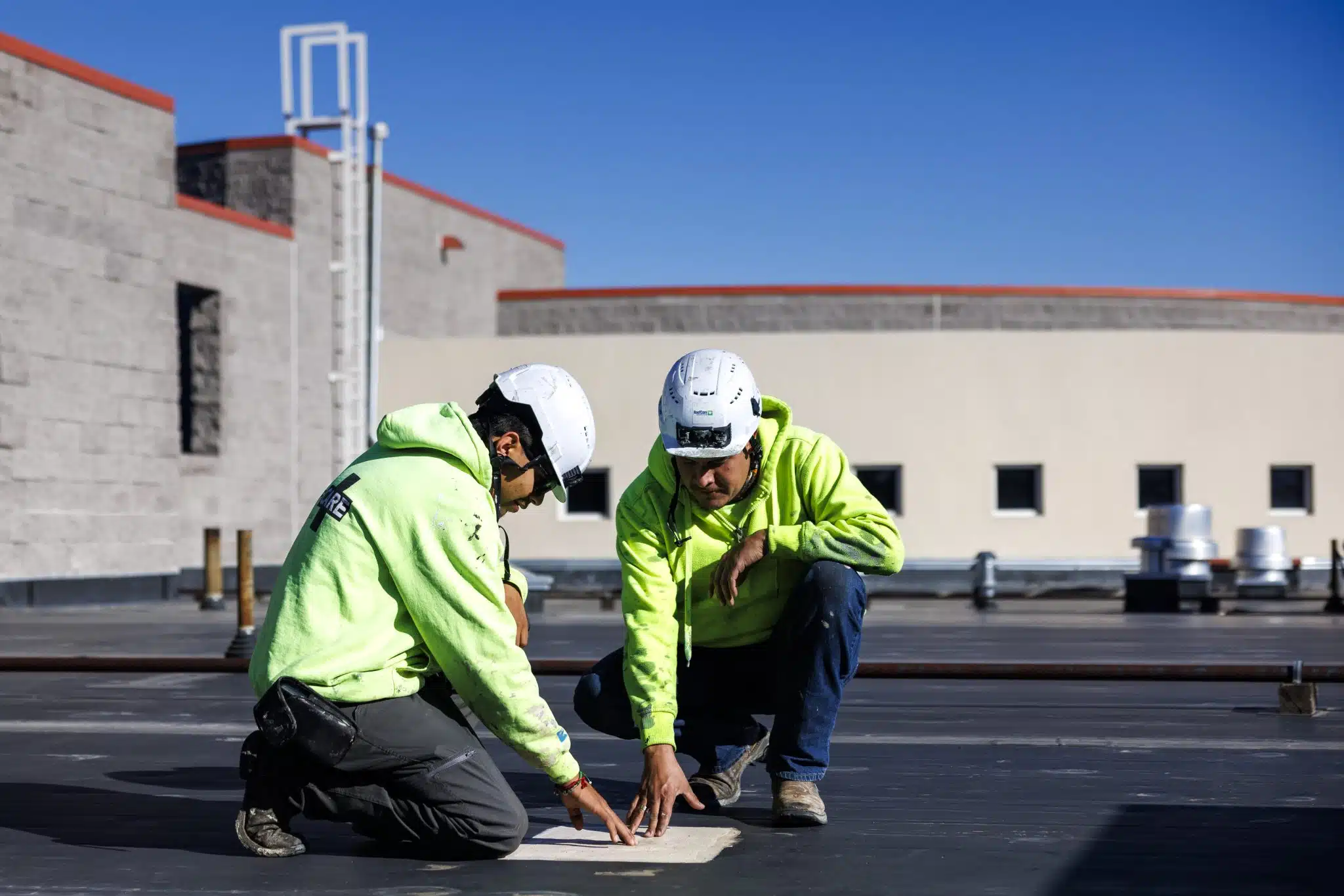
Our replacement scope starts with a roof walk and a moisture-core pull on any roof we suspect has saturated insulation. We document deck condition, parapet flashing condition, drain status, every penetration, and every prior repair. The replacement scope then specifies the membrane, the insulation stack including R-value to current North Carolina energy code, the fastener density to code wind-uplift, the manufacturer warranty path, and the maintenance contract that keeps the warranty active.
The deliverable at closeout is the warranty document, the roof zone diagram with all closeout photos, the maintenance contract, and a written record that the next reroof cycle can build against - not a stack of receipts that the next building owner has to reconstruct from scratch. For Triangle research corridor campus owners managing multi-building portfolios, that documentation package has real capital-planning value across asset cycles.
When Replacement Is the Right Call
Recover-versus-replace is the first decision in any aging-roof scope. We pull moisture cores in five-to-ten representative locations on roofs we suspect have insulation saturation. If more than 25% of cores read wet, replacement is the honest scope - recovering wet insulation traps the moisture and voids the new warranty. If under 25%, a recover with targeted insulation replacement at wet areas can extend the asset another 15-20 years at roughly half the capital cost of full replacement.
Deck condition is the second decision. We pull deck inspection ports under wet cores and at obvious deflection points. Corroded metal deck or rotted plywood means deck replacement, which moves the project into a different cost band and a different sequencing plan. Owners need to know this before the project starts - not when the crew opens up the roof and stops work.
The Triangle's Hurricane Florence remnant rainfall in 2018 and Hurricane Helene's sustained moisture in 2024 both accelerated latent insulation saturation in roofs with compromised seams. If your building's roof was not comprehensively inspected after those events, a moisture survey before your next capital decision is the minimum responsible step.
What the Replacement Scope Specifies
Membrane: TPO 60-mil or 80-mil for most Raleigh commercial buildings; EPDM 60-mil for industrial with high mechanical traffic; PVC 50-mil or 60-mil for restaurants and high-chemical exposure; modified bitumen for buildings with existing BUR systems where the recover path makes sense. We are not married to any one manufacturer - we specify based on building use, manufacturer warranty terms, and what the building's capital horizon supports.
Insulation: We spec to current North Carolina energy code. The stack typically runs polyiso primary insulation plus a cover board. Tapered insulation packages are designed against the existing drain layout and the actual ponding patterns we documented during inspection - ponding is a chronic issue in Raleigh commercial construction given the flat terrain through the Downtown and North Hills corridors.
Fastener pattern: Designed against IBC wind-uplift requirements for the building's zone and exposure category. Buildings near RDU Airport or in open terrain on the western Wake County edge get more conservative pattern density given the region's exposure to derecho-class straight-line wind events.
Manufacturer warranty path: 20-year NDL (no-dollar-limit) warranty is standard for most TPO and EPDM systems. PVC systems can carry 25-year warranties. Restoration coatings carry 10, 15, or 20-year manufacturer warranties depending on mil thickness.
How We Sequence the Project
Pre-construction: Permits filed with the relevant municipality - City of Raleigh, Town of Cary, City of Durham, Town of Chapel Hill - pre-job meeting with the building's facility manager to set crane and material lay-down zones, tenant notification distributed, parking and ingress/egress impact documented.
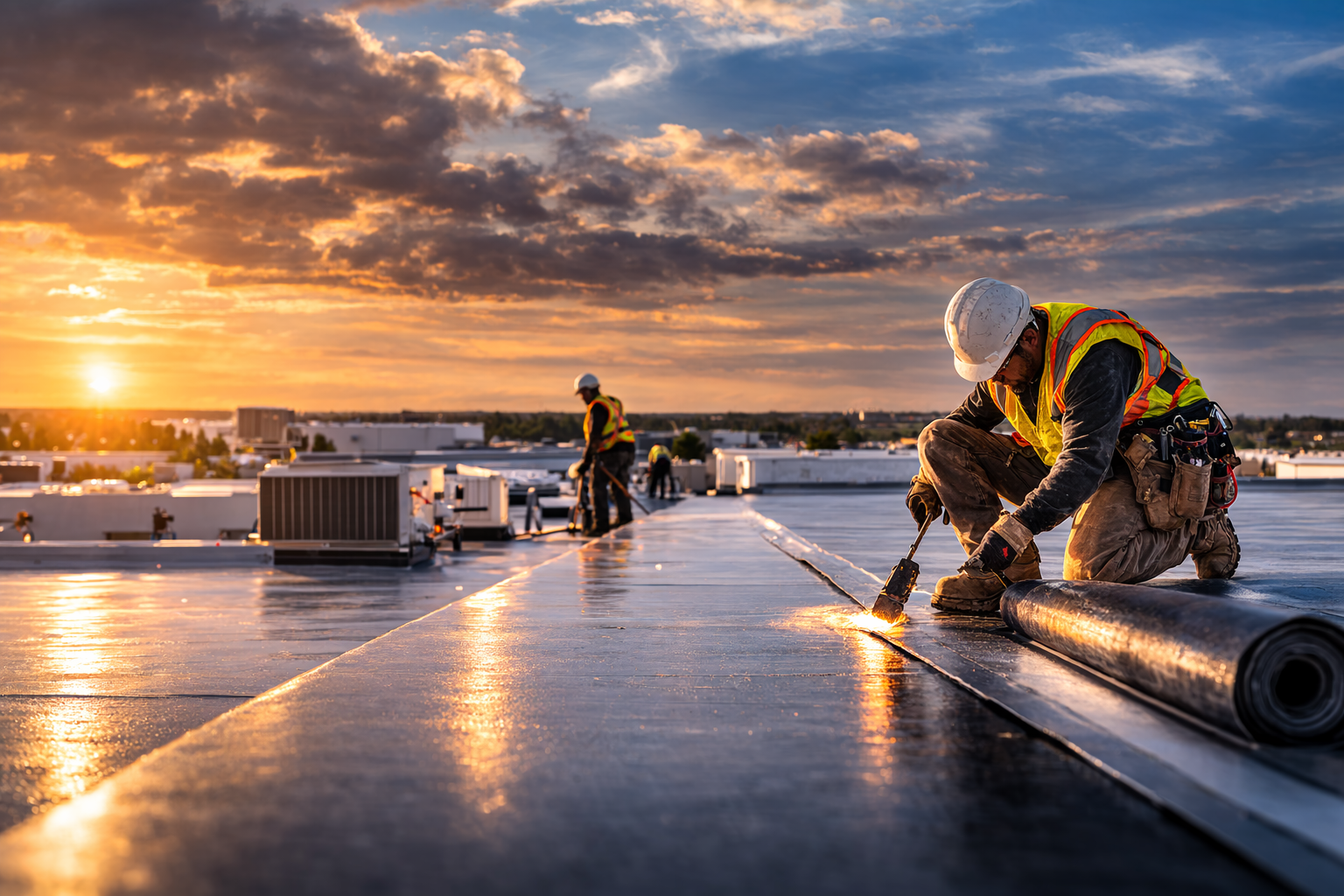
Production: Tear-off staged in 5,000-10,000 sq ft sections with same-day dry-in on each section, so the building is never exposed to an unannounced rain event. The Triangle receives regular afternoon convective storms from May through September - we track NOAA hourly forecasts and adjust daily production sequencing accordingly. Crews work early morning starts to avoid afternoon storm windows.
Closeout: Punch walk with the building's facility manager and our project manager, manufacturer warranty inspection with the manufacturer's field rep, closeout package delivered - warranty document, photo-keyed zone diagram, maintenance contract, manufacturer start-up documentation.
Frequently asked questions
How long does a typical Raleigh commercial roof replacement take?
For a 50,000 sq ft single-story commercial building with no deck replacement: about 3-4 weeks of production from tear-off through closeout, weather cooperation assumed. The Triangle's summer afternoon convective storm pattern can add schedule buffer - we build that into our production schedule rather than promise unrealistic daily output.
Will my building be exposed to rain during the replacement?
No. We tear off only what we can dry-in the same day. Each section gets a temporary dry-in at end of day. We do not leave the building interior exposed overnight, particularly given the Triangle's pattern of overnight convective storms that can appear quickly.
How do you handle rooftop equipment during the replacement?
HVAC units get raised on temporary curbs while we work under them, or they get scheduled into the production sequence so they are worked around. Solar arrays - increasingly common on Triangle research corridor and a Raleigh research campus buildings - require a separate disconnection/reset by a licensed electrician. We coordinate that with your facility's electrical contractor. Communication antennas, satellite dishes, and similar low-load equipment we work around without dismantling.