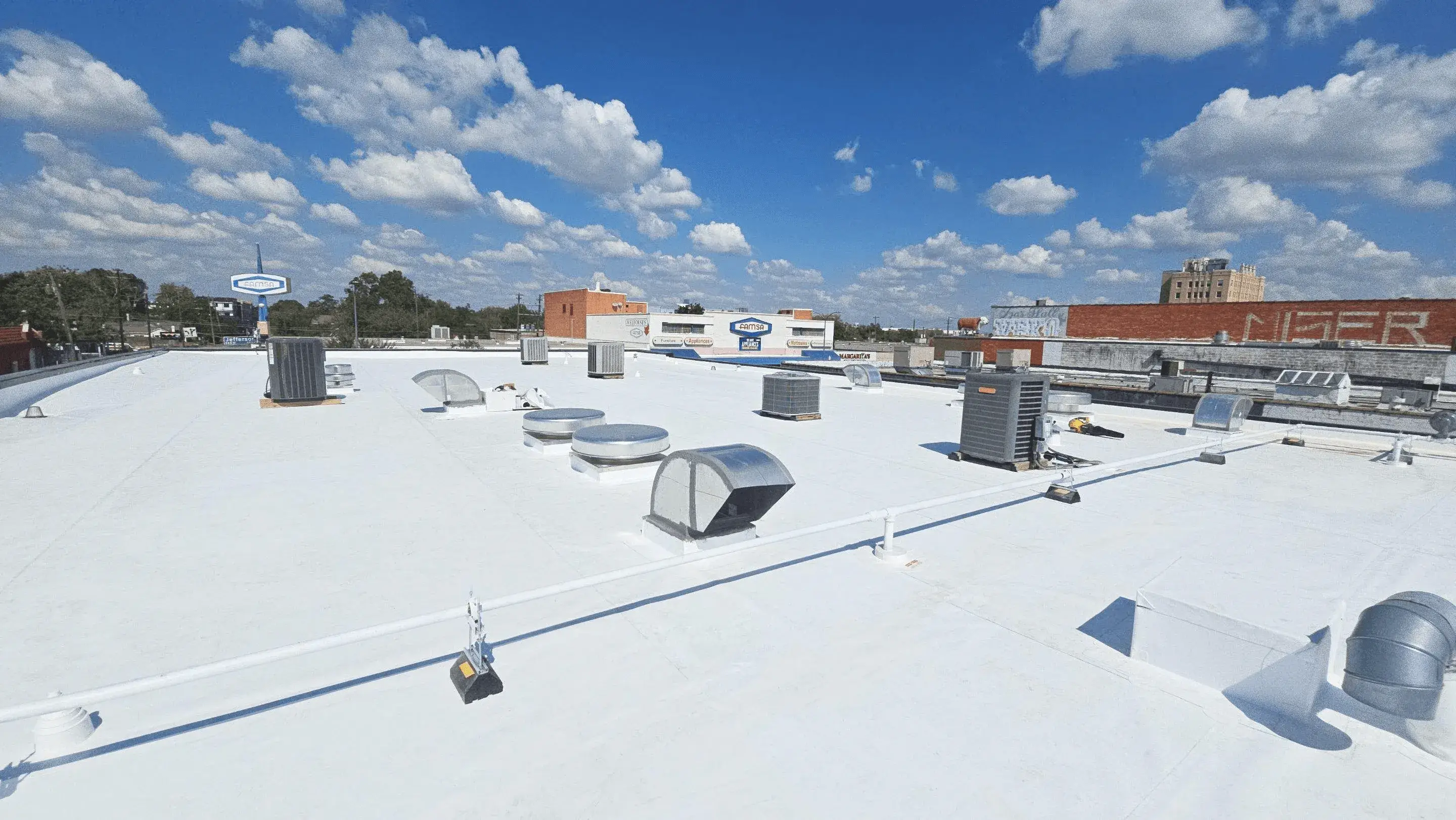
The planning work before the contract is signed determines whether a Raleigh commercial roof replacement produces a warranted 20-year asset or a 5-year problem. Scope, membrane selection, insulation specification, warranty path, permit coordination - we document all of it before you commit.
Commercial roof replacements fail more often at the planning stage than at the installation stage. The wrong membrane selection for the building's use, the wrong insulation specification for North Carolina energy code, the wrong fastener pattern for the building's wind exposure and zone, the wrong warranty path for the ownership horizon - all of these produce a replacement that either fails early or leaves money on the table. By the time the replacement is installed and the contractor has demobilized, changing these decisions costs real money. Planning the replacement correctly costs a fraction of correcting a misspecified one.
The Triangle's commercial market conditions make replacement planning consequential. The 2000s and early 2010s suburban office construction cycle across Cary, Morrisville, Durham, and the Triangle research corridor corridor means there is a large inventory of TPO and EPDM systems now approaching or past warranty life simultaneously. High concurrent replacement demand creates contractor capacity pressure - more projects seeking contractors than the established commercial roster can absorb in a single season. That market condition creates space for lower-tier contractors to compete on price with replacement specifications that are adequate to pass permit inspection but not adequate to deliver the 20-year warranty performance the building owner expects. A detailed specification that produces genuinely comparable bids is the primary defense.
Replacement planning is a service we provide separately from replacement installation. An owner who wants an independent scope, a defensible bid package, and third-party quality oversight during installation can engage us on those terms without also engaging us to execute the replacement. Some building owners and their property managers specifically prefer to separate the planning work from the execution - we accommodate that structure and treat the planning engagement as complete whether or not we win the installation contract.
What a Replacement Planning Engagement Covers
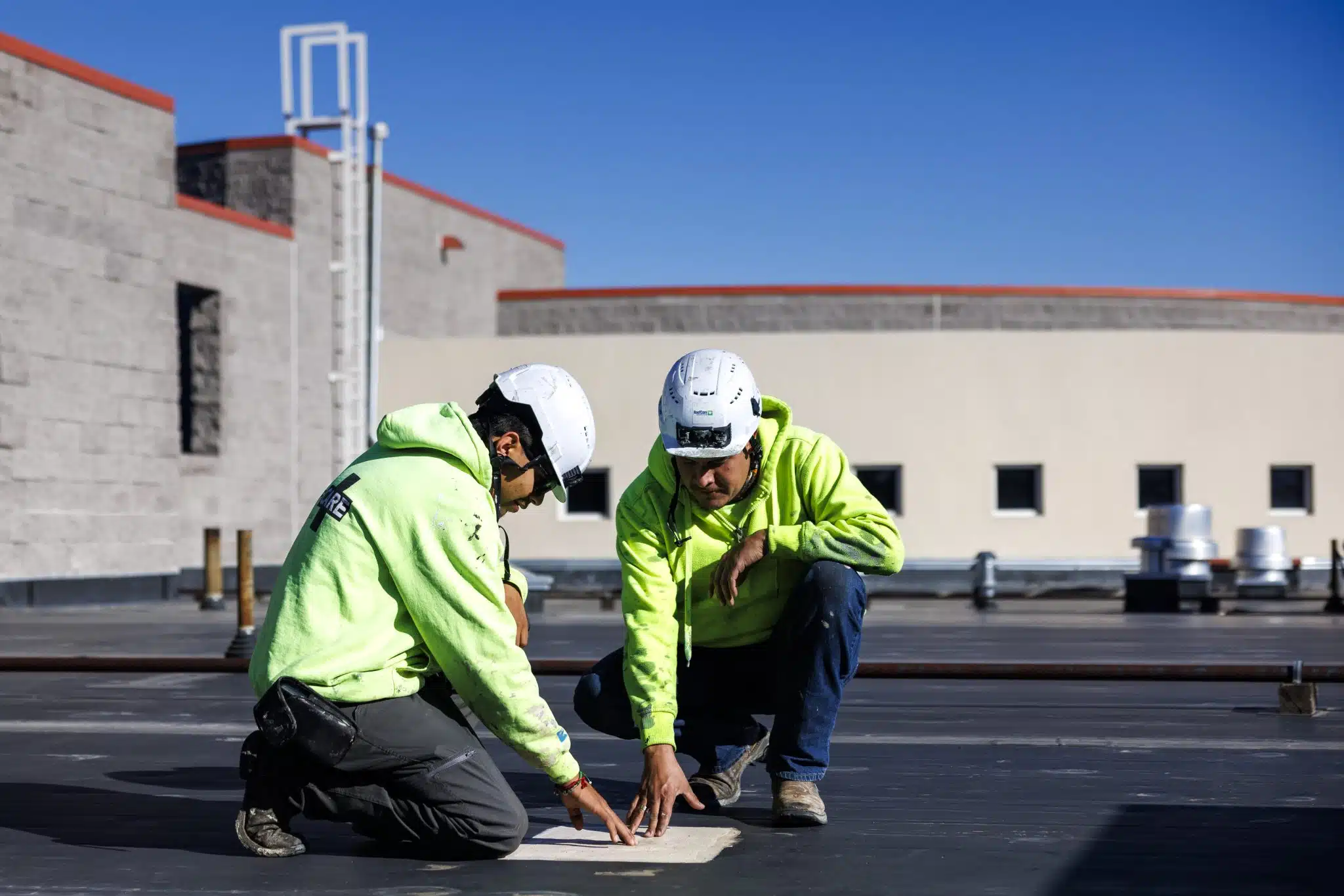
Condition documentation: Full roof walk with photo log keyed to the zone diagram. Core pulls at representative locations to confirm insulation condition and establish the recover-versus-replace decision. Deck inspection at core pull locations and at any observed deflection points. Drain capacity assessment against Wake County or Durham County rainfall intensity-duration-frequency data for the building's roof area. Parapet flashing condition, penetration flashing condition, and curb inventory. The condition documentation is the baseline for the replacement specification - every decision downstream references it.
System selection: Membrane selection based on building use, deck condition, slope, moisture profile, and ownership horizon - not based on what the installer prefers or what carries the highest margin. For most Raleigh commercial buildings, 60-mil or 80-mil TPO is the right starting point; we document the reasoning when a different system is specified. Insulation specification to NC Energy Conservation Code with tapered insulation design against the drain layout and documented ponding patterns. Fastener pattern designed against IBC wind-uplift requirements for the building's exposure category - buildings near RDU Airport or in open terrain on the western Wake County edge require more conservative pattern density than sheltered urban-core buildings.
Warranty path specification: Every replacement planning engagement identifies the manufacturer warranty path before the scope is finalized. Which manufacturer's NDL warranty program applies to the specified system at the building's location. What the manufacturer requires at closeout - field inspection, startup certificate, manufacturer-authorized installer. What maintenance obligations keep the warranty active over its 20-year term. The warranty path goes into the specification before bidding, not into the closeout package after contract execution.
Bid package development: A written replacement specification detailed enough that multiple Triangle-area contractors can price against the same scope without assumptions. Section format: existing conditions summary, scope of work, insulation specification, membrane specification with detail references, flashing scope, drain work, warranty path, closeout requirements, and explicit exclusions. The bid package produces genuinely comparable contractor bids rather than the low-bid-plus-change-orders dynamic that characterizes most commercial roof bids in the current market.
Contractor Selection for Triangle Replacement Projects
What manufacturer authorization actually means: Most NDL warranty programs require the installing contractor to be manufacturer-authorized - meaning the manufacturer has verified the contractor's installation training and is willing to honor warranty claims on that contractor's work. Not all contractors advertising manufacturer warranties in the Raleigh market are authorized under the programs they cite. Authorization status is verifiable through each manufacturer's contractor database. We verify authorization during bid evaluation and flag any discrepancy between a contractor's claim and their documented authorization status.
Insurance and permit requirements for Raleigh commercial work: All replacement projects in the Triangle require general liability and workers' compensation insurance at limits appropriate for the project scope and building value. Commercial roofing permits are required in the City of Raleigh, Town of Cary, City of Durham, Town of Chapel Hill, Town of Cary, and Wake County. Each municipality has its own commercial permit application process, required inspections, and fee schedule. Bid packages specify minimum insurance requirements and confirm permit responsibility before bids are returned.
The low-bid dynamic in the current Triangle market: The simultaneous maturity of the 2003-to-2012 commercial installation cycle across Cary, Morrisville, Triangle research corridor, and suburban Durham creates more replacement demand than the established commercial roster can absorb. This opens the market to contractors without the installation infrastructure to deliver a warranted 20-year system. A specification detailed enough to require manufacturers' authorized installation, manufacturer-specified insulation assemblies, and documented closeout procedures raises the floor of what a bid has to include to be responsive - and filters bids that are cheap because they are underspecified.
Owner Representation During Installation
Construction observation: Replacement planning engagements can include periodic construction observation during installation - seam probe-test verification, insulation layout review, flashing detail compliance check, and closeout walk with the manufacturer's warranty field representative. Construction observation is not continuous supervision; it is strategic verification at the installation stages where specification compliance determines whether the 20-year warranty performs. These are the same stages where the lowest-cost contractor cuts corners when no one is watching.
Closeout package review: The planning engagement closes when the closeout package - signed warranty document, zone diagram with closeout photos, maintenance contract, manufacturer startup certificate - is reviewed and confirmed complete. Incomplete closeout packages are a leading cause of manufacturer warranty disputes at the 5-year or 10-year mark. We document what is complete and what is missing at the final walkthrough, in writing, so the owner has a record before the contractor demobilizes.
Handoff to ongoing maintenance: Replacement planning naturally flows into the first annual inspection under the new system's warranty maintenance requirements. We offer that first inspection as part of the planning engagement or as a separate maintenance contract - the owner's preference.
Frequently asked questions
How much does replacement planning cost on a Raleigh commercial building?
Replacement planning fees scale with building size and scope complexity - typically 1 to 3 percent of the estimated replacement cost. A planning engagement that identifies system selection errors or bid specification gaps that produce a lower-quality installation than specified can cost the owner 20 to 40 percent more in mid-warranty repairs or early reroof. The planning fee is consistently the lowest-cost insurance available on a commercial replacement project.
Can you do replacement planning if we have already selected a contractor?
Yes. Replacement planning is useful regardless of whether a contractor has been selected. It establishes what the scope should include and what the warranty path requires, which creates a factual basis for evaluating the selected contractor's proposal. If the selected contractor's scope does not match the specification, the planning engagement produces the documentation to have a substantive conversation about what is missing - not a subjective disagreement about roofing preferences.
Does replacement planning work for institutional buildings at Raleigh campus, regional institution, or regional healthcare campus?
Yes, and it is more valuable there. Institutional owners with long-term building holds - a Raleigh research campus, regional university campus's Durham campus, regional healthcare campus's hospital and medical office portfolio, regional healthcare system's Wake County facilities - have the most to lose from a misspecified replacement. These buildings have complex rooftop systems, tenant and patient occupancy constraints, manufacturer warranty requirements tied to asset valuation, and capital cycles that make a failed replacement especially disruptive. Replacement planning is standard practice for institutional property owners in the Triangle.
What happens if the replacement project is delayed after planning is complete?
The condition documentation, system specification, and bid package we produce remain valid for 12 to 18 months in most cases. If the project is delayed more than 18 months, we recommend a condition re-assessment before rebidding. The Triangle's active storm cycle - particularly hurricane-remnant moisture events and the summer convective storm pattern - can change a roof's condition meaningfully in that window, and a bid package based on stale condition data can lead to change orders when the contractor opens the roof.