TPO is the most-installed commercial single-ply membrane in the Triangle. We install 60-mil and 80-mil systems against manufacturer-spec details with 20-year no-dollar-limit warranty paths.
TPO - thermoplastic polyolefin - is the dominant commercial single-ply membrane in the Raleigh-Durham market, and for straightforward reasons: it bonds well in the Triangle's humid subtropical climate, it handles the temperature swing between July rooftop surface temps above 160F and January ice storm events, and its heat-welded seams perform more consistently than adhesive-bonded alternatives in high-humidity installation conditions.
We install 60-mil TPO as the standard commercial specification and 80-mil TPO for high-traffic applications - buildings with regular rooftop equipment access, Triangle research corridor facilities with dense service penetrations, and buildings where the additional membrane thickness buys meaningful longevity against puncture risk.
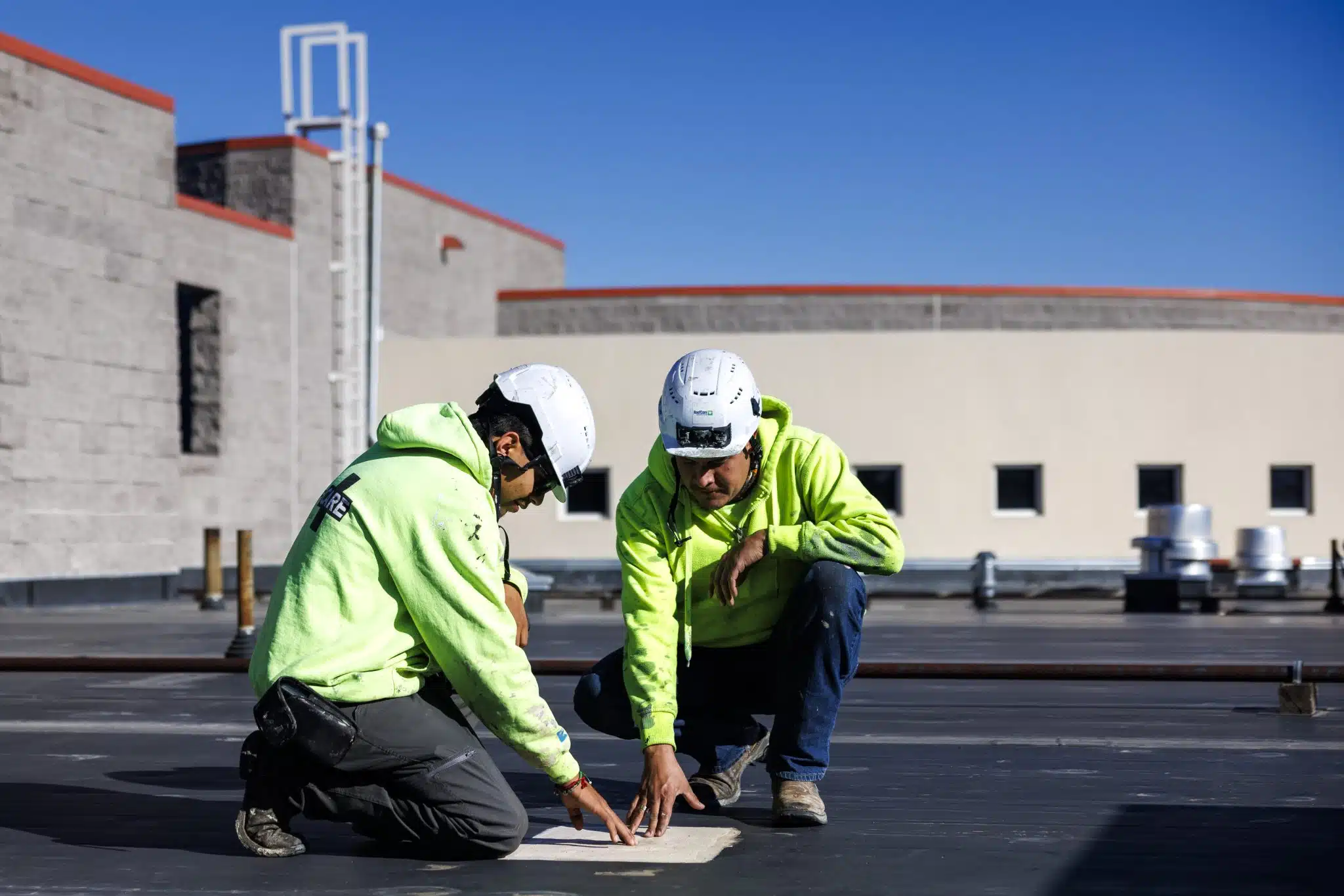
TPO performance in the Triangle depends heavily on installation quality. The welded seams are the system's structural element - a properly welded seam is stronger than the membrane itself, and an under-welded seam is the failure point that every storm event probes. We weld to manufacturer spec, pull test seams randomly throughout the project, and document test results in the closeout package.
TPO in the Triangle Climate
The Raleigh-Durham climate presents two primary challenges for roofing membranes: intense UV radiation during long summers and periodic hurricane remnant rainfall events with sustained water loading. The 2018 Hurricane Florence remnant system dropped more than 15 inches of rain over parts of Wake County over 72 hours. The 2024 Hurricane Helene remnant moisture event produced multi-day sustained rainfall that exposed every compromised seam and drain in the region.
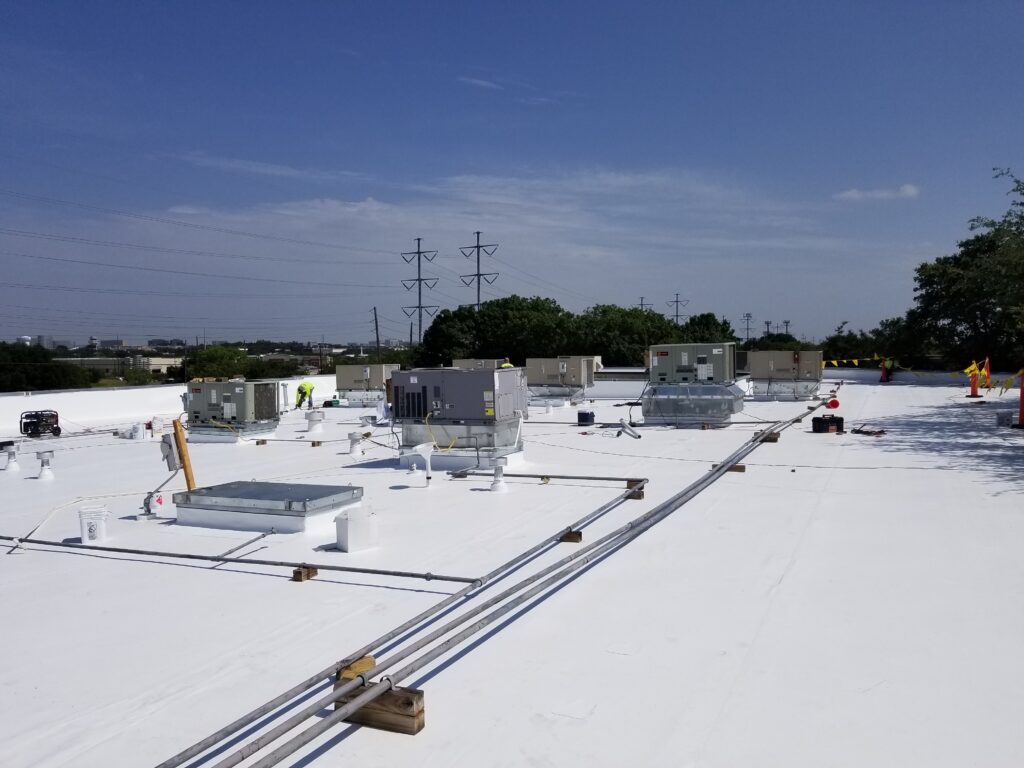
TPO handles both challenges well when installed correctly. Its light-colored surface reflects solar gain - measurably reducing summer cooling loads in the commercial buildings we work on across Downtown Raleigh and North Hills. The heat-welded seams, when installed to specification, are genuinely watertight against sustained water loading at a level that lapped-and-taped alternatives are not.
Winter ice storm events - the January 2022 event that shut down the Triangle for several days is the recent reference - load commercial roofs with ice that refreezes in cycles. TPO's flexibility at low temperatures is a meaningful advantage over stiffer membranes; it accommodates the thermal movement without cracking.
Installation: What We Specify and Why
Substrate: We install TPO over polyiso insulation with a cover board in most applications. Cover board - typically high-density polyiso, gypsum, or HD polyiso - protects the insulation during installation traffic and provides a consistent substrate for membrane adhesion. We do not install TPO directly over bare open-cell polyiso; the inconsistent surface leads to inconsistent weld quality.
Fastening: Mechanically attached (MA) with induction-welded plates is our standard approach for most Raleigh commercial buildings. Fully adhered systems are specified for low-slope applications where wind uplift is a primary concern and for buildings in open terrain near RDU Airport where exposure category demands more conservative attachment. Ballasted systems are used only where the structure can carry the additional dead load.
Seam welding: Hot-air weld at manufacturer-specified temperature and speed settings, verified by handheld probing and periodic peel tests. We do not weld in rain or on wet membrane surfaces. In the Triangle's summer afternoon storm pattern, that means morning starts and weather-aware daily schedules.
Flashings: TPO flashing is heat-welded, not just lapped. At parapets, curbs, drains, and penetrations - anywhere water will collect - we install the manufacturer's specified flashing detail and weld it continuously. These are the areas where every other contractor cuts corners; they are also the areas that fail first in a storm event.
Warranty Paths
Standard TPO systems we install carry 20-year no-dollar-limit (NDL) manufacturer warranties from manufacturers including Carlisle, Firestone, GAF, Johns Manville, and Versico. NDL means the manufacturer covers the cost of labor and materials to repair a warranted failure - not just material replacement.
Manufacturer warranty requires an inspection by the manufacturer's field representative at closeout. We schedule that inspection as part of every warranted project and deliver the signed warranty document as part of the closeout package. Some Triangle research corridor campus owners and institutional clients at Raleigh campus and regional institution require us to register the warranty with their facilities management systems - we accommodate that as a standard closeout deliverable.
Enhanced warranty terms - 25-year or 30-year - are available from some manufacturers in conjunction with thicker membranes and specific insulation assemblies. We discuss these options during scope development, not after contract signing.
Frequently asked questions
How long does TPO roofing last in the Raleigh climate?
A properly installed 60-mil TPO system on a sound substrate carries a 20-year manufacturer warranty and realistically performs 20-25 years with a basic maintenance program. 80-mil systems in good conditions can exceed 25 years. The Triangle's UV intensity and periodic hurricane moisture events do not significantly degrade TPO performance if the seams are properly welded - the membrane's UV resistance is one of its primary advantages over older alternatives.
Can TPO be installed over an existing roof?
Yes, in many cases. Recover - installing new TPO over existing insulation and membrane - is appropriate when moisture core sampling confirms less than 25% saturation in the existing insulation, the existing roof substrate is sound and level, and the building structure can carry the additional weight. Recover costs roughly 40-60% less than full tear-off replacement and carries manufacturer warranty coverage. We pull moisture cores and deck inspections before recommending recover versus replacement.
What is the difference between mechanically attached and fully adhered TPO?
Mechanically attached TPO is fastened to the substrate with induction-welded metal plates and fasteners spaced to meet wind-uplift design requirements. Fully adhered TPO is bonded continuously to the substrate with TPO bonding adhesive. Fully adhered systems perform better in high-wind-uplift applications and on complex roof geometry with many penetrations. Mechanically attached is standard for most Raleigh commercial buildings. We specify the fastening method based on building exposure, roof geometry, and wind-uplift design requirements - not based on what is easier to install.