Property Type
Roof assessment, repair, and replacement for restaurants and food service buildings across Raleigh's commercial corridors - downtown mixed-use corridor, Downtown Fayetteville Street, and the growing North Raleigh dining clusters - with the grease exhaust management and HVAC continuity that food service roofs require.
Restaurant roofing is a specialized category of commercial flat roof work, and most commercial roofing contractors in the Triangle treat it as a standard flat roof job with a few extra penetrations. That approach is why so many Raleigh restaurant roofs are in the condition they are in. Grease exhaust from kitchen hoods is not a cosmetic issue - it actively degrades EPDM and TPO membrane in the deposit zone within a few seasons of exposure, creating a membrane failure pattern that a standard repair does not address if the underlying cause is not corrected simultaneously.
downtown mixed-use corridor is Raleigh's densest restaurant and hospitality corridor. The two-block stretch between Peace Street and Johnson Street - the avenue, the side streets, and the courtyard and alley dining spaces behind the main restaurant buildings - has the highest concentration of restaurant kitchen exhaust on any block in Wake County. Buildings on Glenwood Avenue between Martin Street and Tucker Street carry the accumulated history of multiple restaurant-concept turnovers, each of which likely modified the kitchen exhaust configuration without a corresponding evaluation of the roof membrane in the exhaust deposit zone.
Downtown Raleigh's food and beverage scene has expanded significantly through the City Plaza corridor and the Fayetteville Street restaurant cluster. Buildings near our office carry the same exhaust-related membrane conditions we see on downtown mixed-use corridor, and the same Downtown crane-access and permitting constraints apply to restaurant building roof work in this corridor.
downtown mixed-use corridor - Raleigh's Restaurant Corridor
The downtown mixed-use corridor corridor's restaurant buildings are predominantly two- to four-story structures with flat or low-slope roofs over the kitchen and service areas, pitched or gabled roofs over the dining room and front-of-house sections, and significant outdoor dining platforms and rooftop terraces that create waterproofing interface conditions distinct from a standard commercial flat roof.
Kitchen hood exhaust termination locations on downtown mixed-use corridor buildings cluster around the alley-facing and side-facing roof sections where the kitchen exhaust systems are routed. In buildings where the exhaust terminates horizontally through the parapet wall - a common configuration in older Raleigh restaurant buildings - the grease deposit on the roof membrane immediately below the exhaust termination can be severe enough to require full section replacement rather than spot repair. We assess the exhaust deposit zone as a specific inspection item and include it in the scope recommendation.
Many downtown mixed-use corridor buildings change restaurant concepts on a five- to seven-year cycle. Each concept change often involves a new kitchen layout, modified exhaust routing, and sometimes the addition of new HVAC equipment on the roof. Each modification creates new penetrations, new flashing interfaces, and potentially new exhaust deposit zones. The cumulative effect of three or four concept cycles on a downtown mixed-use corridor building's roof can be significant - and the current operator is often unaware of the full history of the modifications.
Grease Exhaust Damage and Membrane Selection
Grease exhaust from commercial kitchen hoods deposits aerosolized grease on rooftop surfaces in a pattern that extends downwind from the exhaust termination. TPO and EPDM membrane in the deposit zone typically shows softening and swelling within one to three seasons of exposure, followed by surface breakdown and eventual delamination of the membrane's top ply. EPDM is particularly vulnerable - the petroleum-based plasticizers in EPDM membrane are chemically compatible with grease, which accelerates the degradation.
PVC membrane is significantly more resistant to grease exhaust than either TPO or EPDM. For kitchen exhaust deposit zones on restaurant roofs, we typically specify a PVC field membrane or PVC patch over the affected area, extending to a boundary at least five feet beyond the visible deposit zone. The grease-resistant PVC section interfaces with the surrounding TPO or EPDM field membrane through a PVC-to-membrane transition detail.
The kitchen hood itself is part of the solution. A hood with a properly maintained grease baffle and exhaust damper produces a significantly smaller exhaust deposit zone than a hood with a degraded damper or a clogged baffle that forces exhaust to escape at abnormal angles. We note hood condition as part of our roof inspection on restaurant buildings and recommend that the restaurant operator coordinate hood maintenance with roof repair - fixing only the membrane without addressing the hood means the replacement membrane is on the same accelerated degradation path.
HVAC Continuity and After-Hours Sequencing
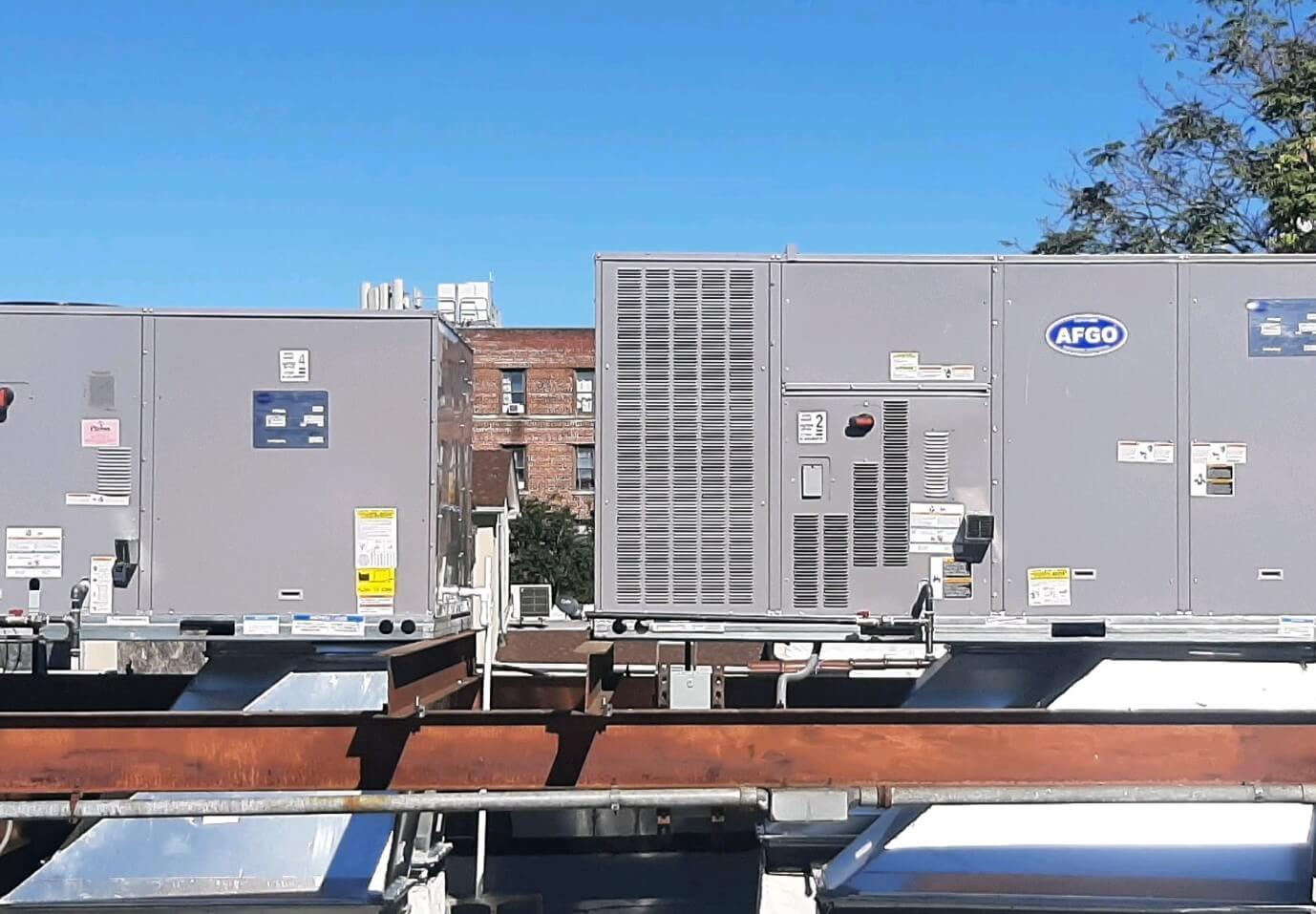
Restaurant HVAC systems are not interruptible during service hours. A dining room without air conditioning in a Raleigh July is a table-service disaster - the impact on covers and revenue is immediate. A kitchen HVAC interruption creates both a food safety compliance issue and an operational collapse. Any rooftop work that affects the restaurant's HVAC system must be scheduled around service hours.
Most Raleigh restaurant buildings run service from 11 AM to 11 PM on peak days. The production window for HVAC-adjacent work on those buildings runs from approximately midnight to 9 AM - before the kitchen begins its prep service. That window is workable for most HVAC curb, flashing, and mechanical equipment work, but it requires a crew that can execute efficiently in that time block and a building manager who is available or on-call during non-standard hours.
For restaurants in multi-tenant buildings - the mixed-use restaurant ground floors on downtown mixed-use corridor and in the downtown core - the HVAC interruption window is further constrained by the commercial or office tenants above. We coordinate the production schedule with the building management, not just the restaurant operator, to avoid overnight work that affects commercial tenants on upper floors.
Frequently asked questions
How do you repair grease-damaged TPO or EPDM membrane on a restaurant roof?
For localized grease deposit damage, we remove the degraded membrane section back to clean undamaged material, inspect the insulation beneath for grease saturation (which requires insulation replacement if present), and install a PVC patch over the affected area with welded or heat-bonded edges to the surrounding field membrane. For larger areas with extensive degradation - a common finding on buildings with multiple concept cycles - we specify a full PVC field membrane for the kitchen area section of the roof rather than continuing to patch a TPO or EPDM system that will degrade again. The PVC section ties into the remainder of the field membrane with an appropriate transition detail.
Can you work on a downtown mixed-use corridor restaurant building without closing the restaurant?
Yes - for the field membrane and flashings work on a restaurant building, production occurs above the roof with no interior disruption to the restaurant operation. The exception is HVAC work, which requires sequencing around service hours as described above. We coordinate the production schedule with the restaurant manager and the building owner, identify the sections that can be worked during the restaurant's operating hours, and schedule HVAC-adjacent work during the early morning window before kitchen prep begins.
Our restaurant is in a multi-story Downtown Raleigh building. What are the access and permitting requirements?
For restaurant buildings in the Downtown Raleigh core - Fayetteville Street, downtown mixed-use corridor, the Warehouse District - roofing work requires a City of Raleigh building permit and, for crane or equipment staging on public right-of-way, a separate right-of-way permit from the city's traffic engineering division. We handle both permit applications as standard pre-construction. For buildings where the restaurant is a ground-floor tenant in a multi-story commercial building, the roofing scope is coordinated with the building owner's facility manager rather than with the restaurant tenant - the restaurant tenant's schedule is a constraint on sequencing, but the roof work is the building owner's project.