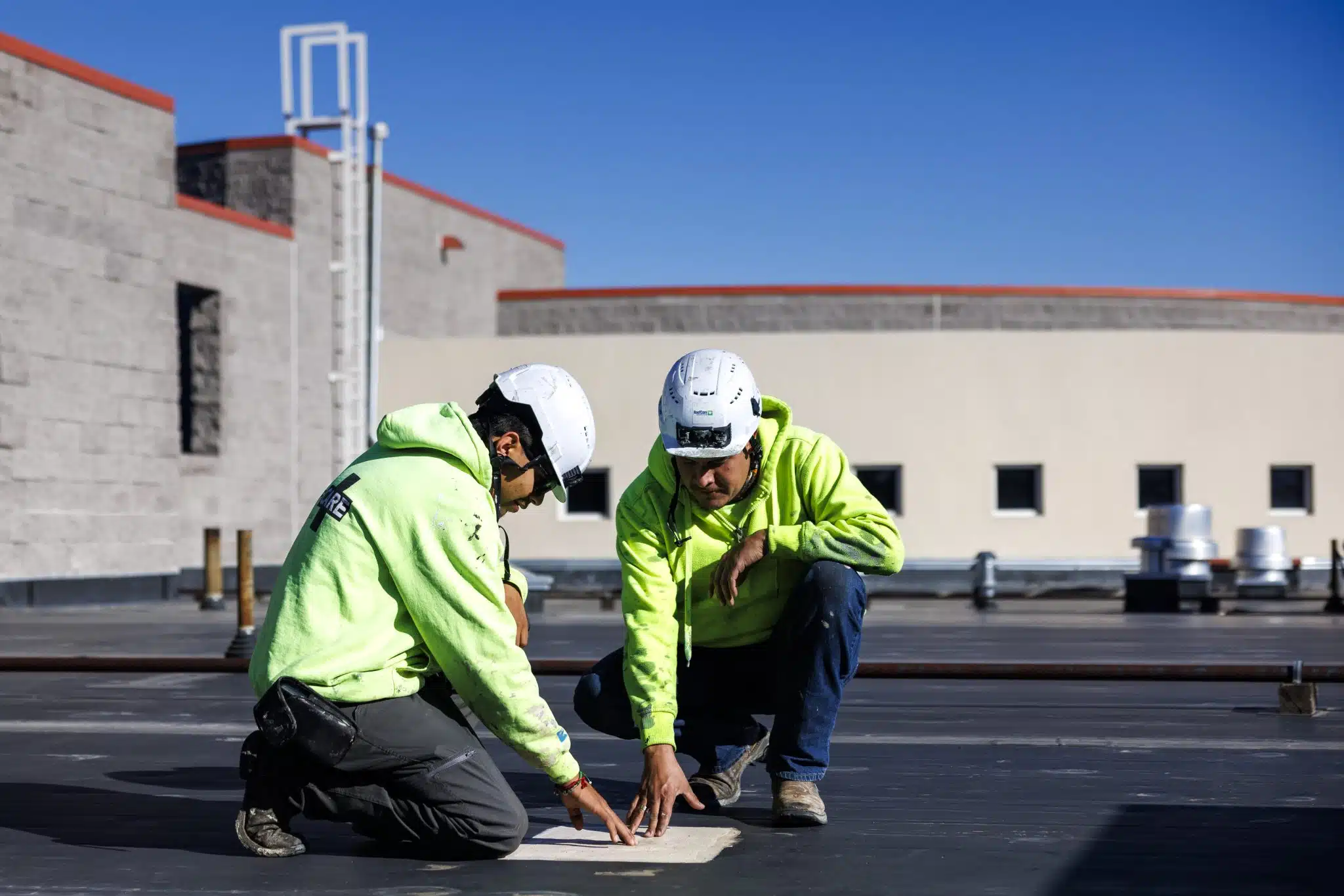
Saturated roof insulation is invisible to a standard visual inspection. Moisture survey services - core sampling and nuclear moisture scanning - quantify what the membrane surface cannot show you, and drive the recover-vs-replace decision with actual data instead of a contractor's best guess.
The most expensive mistake in commercial roofing is recovering a roof over wet insulation. When a recover system is installed over saturated insulation, the moisture is sealed inside the assembly - it cannot dry out, it continues to degrade the insulation and the deck, and it voids the new system's manufacturer warranty. The building owner has paid for a new roof that is already compromised.
The second most expensive mistake is replacing a roof that could have been recovered. A full tear-off and replacement on a commercial building in Raleigh runs $8 to $14 per square foot at current market pricing. A recover system on the same roof with dry insulation runs roughly $5 to $9 per square foot. The difference across 80,000 square feet can easily exceed $300,000.
Moisture survey services - core sampling, nuclear moisture meter scanning, and infrared imaging - quantify insulation saturation before the recover-or-replace decision is made. We combine methods based on the building, the roof age, and the type of insulation assembly to produce a moisture map that shows where the insulation is dry (appropriate for recover) and where it is saturated (requires tear-out in the recover scope or full replacement). That map drives a scope that is honest about what the roof condition actually is.
Core Sampling: The Ground Truth Method
Core sampling is the direct method for assessing insulation moisture content. We cut a 4-inch diameter core through the membrane and all layers of the roof assembly at representative locations across the roof field - typically five to ten cores on a commercial roof up to 50,000 square feet, with additional cores in areas of visible ponding, known past leak locations, or where nuclear scanning indicates elevated moisture. Each core is examined, weighed, and photographed on-site; the insulation is assessed for visible moisture, discoloration, and structural integrity.
Core locations are selected to sample the full range of conditions on the roof - we do not only core in the obvious problem areas. We core representative field sections, drain sumps, areas near penetrations, and any areas where the surface shows signs of past repair or membrane distortion. The core locations and findings are mapped on the roof zone diagram and referenced in the moisture survey report.
Core sampling is also the method for assessing deck condition under the roof assembly. When a core reveals saturated insulation, we extend the core to inspect the deck substrate - metal deck, concrete deck, or plywood - for corrosion, rot, or structural compromise. Deck replacement is a different cost band from insulation tear-out, and building owners need to know about it before the replacement scope is priced, not after the crew opens the roof.
Nuclear Moisture Scanning
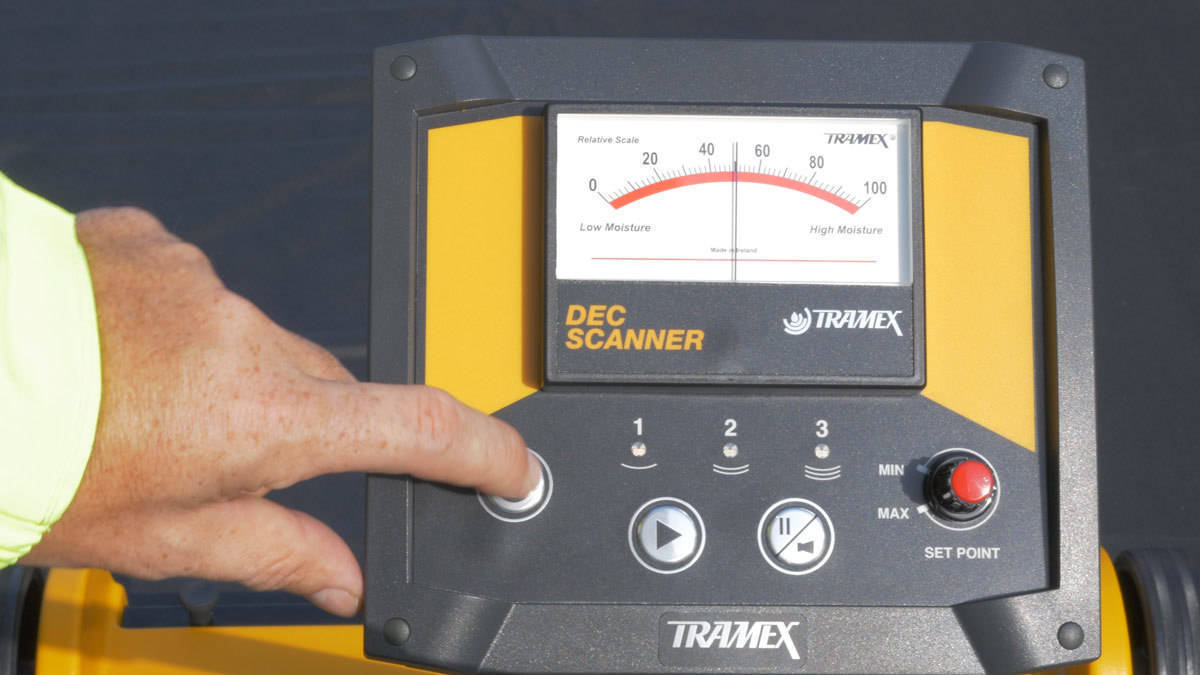
Nuclear moisture meters use low-level nuclear gauge technology to detect the hydrogen content in a roof assembly - which correlates directly with moisture content - without cutting into the membrane. The scanner is walked across the roof field in a grid pattern, with readings taken at regular intervals. Areas of elevated hydrogen content register as potential wet zones, which are then confirmed with core sampling.
Nuclear scanning is useful for covering large roof areas efficiently and identifying the extent of moisture intrusion before committing to the number of cores required to fully characterize the moisture map. On a large commercial building - say, a 200,000 square foot Triangle research corridor warehouse or an a Raleigh research campus research facility - nuclear scanning identifies the wet zones in the field and allows us to target core sampling to confirm those zones rather than randomly sampling across the full footprint.
Nuclear scanning requires a licensed operator. We use certified moisture scanning equipment and maintain the appropriate licensing for nuclear gauge operation in North Carolina. This is not a tool that every roofing contractor can access - it is part of our investment in capabilities that support honest recover-vs-replace analysis rather than defaulting to the option that generates more revenue.
Moisture Survey Report and Scope Implications
The moisture survey report maps every core location and nuclear scan reading onto the roof zone diagram, classifies each surveyed area as dry, suspect, or confirmed wet, calculates the percentage of the roof area with saturated insulation, and provides the recover-vs-replace recommendation with the supporting data.
The industry threshold for recover is typically 25% saturated insulation by area or less - at that threshold, the wet areas can be torn out and replaced as part of a recover scope while keeping the overall project cost well below full replacement. Above 25% saturation, the economics of a recover scope with partial tear-out typically approach or exceed the cost of full replacement, and full replacement becomes the defensible recommendation.
Raleigh commercial buildings that have been through the Hurricane Florence 2018 and Hurricane Helene 2024 rainfall events without formal moisture surveys are candidates for assessment before the next capital decision. Multi-day sustained rainfall events of the type both storms produced are the most efficient mechanism for advancing insulation saturation in roofs with compromised seams - a roof that passed a visual inspection in 2023 may have meaningfully higher moisture content today.
Frequently asked questions
How many core samples does a moisture survey require?
For a commercial building up to 50,000 square feet, we typically cut five to ten cores in representative locations. For larger buildings, nuclear scanning identifies probable wet zones and we target core sampling to confirm those zones - a 150,000 square foot building might require 15 to 25 cores plus nuclear scanning coverage. We document core count and location selection rationale in the survey report, so the findings can be independently evaluated.
Does core sampling damage the roof?
Core cuts are a 4-inch diameter penetration through the membrane and insulation assembly. Each core cut is repaired with membrane patch and sealant at the time of sampling - the repair is the same type of maintenance repair applied to any small-diameter penetration. The repair cost is included in the moisture survey scope. We do not cut cores without patching them the same day.
When does a moisture survey change the replacement scope?
The recover-vs-replace threshold in most scenarios is 25% insulation saturation by area. A survey that finds 15% saturation supports a recover recommendation with targeted tear-out at wet zones. A survey that finds 40% saturation changes the recommendation to full replacement - at that saturation level, the partial tear-out cost in a recover scope makes the project economics equivalent to full replacement, without the clean-slate warranty that full replacement provides. That is the analysis that moisture survey data actually drives.