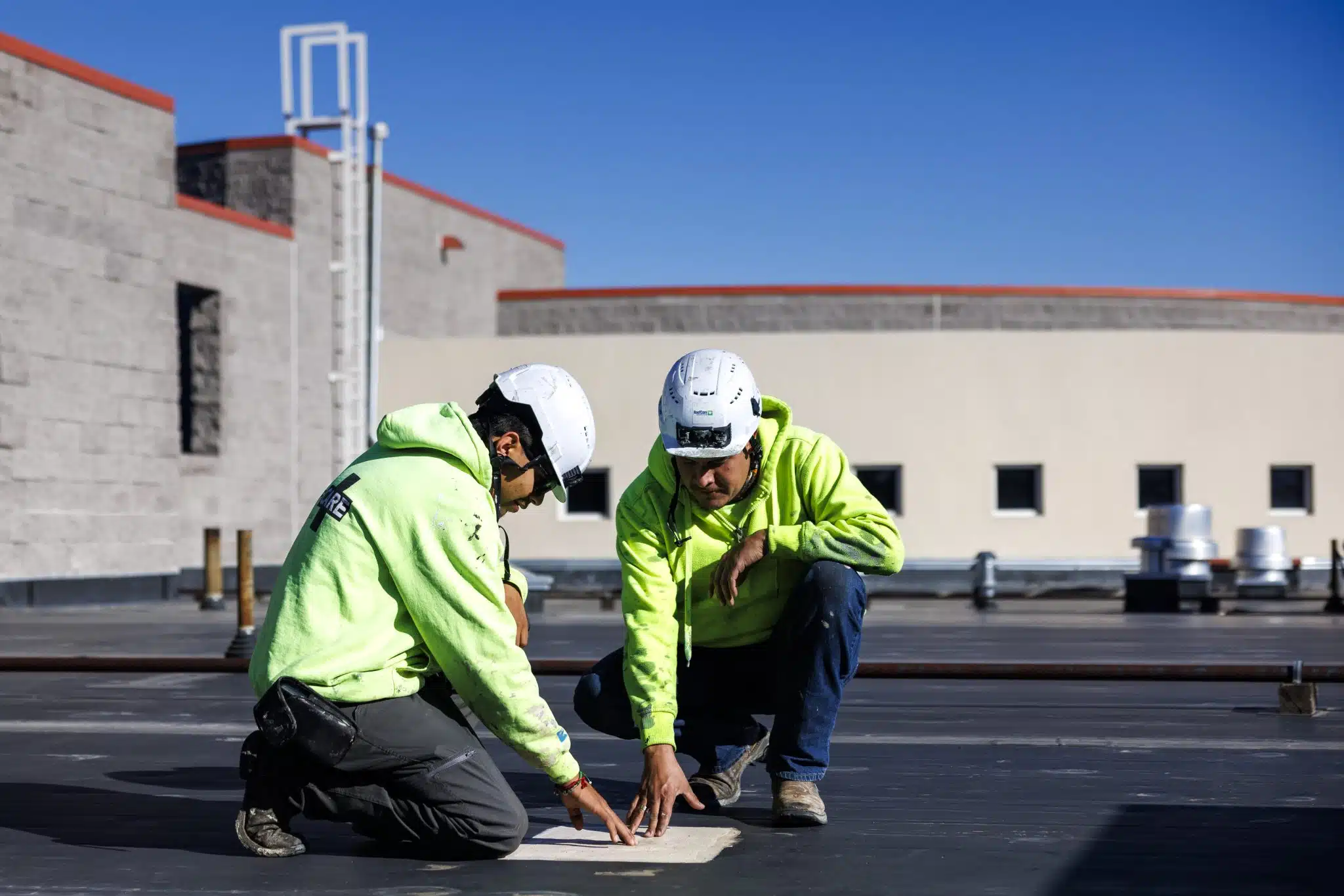
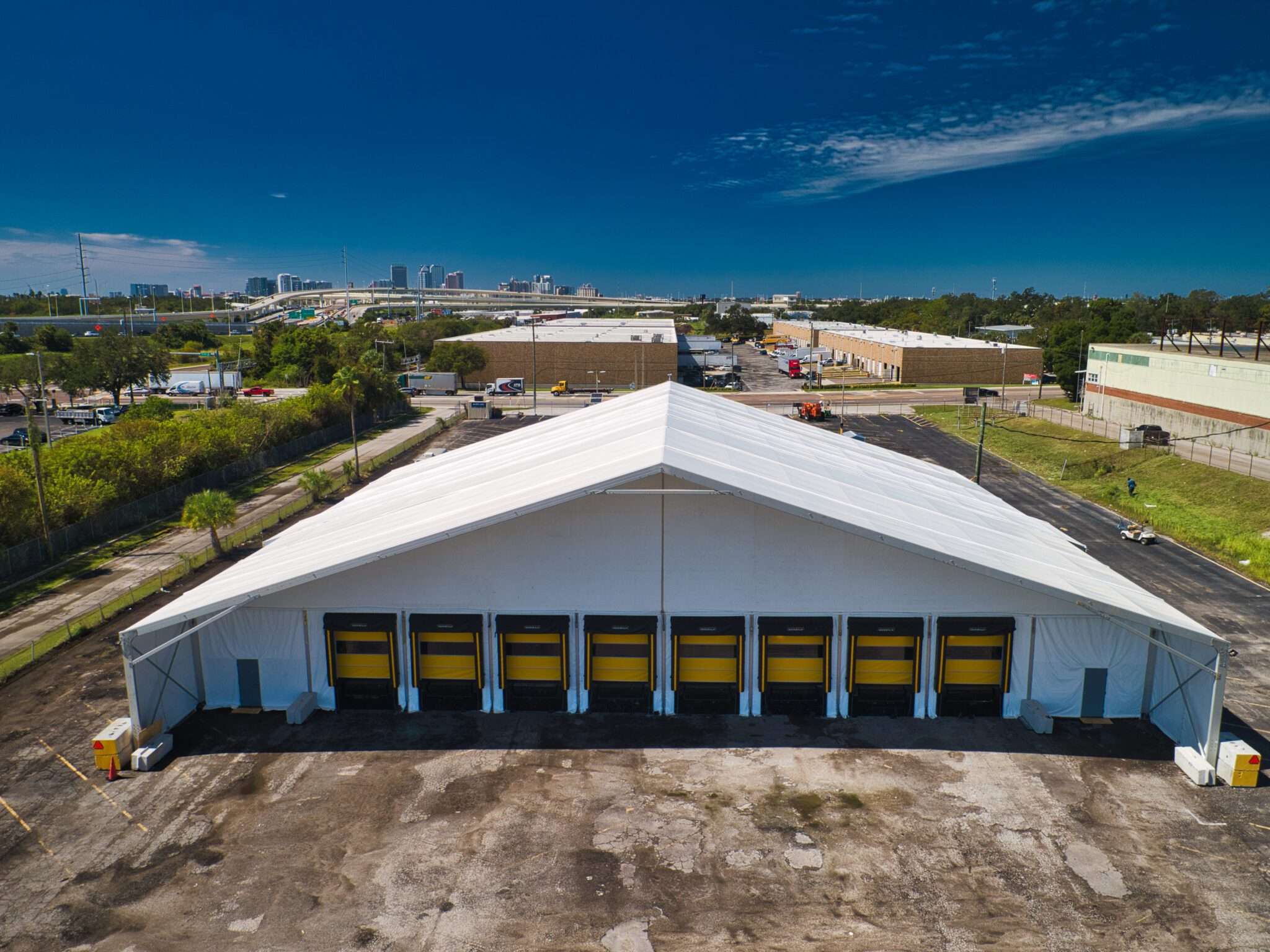
RDU's cargo operations, the I-40 and I-95 distribution corridors, and the Garner and Clayton industrial parks have made the Triangle a major Southeast logistics hub. Distribution buildings are simple buildings with large roofs - they need contractors who can move fast and keep the dock doors open.
The Triangle's logistics and distribution sector has grown sharply. The I-40 corridor from Raleigh west to Triangle research corridor and east toward Johnston County hosts a dense concentration of distribution and fulfillment buildings that grew with the e-commerce expansion. The I-95 corridor through Johnston County - Clayton and Smithfield are the main nodes - connects the Triangle to the Southeast logistics spine and has attracted a second wave of distribution investment. Garner, south of Raleigh on US-70 and I-40, has become one of the most active industrial development corridors in Wake County.
Raleigh-Durham International Airport's cargo operations add a distinct segment: air cargo facilities, cargo logistics buildings, and the ground-side support buildings for the airport's parcel logistics and parcel logistics ramp operations. These facilities share a constraint: operations are 24-hour and roof work cannot interrupt cargo movement.
Distribution and logistics buildings are architecturally simple: large clear-span footprints, flat or low-slope roofs, minimal interior partition. That simplicity makes them good candidates for efficient roof replacements - large unobstructed membrane runs, fewer penetrations per square foot than tech or healthcare buildings, and straightforward drain layouts. The challenge is scale: 200,000-to-800,000-square-foot footprints require a production crew and a material logistics plan that matches the size.
Large-Footprint Production Efficiency
A 500,000-square-foot distribution center in the Garner or Clayton industrial parks is not a difficult roof to replace technically - it is difficult to replace efficiently. The membrane run lengths are long, crane positioning for material lifts matters because multiple lifts per day are required, and the debris removal logistics require planning because the volume of tear-off from a building that size fills multiple dumpsters per day.
We pre-plan crane positioning and staging zones before mobilization using aerial imagery of the site and a site visit to confirm truck and crane access to each face of the building. Material deliveries are sequenced to arrive aligned with production progress - we do not park 40 pallets of insulation in a staging yard for two weeks; we order materials to arrive three to five days ahead of need. That discipline keeps the production yard clear and the site orderly.
Production output on a large distribution building - measured in squares per day - determines whether the project stays on schedule. We staff logistics buildings to produce at a rate that keeps the schedule without sacrificing dry-in discipline. For a 300,000-square-foot building in a typical six-week replacement scope, that means consistent daily output with same-day dry-in on each tear-off zone.
Operational Continuity at RDU Cargo and Distribution Facilities
RDU's cargo facilities - the parcel logistics and parcel logistics ramp buildings, the air cargo warehouse facilities, and the ground logistics buildings on the airport's cargo apron - operate on schedules that do not flex for roofing work. Night sort operations, early morning aircraft turns, and daytime cargo processing are continuous. Roof work at RDU cargo buildings requires advance coordination with the airport's facilities management team, compliance with the airport's contractor access and badging requirements, and a production sequence that keeps cargo operations unobstructed.
We have worked in airport-adjacent environments and understand the access control and operational sensitivity requirements. Every crew member on an RDU-area project clears the airport's contractor badging process before mobilization. Work sequence and staging are planned to ensure that dock doors, dock aprons, and ground-side vehicle circulation remain clear. Any temporary equipment - generators, compressors, material staging - is positioned outside operational traffic lanes with prior approval from the airport facilities coordinator.
The I-40 corridor distribution buildings in Morrisville and the Triangle research corridor-adjacent logistics parks represent a different operational environment - typically single-shift or dual-shift e-commerce fulfillment - where roof work during business hours is feasible with advance coordination with the building's operations manager. We communicate daily production plans to the operations contact and adjust staging to avoid conflicts with inbound and outbound truck traffic.
I-40/I-95 Corridor and Garner-Clayton Industrial Parks
The Garner industrial corridor along US- industrial park hosts a mix of building vintages: older 1980s and 1990s industrial buildings that have been through multiple ownership transitions, and newer 2010s and 2020s fulfillment buildings constructed to current energy code and built with TPO or EPDM systems in their first warranty cycle.
Older industrial buildings in the Garner corridor often carry accumulated repair history - multiple layers of coating, patchwork membrane repairs, and parapet systems that reflect 20 years of band-aid maintenance. The honest first step for these buildings is a moisture survey and a system investigation: how many layers are on the deck, what is the insulation condition, and what does the deck look like under the accumulation. That investigation prevents a replacement scope that produces a warranty void because the replacement system was installed over a saturated insulation stack.
Clayton and Smithfield industrial parks along I-95 are a growing segment of our logistics work. The I- office - typically 40-55 minutes - does not affect our project delivery; we mobilize to Johnston County as a normal service area. Response time for emergency dry-in in the Johnston County corridor is next-business-day; for true emergency wet-building situations, call 919-372-4890 directly.
Frequently asked questions
Can you replace a 400,000-square-foot distribution building roof without shutting down operations?
Yes - this is the standard project configuration for logistics roofing. The production sequence zones the building into manageable sections with daily dry-in on each section. Interior operations continue throughout the project. We coordinate daily production plans with the building's operations manager so dock door availability and truck traffic are never constrained by roofing production. The building is never fully exposed - one zone at a time, dried in each day.
What membrane systems do you specify for large distribution buildings?
TPO 60-mil or 80-mil is our standard specification for distribution and logistics buildings in the Triangle. It handles the UV exposure and hurricane moisture events in the region's climate, its mechanically attached installation method is efficient on large clear-span footprints, and its 20-year NDL warranty terms are appropriate for the asset class. EPDM is an alternative for buildings with high rooftop mechanical traffic. We do not specify systems based on what is easiest to install - the specification follows the building's use, exposure, and warranty requirements.
How do you handle roof work at an RDU cargo facility with airport access requirements?
Contractor badging through RDU's access management process is a pre-construction step - we manage the submission for every crew member assigned to the project. We allow two to three weeks for airport badging. Work zones and staging are planned to avoid interference with cargo operations, and daily production is coordinated with the airport's facilities management contact. Any scope change that affects the approved production plan requires the facilities contact's concurrence before we proceed.