Cinema Roofing in Raleigh: Big Quiet Rooms Under a Big Flat Roof
A movie theater is a handful of very large, very dark, very quiet rooms sitting under one continuous low-slope roof, and that structure is unusual enough to demand its own approach. Each auditorium is a clear span with no interior columns, sometimes eighty to a hundred and fifty feet across, and the audience inside expects to hear a whisper of dialogue without a drum of rain or a rattling rooftop unit intruding. We roof cinemas around Raleigh with the span and the acoustics treated as the two governing problems, because they are what separate a theater roof from an ordinary retail one.
Raleigh's theater inventory ranges from the big stadium-seating multiplexes anchoring shopping centers out toward Brier Creek and the Beltline to dine-in and luxury-recliner houses and the independent and repertory screens that serve downtown audiences near the downtown mixed-use corridor and Fayetteville Street districts. The buildings differ in size and finish, but the roofing fundamentals hold across all of them: long unsupported decks, a dense cluster of mechanical equipment, and an operating schedule that fills the building exactly when most contractors want to be on the roof.
The Long-Span Deck
The clear span over an auditorium is the structural fact that drives everything. A twelve-screen multiplex carries roof spans across each house that a fastener pattern designed for a strip-retail building cannot serve, because long-span steel deck deflects under load and concentrates uplift forces differently than short, stiff framing. Before we specify attachment on a Raleigh theater, we verify the deck type, gauge, and rib depth and run pull-out values against the actual substrate. Shallow ribs on older steel deck hold far less than modern deep-rib deck, and assuming otherwise is how a roof comes loose at the perimeter in the first big windstorm. Where deflection across a wide bay is significant, we may move to an adhered or hybrid system to take the point loads out of the fastener lines at the seams.
Acoustics Live on the Roof
The thing that makes cinema roofing distinct from every other low-slope building is sound. The roof assembly is part of the acoustic envelope, and decisions that are invisible on a warehouse are audible in a darkened auditorium. Rain noise on a thin, lightly insulated deck carries straight into the room; a rooftop unit set on an undersized or poorly isolated curb transmits hum and vibration into the ceiling below. We pay attention to insulation mass, to how rooftop equipment is isolated from the structure, and to keeping the assembly continuous, because on a theater the roof is not just keeping water out, it is keeping the room quiet.
A Hospital's Worth of Rooftop Equipment
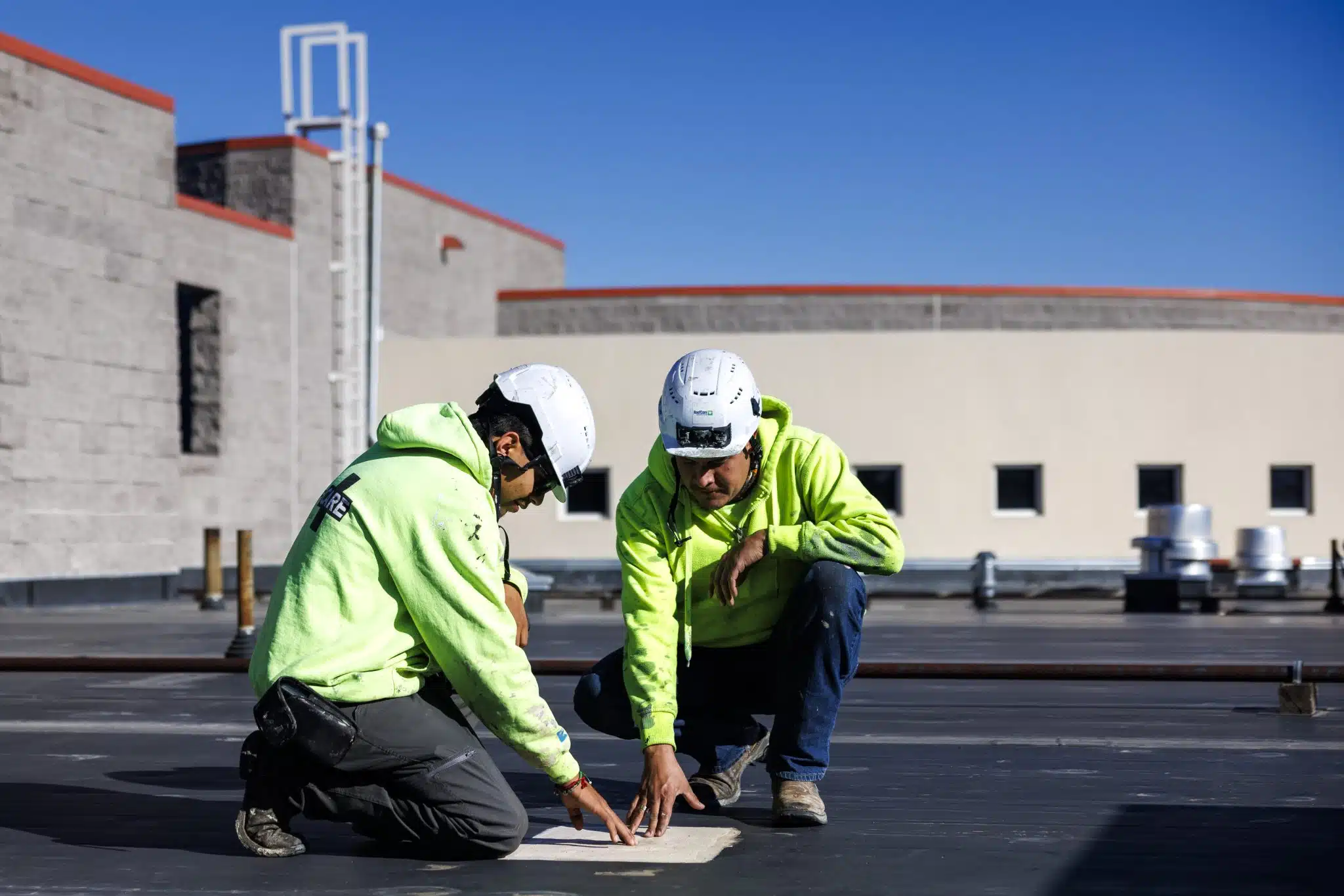
Look at the roof of a multiplex and you are looking at one of the densest mechanical fields in commercial construction. Each auditorium usually has its own dedicated rooftop unit, and on top of that sit concession exhaust fans, makeup-air units, restroom and lobby exhaust, and condensers for the walk-in coolers and freezers that feed the food-service operation. The penetration cluster rivals what we see on a hospital wing. Every curb, duct, conduit, and condensate line gets individually flashed and documented, and the inventory we build before the project starts becomes the map the crew works from so nothing on that crowded roof gets welded over and forgotten.
The Marquee and Entry Canopy
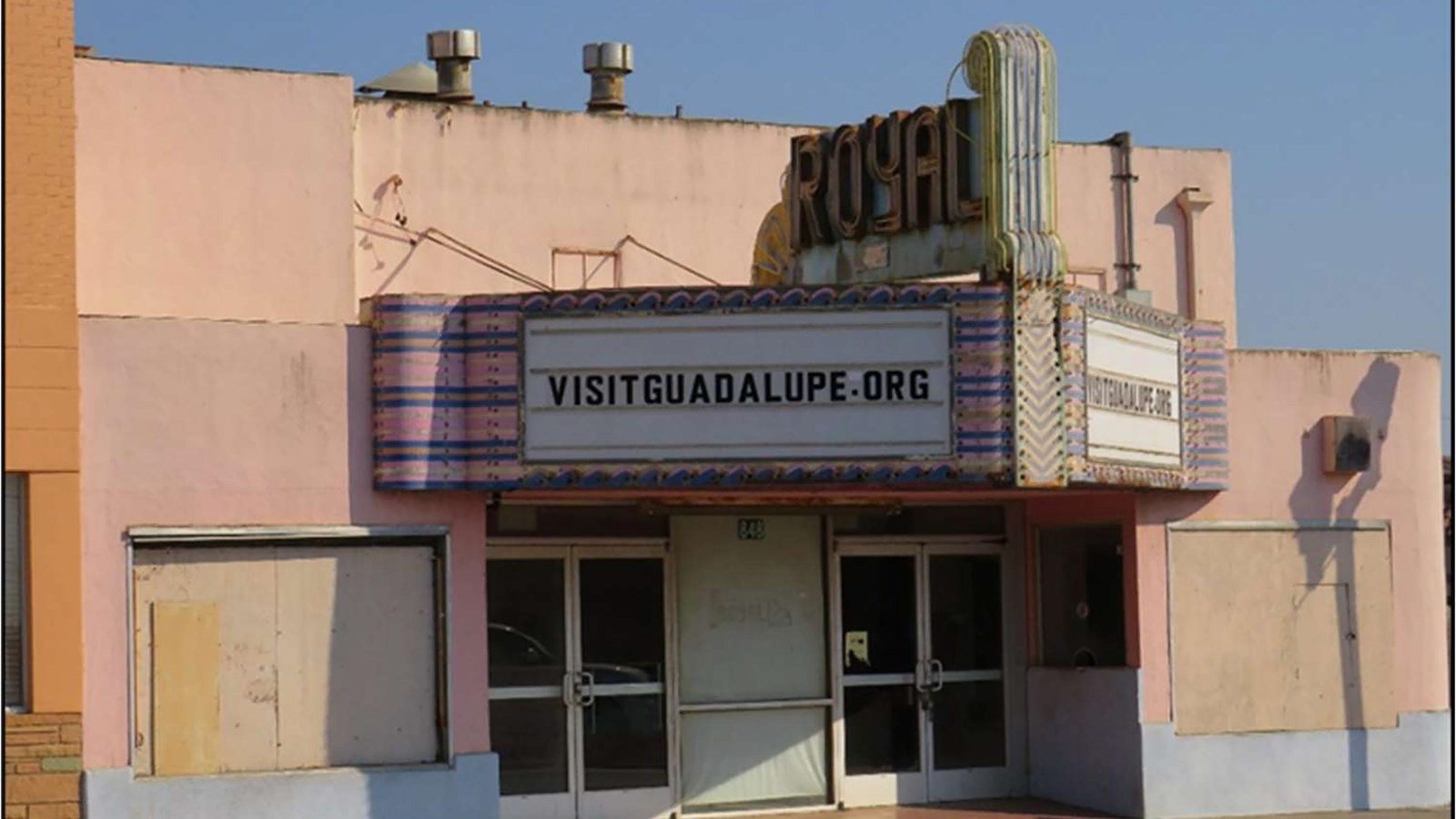
The front of a theater is its own chronic leak story. Marquee signs, entry canopies, and the tall decorative parapets that give a cinema its street presence all create attachment points where supports and fasteners pass through the membrane, and the canopy-to-wall transition over the entrance is one of the most reliable places to find water entry on an older theater. These connections see thermal movement and differential settlement that ordinary retail flashing was never detailed for. We treat every marquee penetration and canopy transition as a separate flashing item and re-detail them as part of the project rather than rolling them into the field membrane and hoping.
Working Around Showtimes
Theaters fill in the afternoons, evenings, and all weekend, which makes them function like a twenty-four-hour building for scheduling purposes. We plan tear-off and dry-in so each section is watertight before the evening's first showings, coordinate any HVAC shutdowns needed for curb or penetration work with facilities management, and keep the noisiest work in the morning windows when the building is empty. Loading-dock access for the HVAC service contractors, conduit runs to the marquee, and the foot traffic funneling toward the entrance all get worked into the sequencing so the roofing operation never collides with a building full of patrons.
Knowing the Deck Before the Tear-Off
Cinemas were built across several construction eras and substrates, and the deck under the membrane decides what the reroof can be. Steel deck over open-web joists accepts mechanical attachment but needs its gauge and ribs confirmed; structural concrete deck calls for an adhered or, where loads allow, a ballasted approach. Before we recommend a recover versus a full replacement on a Raleigh theater, we pull core samples to confirm the existing insulation layers, measure moisture content in the assembly, and total the weight already in place. A roof carrying two old systems and wet insulation is not a candidate for a third layer on top, no matter how convenient an overlay would be, and the core tells us that before we are committed.
Drainage on a Big Flat Roof
A theater roof is a large, nearly flat plane with comparatively few drains, which makes ponding a recurring problem as the deck and insulation settle over the years. Standing water over an auditorium adds dead load to a long span, accelerates membrane aging, and finds any weak seam. We map the low spots during inspection, check the existing drains and overflow scuppers for capacity and blockage, and design tapered insulation to move water where it needs to go. On Raleigh's heavy summer downpours, a roof that drains in minutes instead of days is the difference between a membrane that reaches its warranty and one that fails early over a packed house.
What We Specify for Cinema Roofs
For most Raleigh multiplexes the answer is a 60-mil or 80-mil TPO membrane mechanically attached over tapered polyisocyanurate insulation. The tapered insulation corrects the ponding that accumulates over decades on a big flat theater roof and gets standing water moving toward the drains, and the white TPO surface meets the cool-roof requirements that local reroofing permits increasingly carry. We add reinforced walkway pads on the service routes between rooftop units, because a roof this crowded with equipment sees constant maintenance traffic and the membrane needs protection where boots travel. On concrete decks or where acoustics push us that way, an adhered PVC system can be the better long-term fit, and we recommend based on the deck and the building rather than a default.
Pricing a Theater Reroof
We price cinema work by the roof square after a walk and a core review, with the membrane specification, the existing assembly condition, the penetration density, and the access constraints all factored in. Most multiplex reroofs include tapered insulation design, which adds to the cost up front but pays back by eliminating the ponding that shortens membrane life. The proposal is fixed-price, the scope spells out the canopy and marquee details as line items rather than burying them, and there are no convenient surprises waiting in a change order once the crew is on the roof.
Get a Cinema Roof Scope That Respects the Room Below
Whether you operate a stadium-seating multiplex near the Beltline or an independent house downtown, we will walk the roof, core the assembly, inventory the mechanical cluster, and deliver a scope that protects the span, the acoustics, and the showtimes. Reach out and we will schedule a roof walk around your screening calendar.