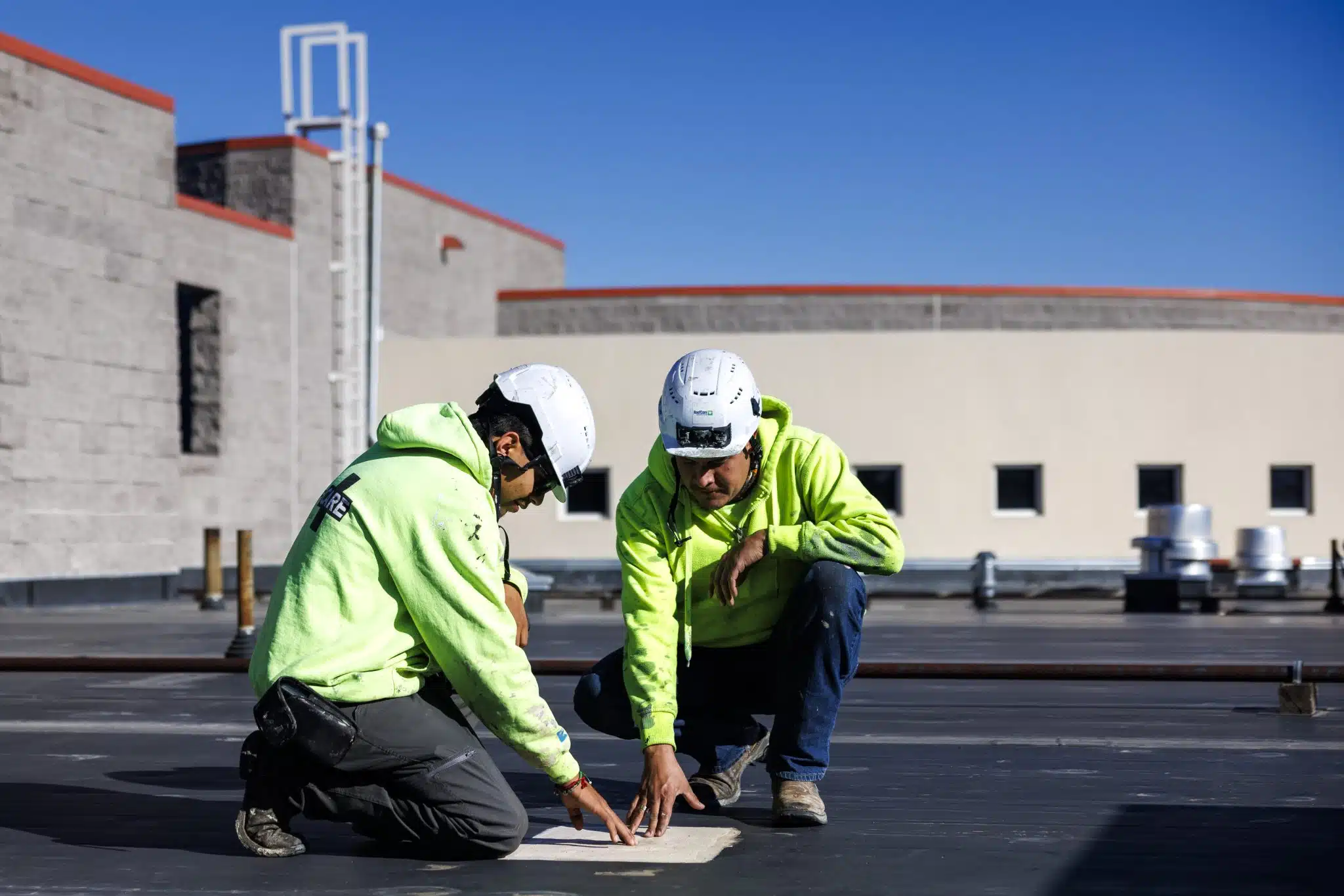
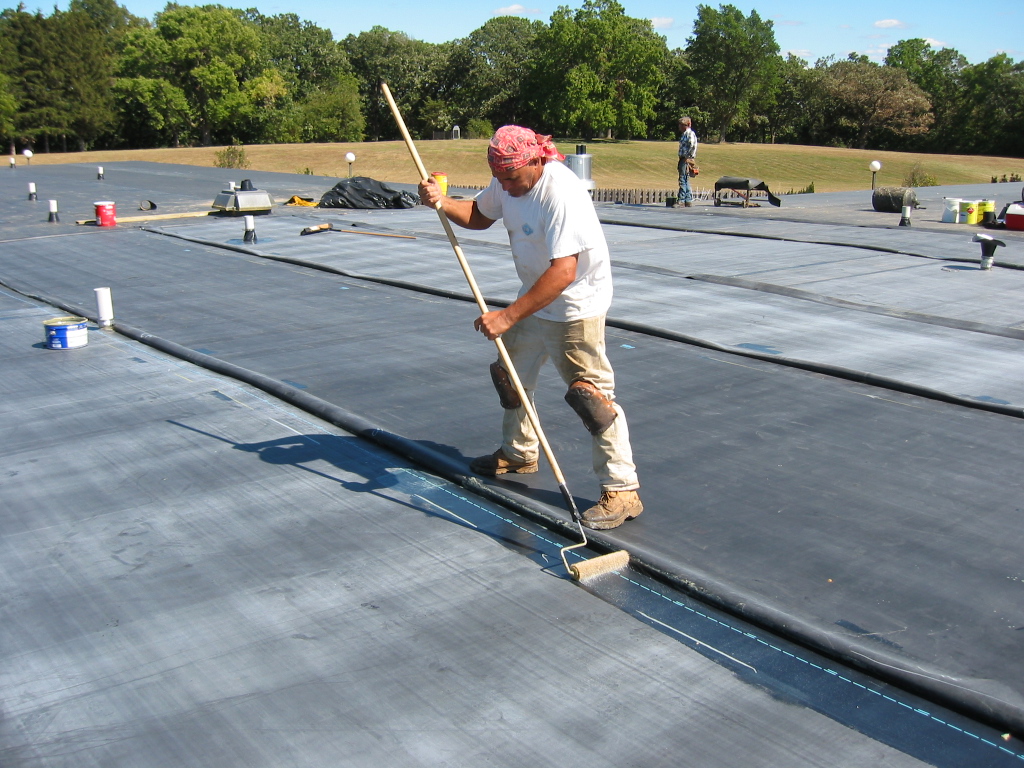
EPDM - ethylene propylene diene monomer - has been the workhorse membrane for Raleigh industrial and warehouse buildings for four decades. We install, recover, and repair EPDM systems on commercial buildings from the Triangle research corridor industrial corridor to the Downtown Raleigh mixed-use core.
EPDM is a synthetic rubber membrane that performs well in the Triangle's temperature extremes - from July rooftop surface temps well above 150F to January ice storm freeze-thaw cycling. Its flexibility at low temperatures is a genuine advantage over stiffer membranes like aged PVC, and its UV resistance is well-established after decades of real-world performance in the Piedmont climate.
The knock on EPDM in the modern commercial roofing market is its adhesive-bonded seams. Early EPDM installations used taped splice seams that are now well into their aging cycle on buildings constructed in the 1980s and 1990s. Many of the commercial buildings in the Triangle research corridor campus area, along US-70, and in Cary's Crossroads retail corridor are on their second or third EPDM membrane - and the common failure mode in older installations is precisely those lap seams.
Current EPDM seaming technology - bonded seam tape systems with factory-applied seam primers - performs substantially better than the tape-and-adhesive approach used in early installations. We install current-specification EPDM with bonded seam tape and document seam completion as part of the quality control process. For repair work on older EPDM systems, we use compatible bonded seam tape materials to bring failed seams back to specification.
EPDM Applications in the Triangle
EPDM is particularly well-suited to several building types common in Raleigh and the broader Triangle market. Industrial and light manufacturing buildings - the warehouse and distribution facilities pushing out along I-40 west toward the Johnston County line and the light industrial parks along US-64 east - have large flat roof fields with relatively low penetration density, high rooftop mechanical traffic, and capital horizons that favor EPDM's long proven service life over the potentially higher initial cost of TPO.
Raleigh commercial buildings with chemical exposure - restaurants, food-processing facilities, laboratories - benefit from EPDM's resistance to grease and many chemical compounds that attack TPO over time. Triangle research corridor campus buildings with rooftop ventilation systems that exhaust research chemicals are common candidates for EPDM in areas adjacent to those exhaust stacks.
The Durham and Chapel Hill markets - driven by regional university campus's medical and research facilities and regional institution-Chapel Hill's institutional campus - include a large inventory of older buildings that were originally spec'd with EPDM. We run active EPDM installation and maintenance accounts across the Triangle and have material staging relationships that allow prompt response for both repair and replacement projects in these corridors.
Installation: Fully Adhered, Mechanically Attached, and Ballasted
Fully adhered EPDM - the membrane bonded continuously to the insulation substrate with EPDM bonding adhesive - is our specification for most Raleigh commercial buildings where wind-uplift calculations require continuous attachment. Fully adhered systems perform better at the building perimeter and at transitions around equipment curbs and parapets, where mechanical stress from wind pressure is highest. Buildings near RDU Airport in the Morrisville and Cary commercial corridors sit in open terrain where wind exposure is higher than typical urban shielded sites.
Mechanically attached EPDM uses fastener rows spaced to meet wind-uplift design requirements. It is installed faster than fully adhered and with less sensitivity to temperature - bonding adhesive application has a narrower temperature window - making it relevant for projects in the Triangle's fall shoulder season when overnight temperatures can complicate adhesive application. We specify mechanically attached EPDM for large-footprint industrial buildings where the wind-uplift design allows it.
Ballasted EPDM - the membrane held down by a layer of rounded river ballast stone - is rarely specified for new commercial construction in the Triangle but is encountered frequently on older Triangle research corridor campus buildings and 1980s-era commercial roofs. Ballasted systems have a specific set of maintenance requirements: the ballast must be redistributed periodically to prevent drain blockage, and replacement or recover of a ballasted EPDM requires structural verification that the deck can carry the ballast weight. We evaluate ballast load calculations as part of any scope involving ballasted systems.
Repairing Aging EPDM in Raleigh
The stock of commercial buildings with original EPDM systems installed in the 1985-2005 period represents a significant repair and recover market across the Triangle. These roofs are at or past their designed service life, and the most common failure pattern is seam failure - the original lap seams have lost adhesion, and the membrane has curled at edges in the years since Hurricane Florence's sustained water loading and Hurricane Helene's multi-day rainfall.
EPDM seam repair using current bonded seam tape technology is straightforward when done correctly: clean the membrane surface, apply seam primer, apply factory-spliced bonded seam tape, roll and probe to confirm adhesion. The failure mode in poor EPDM repair is inadequate surface preparation - applying tape to a contaminated or dusty surface, or skipping primer on a weathered membrane. We prepare surfaces to specification and document it.
When EPDM seam failures are widespread - affecting more than 20% of the seam linear footage - we recommend recover or replacement rather than individual seam repair. Widespread seam failure in an aging EPDM system indicates general adhesive fatigue across the membrane, not isolated incidents. Recovering the roof with a new EPDM or TPO system over the existing substrate (if moisture core sampling confirms sound insulation) is the appropriate scope in that condition.
Frequently asked questions
How long does EPDM roofing last in the Raleigh climate?
A properly installed 60-mil EPDM system carries a 20-year NDL manufacturer warranty and typically performs 20-25 years with semi-annual maintenance. The Triangle's UV intensity is not a significant EPDM aging factor - the membrane's UV resistance is better than most alternatives. The limiting factor is typically seam performance over time, particularly on older installations using original adhesive technology. 90-mil EPDM systems with current seaming technology in industrial applications can exceed 25 years.
Can EPDM be installed in cold weather?
Partially. Mechanically attached EPDM can be installed in colder conditions than fully adhered, since the bonding adhesive application temperature range is the limiting factor in fully adhered systems. EPDM bonding adhesive requires ambient and substrate temperatures above approximately 40F for proper application. In the Triangle's cool season - November through March - we monitor forecast temperatures and schedule adhesive work during the warmest parts of the day. Seam tape systems have a slightly wider temperature tolerance than solvent-based bonding adhesives.
Is EPDM or TPO better for a Raleigh commercial building?
Depends on the application. EPDM is the better choice for buildings with chemical exposure, high mechanical traffic, older buildings being recovered where the existing substrate was originally EPDM, and large simple-footprint industrial roofs where service life and puncture resistance are the primary criteria. TPO is typically the better choice for new construction, buildings with energy code reflectivity requirements, and buildings where manufacturer warranty terms are the primary criterion - most TPO warranties are NDL; some EPDM warranties are not. We present both options with specific performance and cost comparisons during scope development.