Commercial roofing for Class A, B, and C office buildings, suburban office parks, and downtown towers throughout Raleigh, NC.
downtown technology office's headquarters campus at in downtown Raleigh, one of the Triangle's most prominent tech company anchors before its acquisition by research office campus, represents the Class A office environment that has made the Triangle research corridor corridor one of the most competitive commercial real estate markets in the Southeast. Office building owners and property managers throughout Raleigh - from the downtown towers along Fayetteville Street to the sprawling corporate campuses surrounding Triangle research corridor and the suburban offices of North Hills - face roofing requirements shaped by North Carolina's hot-humid climate, progressive LEED market pressure, and the mixed-climate demands that bridge the Deep South and the Mid-Atlantic.
Occupied building protocols in Raleigh office buildings must address both summer heat and the occasional winter ice storm. The standard daily shut-down protocol applies - no open laps overnight, watertight protection over incomplete areas - but in Raleigh, the protocol must also include an ice-storm contingency. If an ice storm is forecast within 48 hours, membrane laps in progress should be fully closed and all temporary protection should be weighted and secured. Ice accumulation on loose temporary tarps or partially completed membrane laps creates a water intrusion scenario that can be more damaging than a summer thunderstorm because the slow melt delivers water over an extended period rather than in a short surge.
LEED options are well-established in the Raleigh-Durham office market. The Triangle research corridor campus has hosted LEED-certified buildings for over two decades, and major tenants in the Triangle market - biotech companies, tech firms, state government agencies - routinely include LEED requirements in their lease specifications. A cool-roof membrane on a Raleigh office building contributes to the LEED Heat Island Effect credit, which reduces the building's contribution to Raleigh's growing urban heat island - a genuine environmental concern in a metro area that has added more than 400,000 residents since 2000. regional institution Energy Progress offers commercial cool-roof rebates for existing buildings; confirm current program requirements before specifying the membrane.
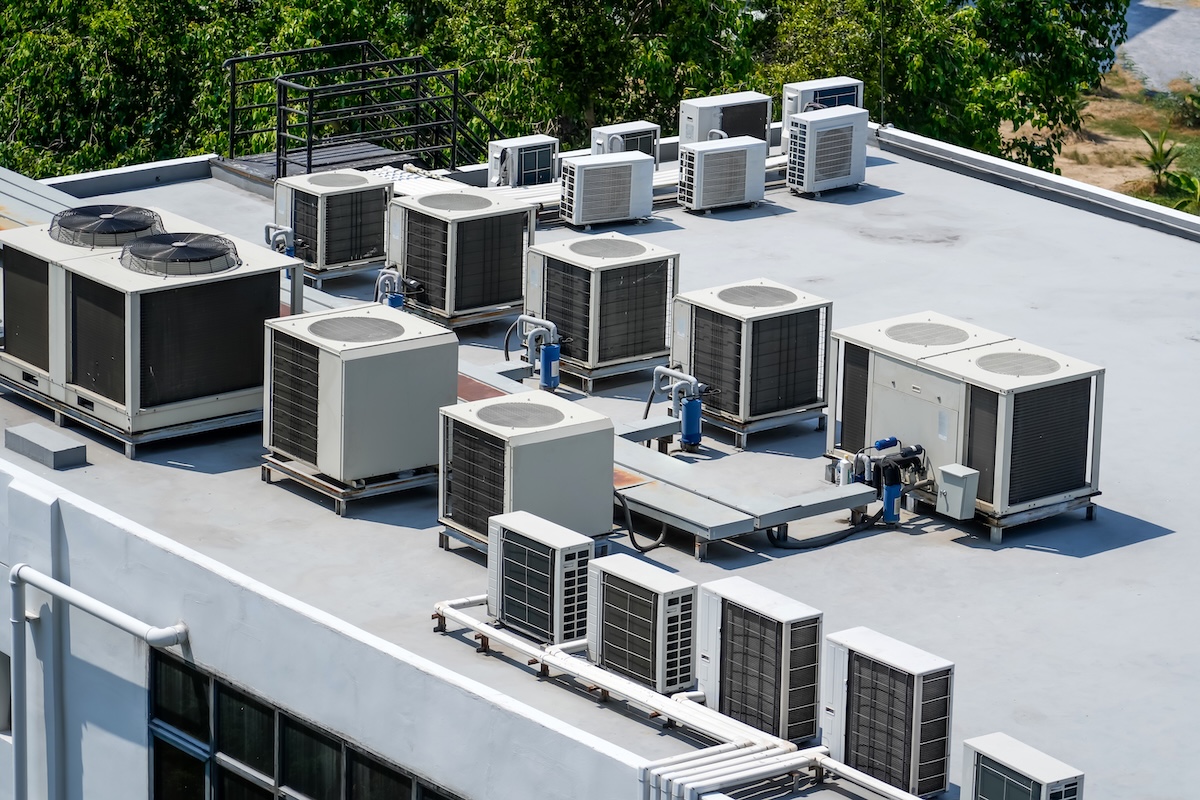
HVAC coordination on a Raleigh office building is complicated by the region's long cooling season, which runs from April through October and creates tenant dependency on rooftop HVAC equipment for six or more months of the year. Schedule equipment isolation work for the brief shoulder windows - March and early November - when outdoor temperatures make brief HVAC outages tolerable. Raleigh's summer heat and humidity combine to make a full HVAC outage during July or August an operational crisis for any office tenant; never schedule equipment isolation work in those months without a credible backup cooling plan that you have tested before construction begins.
North Carolina energy code (based on ASHRAE 90.1, climate zone 3A) requires minimum R-25 CI for commercial roofs and cool-roof reflectance compliance for large office buildings. The Triangle's competitive Class A office market - particularly the LEED-seeking Triangle research corridor cluster - typically targets above-code performance. regional institution Energy Progress's commercial energy efficiency program offers rebates for above-code insulation and reflective membranes on existing buildings, which can partially offset the incremental cost of upgrading from R-25 to R-30 on a large Raleigh office building re-roof.
Lease obligations in Raleigh's Class A office market are shaped by the mixed tenant base of tech companies, government contractors, healthcare administrators, and financial services firms. Government contractor tenants with SCIF (Sensitive Compartmented Information Facility) requirements often have lease provisions that restrict overhead construction work entirely during operating hours - a requirement that must be identified and accommodated before the project schedule is set. Review all active lease abstracts before scheduling and provide formal written notice to all tenants at least 30 days before construction begins; Raleigh's professional office tenant community has low tolerance for construction surprises.
Wake County and the City of Raleigh both require commercial roofing permits, a licensed contractor, and inspections. The NCLBGC license requirement (Class II building contractor or above) applies to large commercial projects. The City of Raleigh's Development Services department has implemented an online permit portal that has reduced processing times for projects under $500,000; larger projects require full plan review, which has run four to eight weeks in recent permit cycles. Engage the department early at the pre-application stage to confirm current requirements.
Preventive maintenance on a Raleigh office building should be scheduled in April and October, with post-storm assessments after tropical events. The Triangle's combination of ice storm risk in winter and tropical weather risk in summer means that there is no season where significant weather events are impossible. The bi-annual inspection program should document drain condition, membrane seam integrity, and parapet flashing status, with particular attention to ice-storm damage at wall-to-roof transitions that can open seams without creating an immediately visible interior leak. Budget $0.13 to $0.18 per square foot annually for a well-managed Raleigh Class A office building roof.
Contractor selection for a Raleigh office building project should prioritize familiarity with Triangle-area office tenant cultures, NCLBGC licensing, and ice-storm damage experience alongside the standard installation quality criteria. A contractor who only works in warmer, less storm-varied markets will not have the contingency planning protocols that Raleigh's combination of summer tropical risk and winter ice-storm risk requires. References from other Triangle research corridor campus operators and downtown Raleigh property managers are the most relevant qualification source.
- How should a Raleigh office building prepare for an ice storm during an active roofing project?
- If an ice storm is forecast within 48 hours, fully close all in-progress membrane laps and secure all temporary protection with weights or mechanical fasteners. Loose temporary tarps with ice accumulation become water intrusion sources during the melt cycle. Require that the contractor's daily shut-down protocol include a weather-watch component and explicit ice-storm preparedness steps.
- Does regional institution Energy Progress offer rebates for Raleigh office building cool roofs?
- Yes. regional institution Energy Progress's commercial energy efficiency program offers rebates for cool-roof installations and above-code insulation on existing buildings. Confirm current program requirements and rebate amounts at the beginning of project planning - not at project completion - to ensure that the specified system qualifies and that application windows are met.
- What LEED credits apply to a Raleigh office building re-roof?
- Heat Island Effect (cool roof), Stormwater Management (if drainage improvements are included), Materials and Resources (recycled content, regional sourcing), and potentially LEED Existing Buildings recertification credits for energy performance improvements. Coordinate with the project's LEED documentation team before selecting membrane and insulation products.
- How should HVAC isolation be scheduled for a Raleigh office building re-roof?
- Schedule equipment isolation work for March or early November - the brief shoulder windows when outdoor temperatures make short outages tolerable. Never schedule HVAC isolation during July or August without a tested backup cooling plan. Raleigh's six-plus-month cooling season makes summer HVAC outages an operational crisis for any office tenant.
- What contractor license is required for a large Raleigh office building roofing project?
- The North Carolina Licensing Board for General Contractors (NCLBGC) requires a Class II or Class I contractor license for projects above $1 million. The roofing subcontractor must be properly licensed or work under the general contractor's license. Verify current license status at nclbgc.org before contract execution.
Frequently asked questions
Is built-up roofing still installed on new commercial buildings in Raleigh?
Rarely, and effectively not at all for new construction. The hot-mopping logistics, equipment requirements, and fume management make new BUR installation noncompetitive against TPO, modified bitumen, and EPDM for comparable service life. The entire BUR market in the Triangle is assessment, repair, and replacement of the existing inventory - primarily the 1960s through 1980s commercial building stock that predates the single-ply era.
How do I know if my Raleigh building's BUR system needs replacement versus repair?
Core pull data is the only honest answer. A BUR surface that looks marginal may have dry insulation and be a legitimate recover candidate. A surface that looks serviceable may have 40 percent saturation and need full replacement. Visual assessment of BUR by any contractor cannot substitute for core pulls. We pull cores, show you the data, and make a recommendation based on what we find - not based on the project size we want to close.
My building has had multiple BUR patches applied over the years. Does that affect the replacement decision?
Patch history often complicates the recover option more than it affects the replace decision. Repeated patches with incompatible materials - asphalt over coal tar, cold-process over hot BUR - create adhesion problems for any recover system. If the patch history is complex and the new system cannot achieve adequate adhesion to the existing substrate, full tear-off is the only path to a warranted installation. We document patch history during inspection and flag incompatibility risks before any recover scope is proposed.
Do you handle BUR replacement on large industrial buildings along the I-40 and US-1 corridors?
Yes. Large-footprint BUR replacement on industrial buildings in the southwest Wake County and Johnston County markets - buildings of 100,000 to 400,000 square feet - is a significant part of our work. These projects require detailed pre-construction staging plans, sequenced tear-off and daily dry-in to protect active operations below, and sometimes multi-season project scheduling for facilities that cannot absorb a full roof disruption in a single mobilization.