A food plant fights its roof from two directions at once
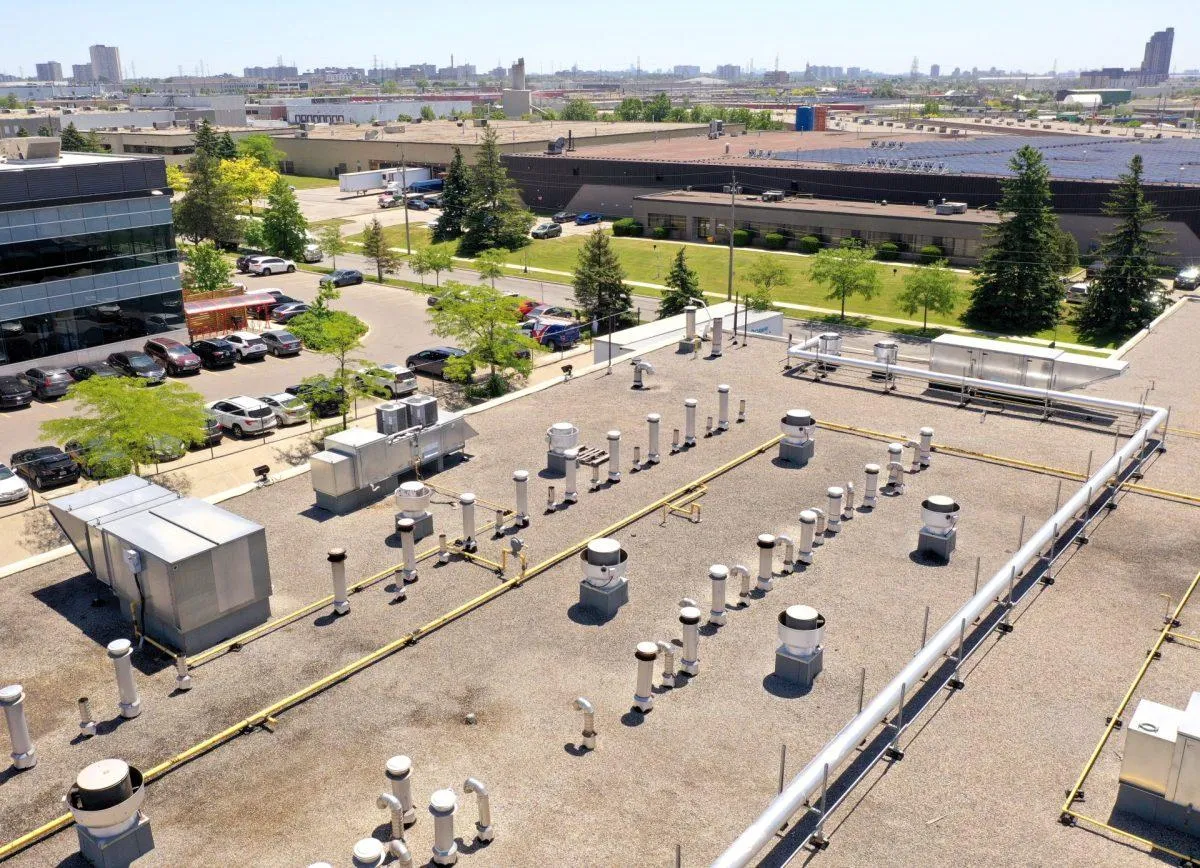
A food processing roof has to survive humidity pushing up from inside and heavy equipment bearing down from above. Cookers, washdown, and steam from the production floor drive warm wet air into the roof assembly, while the refrigeration condensers, evaporative units, and process equipment sitting on the roof load the deck and punch it full of penetrations. Get either one wrong and you do not get a slow leak - you get condensation inside the assembly, corroded deck, and a moisture path over a food contact zone that turns a roofing problem into a food-safety problem. Raleigh's food and beverage producers cannot treat the roof as routine, and neither do we.
Wake County and the surrounding counties carry a real food-production base: bakeries and commissaries serving the region's grocery and restaurant volume, beverage and bottling operations, cold-storage and distribution kitchens near the I-440 and I-40 freight routes, and the long-standing agricultural processing tied to eastern North Carolina that feeds plants on the city's southern and eastern edges. These buildings run hard, and their roofs take a beating that an office building never sees.
What makes a processing roof its own animal
Material choice starts with the sanitation rules, not the spec sheet
Over a USDA- or FDA-regulated production area, the membrane, the adhesives, the primers, and the sealants all have to be acceptable for use in a food environment. Plenty of standard roofing adhesives carry solvents that have no business near food production. We confirm material acceptability against the plant's food-safety plan before we specify anything that goes above a contact zone, and we keep the documentation so it is there when an inspector asks.
Washdown and cook humidity drive moisture into the assembly
The interior moisture load in a wet-process plant is relentless. Without the right vapor control for Raleigh's hot, humid climate, that moisture condenses inside the roof, soaks the insulation, and corrodes a steel deck from below with no surface leak to warn you. We treat vapor management as a design decision specific to your process and our climate zone, and we will not recover over an assembly we suspect is already wet - a moisture survey settles that before the scope is final.
Refrigeration loads and penetrations dominate the rooftop
Cold-storage and chilled-process areas carry serious rooftop refrigeration: condensing units, evaporative equipment, and the refrigerant and condensate lines that serve them. That is real structural load plus a dense field of penetrations, each one a potential leak. We verify the deck can carry what is up there, flash every penetration as its own detail, and pay special attention to drainage over freezer and chill rooms, where ponding adds thermal load and accelerates deck corrosion.
Drainage over cold rooms cannot be an afterthought
Standing water over a freezer is worse than standing water anywhere else - it loads the structure and drives condensation through the cold roof assembly. We use tapered insulation to move water to drains and scuppers at the low point of each bay and confirm the drainage layout matches the way the refrigeration system actually runs.
The sanitation window runs the schedule
Processing plants in this market commonly run two or three shifts with a single weekly sanitation window as the only time the floor is down and cleaned. Any work that opens the envelope over an active production area lives inside that window, with the QA manager confirming the floor below is cleaned and protected before we start. We build the phasing around your production calendar - not the other way around - and we dry the building in before the line comes back up. Work over refrigerated rooms also gets coordinated with your refrigeration team so we never compromise the cold chain.
What a food plant roof inspection covers
- Material acceptability for every product proposed over a food contact zone, documented for your food-safety plan
- Vapor retarder strategy and signs of moisture entrapment in the existing assembly, with cores where warranted
- Deck load capacity and condition under rooftop refrigeration and process equipment
- Every penetration for refrigerant, condensate, gas, and process lines, flashed and logged individually
- Drainage and ponding over freezer and chill rooms, where standing water does the most harm
- Parapet and edge condition, plus exhaust and intake hood flashings over the production floor
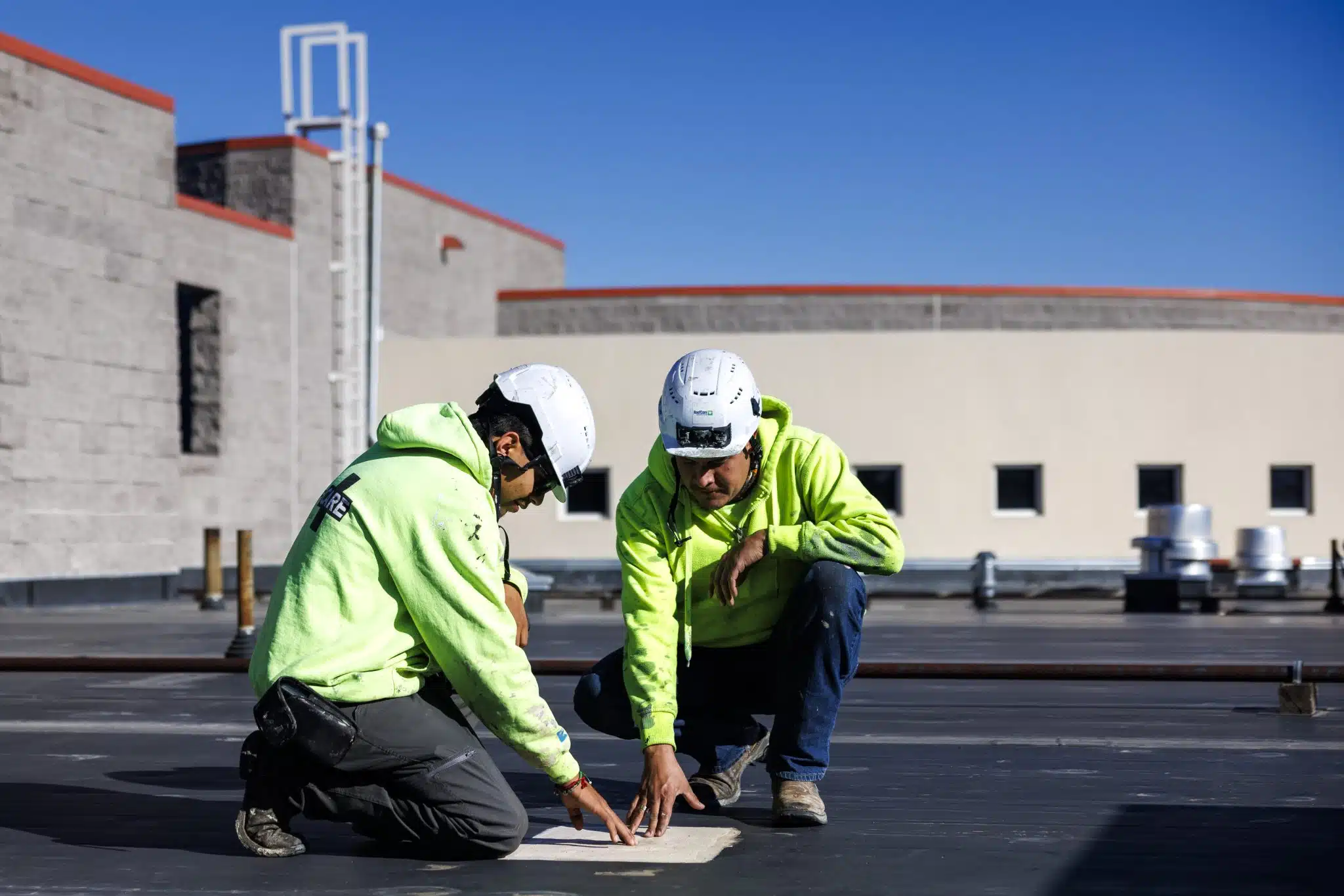
You get a marked roof diagram, photographed deficiencies, a moisture log, and a recommendation that separates repair from section replacement from full replacement - and that QA can pull during an audit.
Questions we hear from Raleigh food and beverage plants
Can you use any roofing material over our production floor?
No. USDA- and FDA-regulated areas require the membrane, adhesives, primers, and sealants to be confirmed acceptable for food environments. We check each product against your food-safety plan with your QA team before it goes over a contact zone.
Our roof looks fine but the deck is rusting - why?
Almost always interior moisture. Washdown and cook humidity condense inside the roof assembly and corrode the steel deck from below, with no surface leak to tip you off. The fix starts with the right vapor control and, often, replacing wet insulation rather than recovering over it.
How do you schedule around our production shifts?
Work that opens the roof over the line goes into your weekly sanitation window or a planned shutdown, with QA confirming the floor is cleaned and protected first. We phase around your calendar and dry the building in before production resumes.
How do you handle drainage over our freezer rooms?
Ponding over a freezer adds load and drives condensation through the cold assembly, so we use tapered insulation to direct water to drains and scuppers at the low point of each bay and confirm the layout fits how your refrigeration system runs.
What if a leak hits during active production?
That is a food-safety event, not just a maintenance call. Our response is immediate contact with your QA and facilities team for a product-hold decision, priority mobilization for temporary dry-in, and documentation for your incident reporting. We provide emergency contact information at closeout on every food-plant project.
Get a food processing roof assessment in Raleigh
Whether you run a bakery, a beverage line, a cold-storage kitchen, or an agricultural processing plant in the Raleigh area, we will walk the roof, check the deck under your refrigeration loads, confirm material acceptability for your sanitation rules, and deliver a documented scope you can budget and defend. Reach out through our contact page to set up a visit.