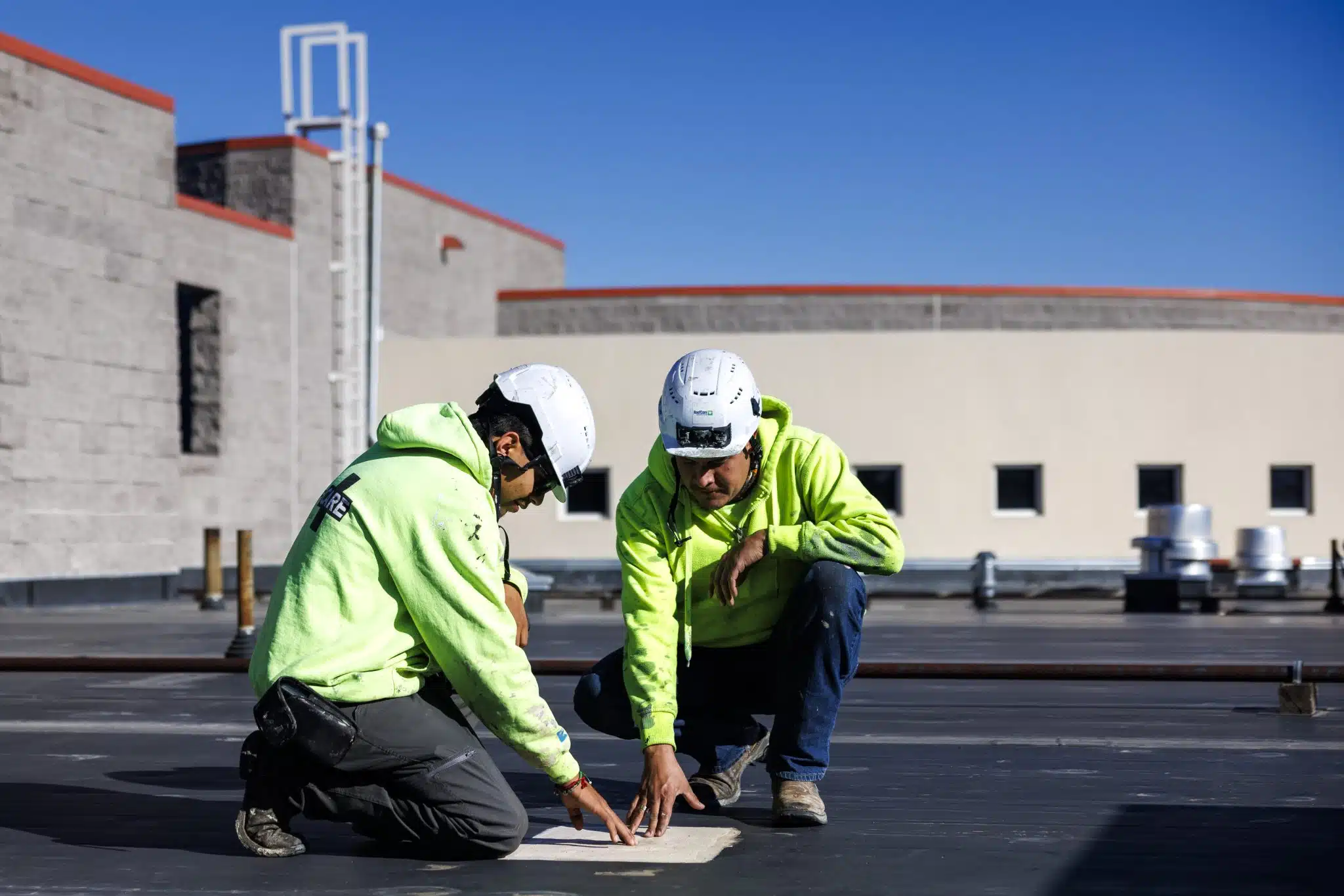
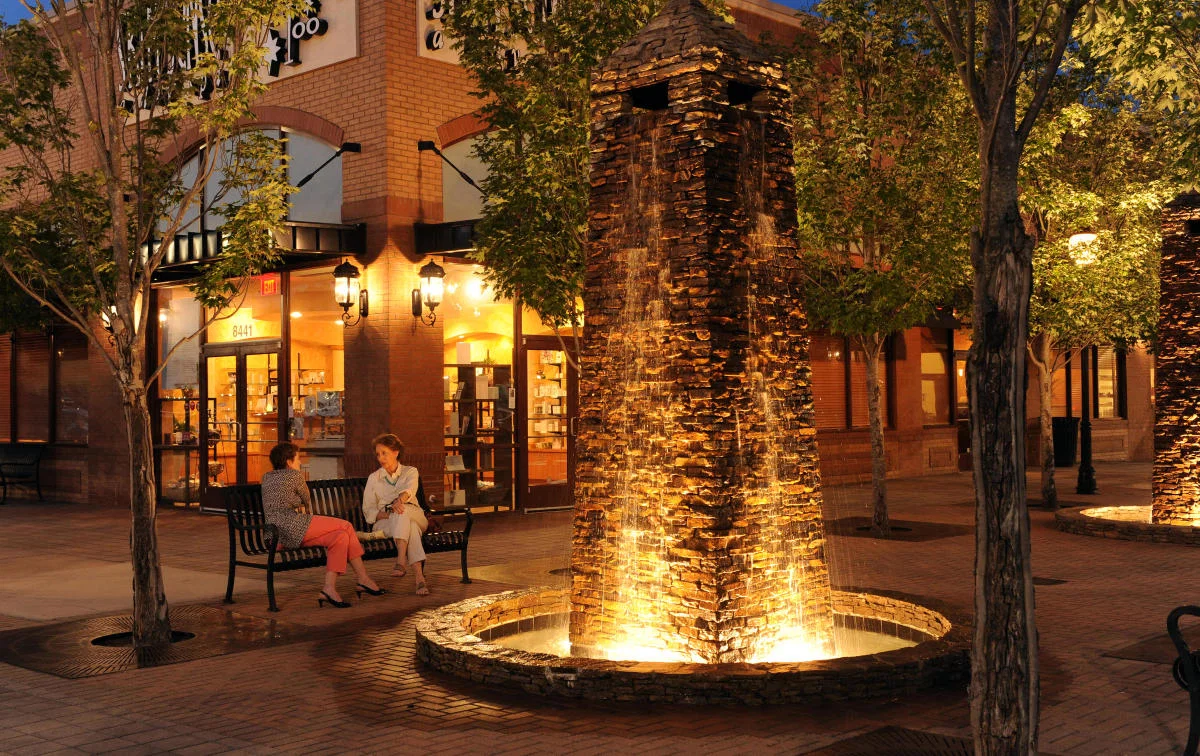
Brier Creek sits on the northwest edge of Raleigh, adjacent to RDU International Airport and straddling the Wake-Durham county line. The I-540 outer loop has made this one of the Triangle's fastest-growing corporate and logistics development zones.
Brier Creek is defined by its geography: RDU International Airport to the northwest, the I-540 / I-40 interchange to the south, and the Leesville Road corridor running through the middle. That geography has made it one of the Triangle's primary corporate campus destinations - accessible from Durham, Raleigh, and Cary without running the full length of any of them.
Brier Creek Commons, rooted in the regional retail cluster at Brier Creek Parkway and T.W. Alexander Drive, is surrounded by a ring of corporate office parks, hotel clusters, and the distribution and logistics facilities that have expanded aggressively along the I-540 corridor since the outer loop opened its final segments. The tenant mix ranges from Fortune 500 regional facilities to logistics operators to the medical device and biotech companies that prefer proximity to RDU for supply chain and personnel reasons.
Proximity to RDU Airport creates a specific condition for buildings in the Brier Creek footprint: open terrain exposure. The area west of Leesville Road and north of I-540 is relatively flat and open compared to the more sheltered commercial areas closer to the Raleigh urban core. That exposure matters for wind-uplift specification on commercial roofs - and it is one of the factors we evaluate first when scoping replacement or recovery work in this district.
RDU-Adjacent Corporate Campuses
The corporate office parks along Brier Creek Parkway, T.W. Alexander Drive, and the Airport Boulevard corridor are primarily post-2000 construction - three- to five-story office buildings, many with ground-floor retail or amenity space, designed for corporate campus occupancy. These buildings typically run TPO or EPDM single-ply systems with mechanically attached fastening. The open terrain around RDU places these buildings in a higher wind-exposure category than comparable buildings in the urban Raleigh core, which means the fastener pattern density specified for compliant wind-uplift resistance needs to reflect actual site exposure, not generic commercial defaults.
Several of the larger corporate campuses in the Brier Creek zone have internal facilities teams or third-party property management firms who maintain asset records and capital plans. For these clients, our value is in providing documented condition assessments and capital horizon projections that integrate with their existing asset tracking - not just showing up with a repair quote. We produce inspection reports in formats that work with standard commercial property management platforms.
The hotel cluster along Brier Creek Parkway - multiple full-service and select-service hotel properties catering to the RDU traveler market - operates on brand standards that require contractor documentation, safety compliance, and access coordination with front-desk and operations management. We handle brand-standard compliance requirements as part of standard pre-mobilization on hospitality work.
Brier Creek Commons and Retail District
Brier Creek Commons - the power center and lifestyle retail cluster at T.W. Alexander Drive - is one of the higher-traffic retail concentrations in northwest Wake County. The anchor and junior anchor buildings in the Commons are primarily late-1990s and early-2000s construction, which means their original roof systems are in the 20-plus-year range. Many of these buildings have never had a comprehensive moisture survey; the maintenance history is a series of patch repairs at visible leak points.
Large footprint retail buildings at Brier Creek Commons - in the 80,000 to 200,000 square foot range for the big-box anchors - require logistics planning that accounts for the center's daily traffic pattern. Early-morning tear-off before the center opens, crane positioning that does not block the primary parking ingress lanes, and material staging that does not conflict with delivery trucks running the service road are all pre-construction decisions that determine whether the project runs smoothly or creates tenant and landlord relations problems.
Retail national chain tenants at Brier Creek Commons often maintain their own roofing maintenance standards and preferred manufacturer lists. We are familiar with the common national retail chain requirements and can work within those specifications while maintaining the quality standards that protect the building owner's warranty investment.
I-540 Logistics and Distribution Corridor
The distribution and logistics buildings along the I-540 corridor north of Brier Creek - stretching from the RDU area northeast toward the Express lanes - represent a growing category of commercial roofing work in this district. Large-footprint industrial and logistics buildings in the 200,000 to 500,000 square foot range have their own distinct roofing profile: lower parapet walls, simpler drainage geometry, but large absolute square footage that demands efficient crew sequencing and material delivery logistics.
Wind uplift is the dominant design consideration for large-footprint low-rise buildings in the open terrain near RDU. Buildings in the I-540 open terrain exposure band need fastener patterns designed specifically for that wind environment - the generic pattern used for an urban mid-rise building is not adequate for a 400,000 square foot distribution center on flat terrain with unobstructed wind fetch from the northwest.
Many of the logistics operators in this corridor are managing national or regional real estate portfolios through REITs or institutional real estate platforms. For these owners, we can build multi-building inspection and capital planning programs that provide a consolidated view of roof asset condition across the Brier Creek cluster - useful for prioritizing capital allocation across buildings at different points in their warranty cycles.
Frequently asked questions
How does RDU Airport proximity affect roofing work in Brier Creek?
RDU airspace has height restrictions that affect crane equipment selection for some locations near the runway approach paths. We check FAA obstruction requirements for any project in the Brier Creek-to-RDU corridor before specifying crane equipment. The more common impact is open terrain wind exposure - buildings near the airport are in a higher exposure category than urban Raleigh buildings, which drives more conservative fastener pattern specifications.
Can you handle the logistics for a large Brier Creek Commons retail building replacement?
Yes. Brier Creek Commons logistics planning - crane positioning, delivery windows, debris removal without blocking the service road or tenant parking - is a pre-construction planning exercise we have done on comparable power center sites. We work with the center's property management team to develop the plan before mobilization.
Do you work on the I-540 corridor warehouse and distribution buildings?
Yes. Large-footprint industrial buildings in the Brier Creek and I-540 logistics corridor are part of our regular service area. Wind uplift specification for open terrain industrial buildings, efficient large-footprint sequencing, and capital planning for institutional portfolio owners are all things we handle routinely in this district.