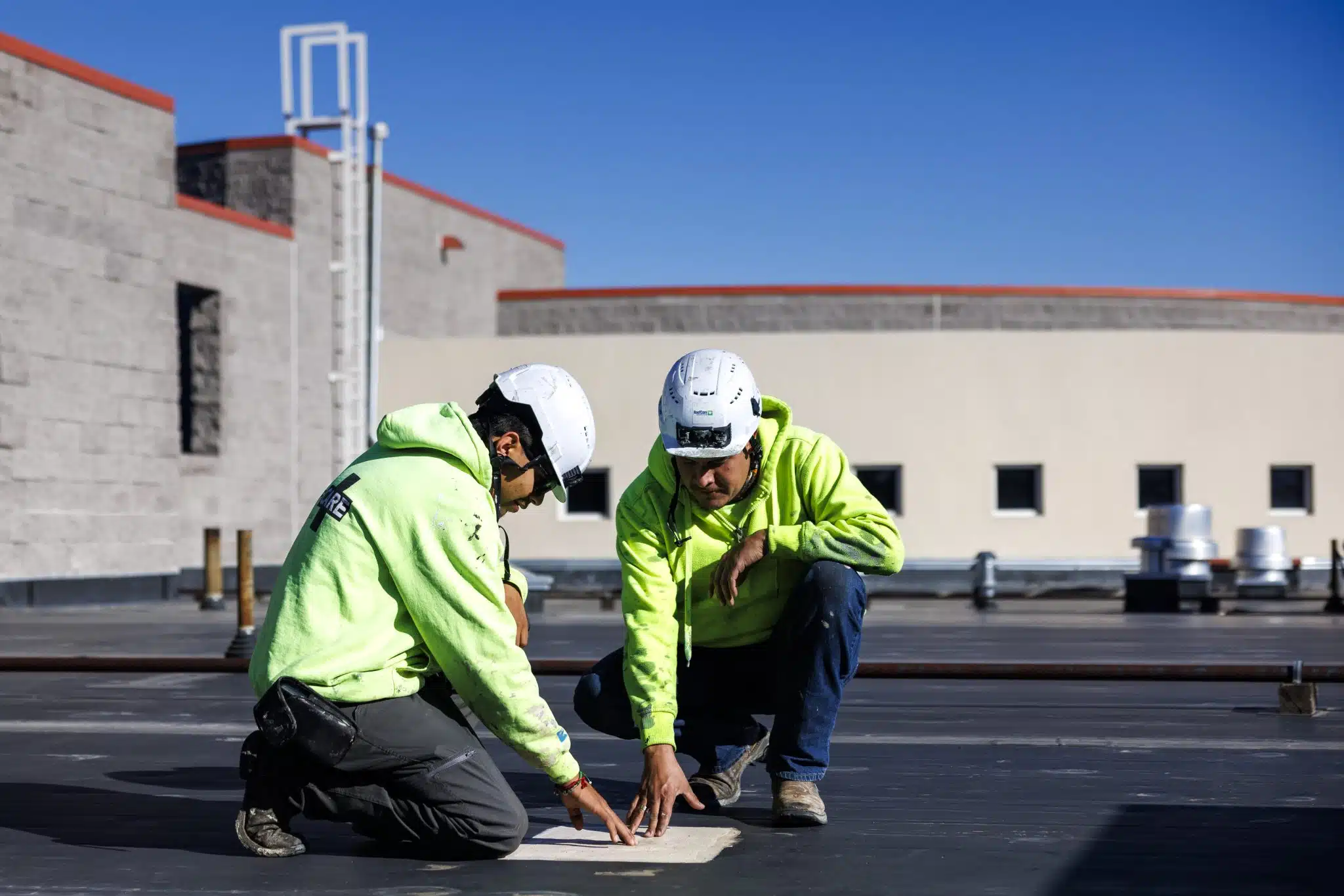
The parapet wall is where the roof membrane meets the building envelope - and where the largest share of difficult-to-trace leaks originate on Raleigh's older commercial buildings. Repairing a parapet correctly means integrating the wall, the coping, and the base flashing into a single watertight assembly.
Parapet walls create the roofline on most commercial flat-roof buildings in downtown Raleigh and the surrounding office corridors. They keep the roof membrane edge protected from wind uplift, give the building its visual profile from the street, and - when maintained correctly - form the critical waterproofing transition between the roof surface and the building wall. When that transition fails, water enters the wall cavity and travels down through the structure in ways that are notoriously difficult to trace from the interior.
The Fayetteville Street and downtown mixed-use corridor commercial corridors contain a significant concentration of masonry parapet walls from the 1960s through 1990s construction wave - brick and CMU parapets with metal coping caps and base flashings that are now 30-60 years into a life cycle that was never designed to be permanent. The caulk joints at coping seams have failed, mortar joints have opened, base flashing has separated from the wall surface, and the waterproofing that was supposed to shed water away from the wall cavity is doing the opposite.
Parapet repair is not a roofing problem in isolation - it is a building-envelope problem that requires the parapet, the coping, and the roof membrane base flashing to be addressed as a system. Sealing only the coping joints while leaving a separated base flashing still fails. Re-flashing the base while leaving deteriorated coping still admits water behind the cap. We scope parapet repairs at the assembly level and execute them with materials that are fully integrated with the roof membrane system.
Coping Cap Repair and Replacement
Metal coping caps - aluminum, galvanized steel, or copper on older Downtown Raleigh buildings - are the top course of the parapet assembly. They shed water off the top of the parapet and must be firmly anchored, with sealed lap joints and end joints, to prevent water from entering behind the cap and down the wall face or into the wall cavity.
Coping failures we regularly find on Raleigh commercial buildings: open lap joints where the original caulk has failed and not been replaced; end caps that have separated from the adjacent wall penetration; coping sections that have lifted at the anchor points due to wind loading or thermal expansion; and coping caps on buildings near I-440 where the wind exposure has been underestimated in the original design.
Coping repair ranges from re-caulking open joints with a compatible sealant product, to re-anchoring lifted sections, to full coping replacement on assemblies where the substrate nailer or blocking is deteriorated. On buildings with historic or architecturally significant coping profiles in the Downtown Raleigh commercial district - particularly on Fayetteville Street buildings with original precast concrete coping - we match profiles and materials as closely as practical within a budget that makes sense for the building.
Base Flashing and Parapet Counter-Flashing
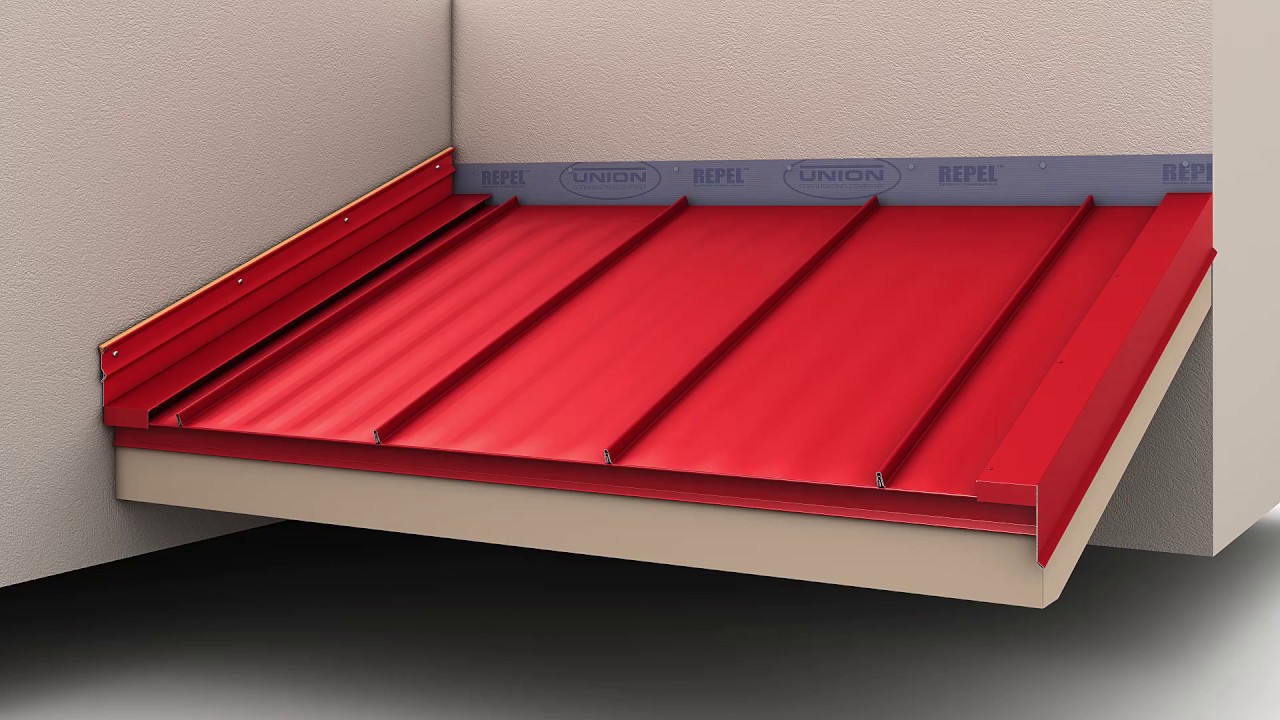
The parapet base flashing is the vertical leg of the roof membrane that turns up the inside face of the parapet wall. On a properly installed commercial roof, the base flashing runs up the full height of the parapet's inside face - typically 8-12 inches minimum - and is terminated under a counter-flashing or coping detail that caps the top. The base flashing is the same membrane material as the field and is welded or bonded continuously to the field membrane.
Base flashing failures are more common than field failures on aging roofs, for two reasons. First, the base flashing is subject to more thermal movement than the field - the inside face of the parapet experiences more temperature differential than the field surface. Second, the base flashing is often the location where the original installation was rushed, with inadequate bonding at the lower transition from vertical to horizontal or insufficient height to stay below the coping.
We re-flash parapet bases with the same membrane material as the field - TPO flashing on TPO systems, EPDM flashing on EPDM systems - and weld continuously. Where the existing parapet face substrate has deteriorated (water-damaged wood blocking or corroded embedded metal), we address the substrate before installing the new flashing, because a new flashing over a deteriorated substrate will fail at the same rate as the original. Counter-flashing termination bars are mechanically anchored into the masonry, not just sealed at the surface.
Masonry and Mortar Joint Repair
Brick and CMU parapet walls in the Downtown Raleigh stock have mortar joints that are 30-60 years old in many cases. Open and eroded mortar joints on the exterior face of the parapet allow water infiltration directly into the wall, bypassing the coping cap entirely. This is a particular issue on north-facing and west-facing parapet faces that receive less drying solar exposure.
Mortar joint repointing - tuck-pointing the deteriorated joints with a compatible mortar - addresses open joint infiltration on masonry parapets. The critical specification issue in repointing is mortar compatibility: repointing a soft historic brick parapet with a hard Portland cement mortar creates a differential stiffness that causes the new mortar to crack the adjacent brick rather than the mortar itself failing as intended. We specify mortar hardness to match the existing masonry, particularly on the pre-.
Parapet masonry that has experienced freeze-thaw spalling - an issue on north-facing parapets after the January 2022 ice storm and its predecessors - may require brick replacement at the damaged faces before repointing. We document spalling extent as part of every parapet inspection and include masonry repair in the parapet repair scope when the brick face integrity is compromised.
Frequently asked questions
We have interior wall stains but the visible roof area looks fine - could this be a parapet issue?
Yes, commonly. Interior wall stains that appear below windows or at the top of exterior walls on commercial buildings are frequently parapet infiltration - water entering behind the coping or through open mortar joints on the exterior face - rather than direct roof membrane failures. The water enters at the parapet and runs down the wall cavity before exiting at whatever opening presents: window frame, wall penetration, or the wall-floor junction. We assess the parapet assembly as part of any leak investigation where the interior intrusion pattern suggests a wall-infiltration source.
What is the expected lifespan of a parapet coping repair versus full coping replacement?
Caulk joint re-sealing on otherwise sound metal coping - good metal, solid anchorage, intact finish - typically holds 5-8 years in the Triangle's climate with its UV intensity and thermal cycling. Full coping replacement with new metal and sealant on a sound substrate carries a longer practical horizon: 20-plus years on aluminum coping with proper anchorage and a quality sealant. The decision depends on the coping substrate and metal condition, which we assess before recommending repair over replacement.
Do parapet repairs affect the roof membrane warranty?
They can, if not executed correctly. Most commercial roof warranties include the parapet base flashing as a warrantied component. Repairs to the base flashing that use non-manufacturer-approved materials, or that are performed by contractors not approved by the manufacturer, may affect warranty coverage on that section. We identify whether the roof carries an active warranty before beginning parapet work, and we perform base flashing repairs with manufacturer-approved materials and document the repair for the warranty record.