Silicone coating extends the life of qualifying Raleigh commercial roof systems by 10 to 20 years when the substrate is sound, insulation is dry, and the application follows manufacturer specification. It is not a patch for a failing system.
Silicone roof coating is one of the most oversold products in the Triangle commercial roofing market. Applied correctly to a qualified substrate, silicone produces a seamless, fully adhered waterproof membrane that handles the Triangle's UV load, stays flexible through Raleigh's full temperature range, and carries manufacturer warranties of 10, 15, or 20 years depending on mil specification and substrate preparation. Applied over wet insulation, failing seams, or inadequate substrate preparation - which is how it is frequently applied by contractors who prioritize closing the coating sale over qualifying the substrate - it fails in two to three years and leaves the building owner in the same position as before, minus the coating cost and plus a substrate that is harder to prepare for a legitimate installation.
Every silicone coating project we take starts with core pulls to verify insulation condition, a full membrane assessment to confirm the existing substrate is qualified, and a surface preparation specification matched to the substrate type. If the insulation is wet, we do not apply silicone - we tell the owner why, and we scope the replacement or targeted insulation cut-and-fill that has to happen before any coating makes sense. That conversation sometimes means we lose the coating project. We lose it rather than apply silicone over a substrate that will fail.
The Triangle's humid subtropical climate creates conditions that specifically favor silicone over acrylic and polyurethane coatings for commercial applications. Silicone cures through atmospheric moisture - Raleigh's summer relative humidity, which consistently runs above 70 percent during application season, is neutral-to-favorable for silicone cure where it can impair acrylic cure. Silicone does not re-emulsify after cure, making it resistant to the sustained water loading that Raleigh's hurricane-remnant moisture events produce on low-slope commercial roofs. And silicone's UV stability outperforms acrylic and elastomeric alternatives in the Triangle's high-UV summer cycle, where dark substrates reach 150 to 180 degrees Fahrenheit and coating oxidation is a primary failure mechanism for lower-grade products.
Qualifying Substrates for Raleigh Silicone Coating
TPO and single-ply membranes: Mid-life TPO and EPDM systems with intact seams, minimal surface crazing, and dry insulation are primary silicone coating candidates. The coating bridges minor surface oxidation and surface porosity - but it does not address seam or flashing failures. Seams and flashings must be repaired or replaced before coating begins. The 2000s and early 2010s 45-mil TPO inventory across the North Hills and Cary office corridors is a strong coating candidate where the insulation is confirmed dry and the seams remain welded.
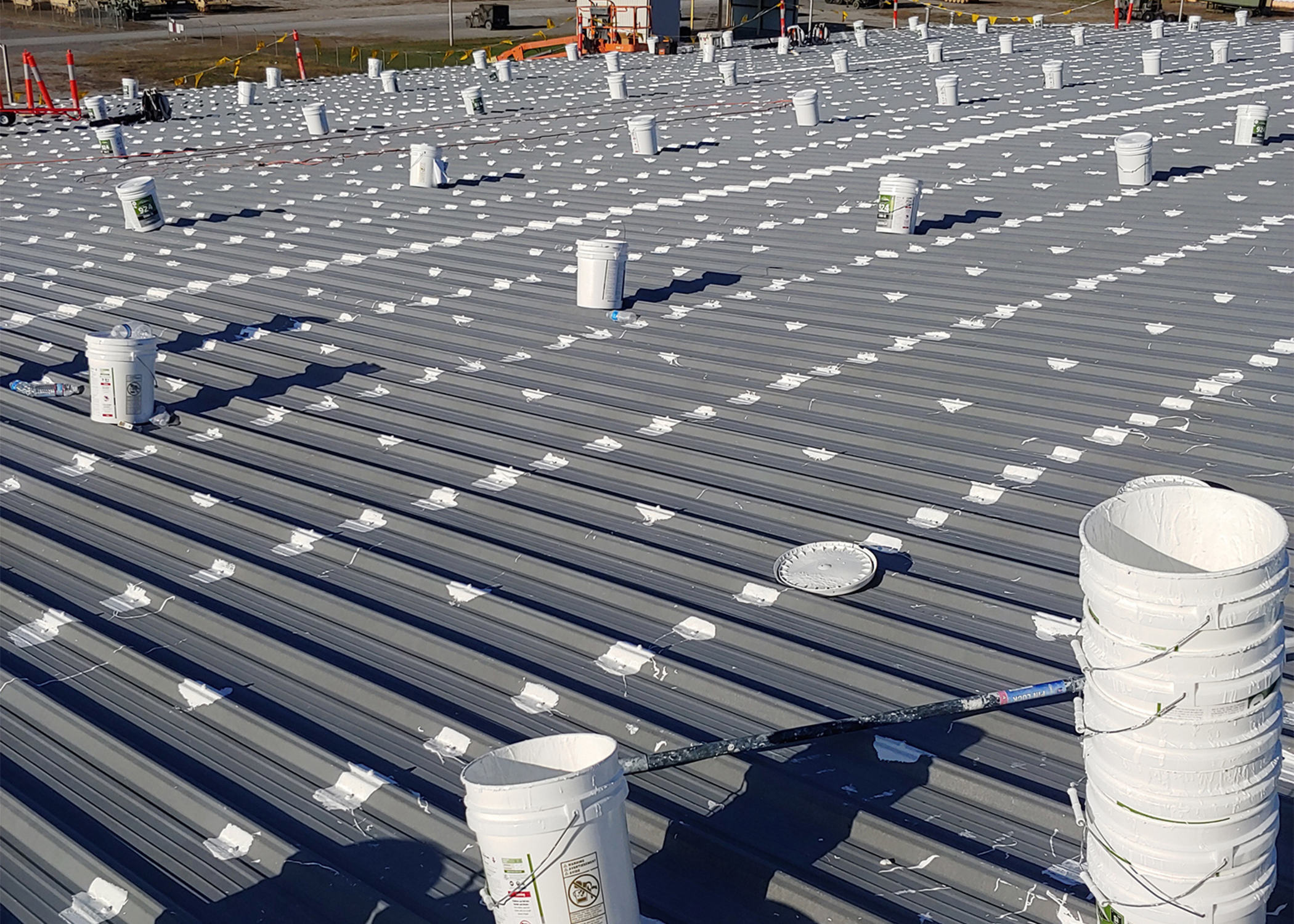
Metal roofing: Aged metal roofing - corrugated and 5-V crimp systems on older research and industrial buildings at Triangle research corridor and the western Wake County industrial corridors - is one of the strongest silicone coating candidates in the Triangle. Metal substrates develop rust, small seam separations, and fastener corrosion over decades of service. Silicone applied over a cleaned, primed, and seam-reinforced metal substrate seals fastener penetrations, fills seam gaps, and extends the metal system's service life at a fraction of panel replacement cost. We specify butyl seam tape reinforcement before coating on all metal applications.
Modified bitumen: SBS modified bitumen in good condition with minimal surface cracking and confirmed dry insulation qualifies for silicone coating. APP modified bitumen is less predictable as a silicone substrate because surface chemistry can produce adhesion failures - we test adhesion on a sample section before committing to a full APP coating application. We have walked buildings in the Triangle research corridor interior road network and the Morrisville office park where APP systems dating to the early 2000s qualified on the sample test and carried through to successful 15-year coating installations.
Disqualifying conditions: Wet insulation found on core pull disqualifies any substrate from coating. The coating seals moisture inside the assembly; thermal expansion during summer heat produces void-forming gas bubbles that blister and fail the coating within one to two seasons. Heavily cracked or failed membranes where the coating cannot bridge the crack width also disqualify the substrate. We document disqualifying conditions in writing and explain the remediation path before any coating scope is proposed or priced.
Silicone Mil Specifications and Warranty Paths
10-year warranty path: Typically 20 dry mils applied in two coats of 10 mils each. This is the minimum specification most manufacturer warranty programs accept. Appropriate for Raleigh buildings with shorter ownership horizons or where the owner is bridging to a planned replacement or portfolio sale.
15-year warranty path: Typically 25 to 30 dry mils. Manufacturer programs at this level require seam-reinforcement fabric embedded in the base coat at parapet flashings and field seam zones before the topcoat is applied. The 15-year specification is the most commonly used for active-maintenance commercial buildings in the North Hills, Midtown, and Cary corporate corridors.
20-year warranty path: Typically 30 to 40 dry mils depending on manufacturer. Requires the most rigorous surface preparation, seam reinforcement fabric throughout the field, and manufacturer field inspection during and after application. Appropriate for Raleigh institutional buildings and long-hold REIT assets where the owner wants maximum coating life and is treating the installation as a full roof restoration.
Manufacturer programs active in the Triangle: Tremco, Polyglass, GE/Momentive Specialty Chemicals, Henry/Bakor, and Garland all carry silicone restoration warranty programs with applicator coverage in the Raleigh-Durham market. The right manufacturer depends on the substrate system, existing warranty compatibility, and warranty field-rep support available in the Triangle. We maintain manufacturer authorization under the programs we apply.
Application Logistics in the Triangle Climate
Temperature and humidity application windows: Silicone applies best above 40 degrees Fahrenheit surface temperature and below approximately 95 degrees surface temperature. Raleigh's June through August heat regularly pushes dark-substrate roof surfaces above the application ceiling by mid-morning. We schedule silicone coating work in early morning during summer months - typically 5:30 AM start to maximize the application window before surface temperatures rise - or shift to the September through November application season when surface temperatures return to range. Application below 40 degrees, which occurs in Raleigh from December through February, requires heated material storage.
Rain hold-out management: Silicone is rain-resistant after approximately 30 to 60 minutes of initial cure depending on product, temperature, and humidity. The Triangle's afternoon convective thunderstorm pattern from April through September makes morning-only application standard. We do not apply silicone during the afternoon from April through September, and we track NOAA hourly forecasts throughout the application day. A rainfall event within the hold-out window requires a condition inspection before any additional application proceeds.
HVAC intake and equipment protection: Silicone overspray on rooftop HVAC units, exhaust fans, skylights, and communication equipment is a significant contamination risk. We mask and protect all rooftop equipment within the spray zone before any application begins. Buildings with active rooftop fresh-air intakes - particularly medical office buildings at regional healthcare campus's North Hills campus or regional institution Rex's secondary facilities - require coordination with facilities management to schedule application during off-hours when the air handler intake filters can be protected or the units temporarily shut down.
Frequently asked questions
How do I know if my Raleigh building's roof qualifies for silicone coating?
Core pull data is the first gate. If the insulation is wet, coating is not a viable scope. If dry, we then assess membrane condition - seam integrity, surface condition, flashing condition. Both gates have to pass for coating to be a legitimate option. The assessment takes one day for most Raleigh commercial buildings. Core pull and membrane inspection are the same protocol we run for any replacement scoping, so the assessment cost is fully applicable to a replacement scope if the substrate does not qualify.
How does silicone coating cost compare to full replacement on a Raleigh commercial building?
On a qualified substrate, installed cost for a 20-year silicone restoration typically runs 40 to 60 percent of full tear-off and replacement cost. The lifecycle comparison depends on the substrate's remaining condition and the ownership horizon. On a building where the membrane is mid-life and insulation is confirmed dry, coating can extend the asset 15 to 20 years at roughly half the replacement cost. On a building with marginal insulation or a failing membrane, coating is not cheaper than replacement - it is money spent to delay an inevitable replacement and often complicates the eventual tear-off.
Does silicone coating qualify as a cool roof under North Carolina energy code?
White silicone coatings with Solar Reflectance Index above 78 The coating's SRI rating must be documented - we provide the manufacturer's SRI data sheet in the closeout package. For Raleigh commercial buildings pursuing LEED certification or regional institution Energy Progress commercial energy efficiency incentives, the SRI documentation is a required submittal.
Can silicone be applied over existing silicone coating?
Yes. Silicone bonds to cured silicone after thorough cleaning. Re-coating an existing silicone system at mid-warranty to extend the warranty period is a viable maintenance strategy for Raleigh buildings that want to add coverage without full tear-off. The existing coating must be clean, intact, and delamination-free. Re-coat thickness requirements and warranty extension terms vary by manufacturer program.