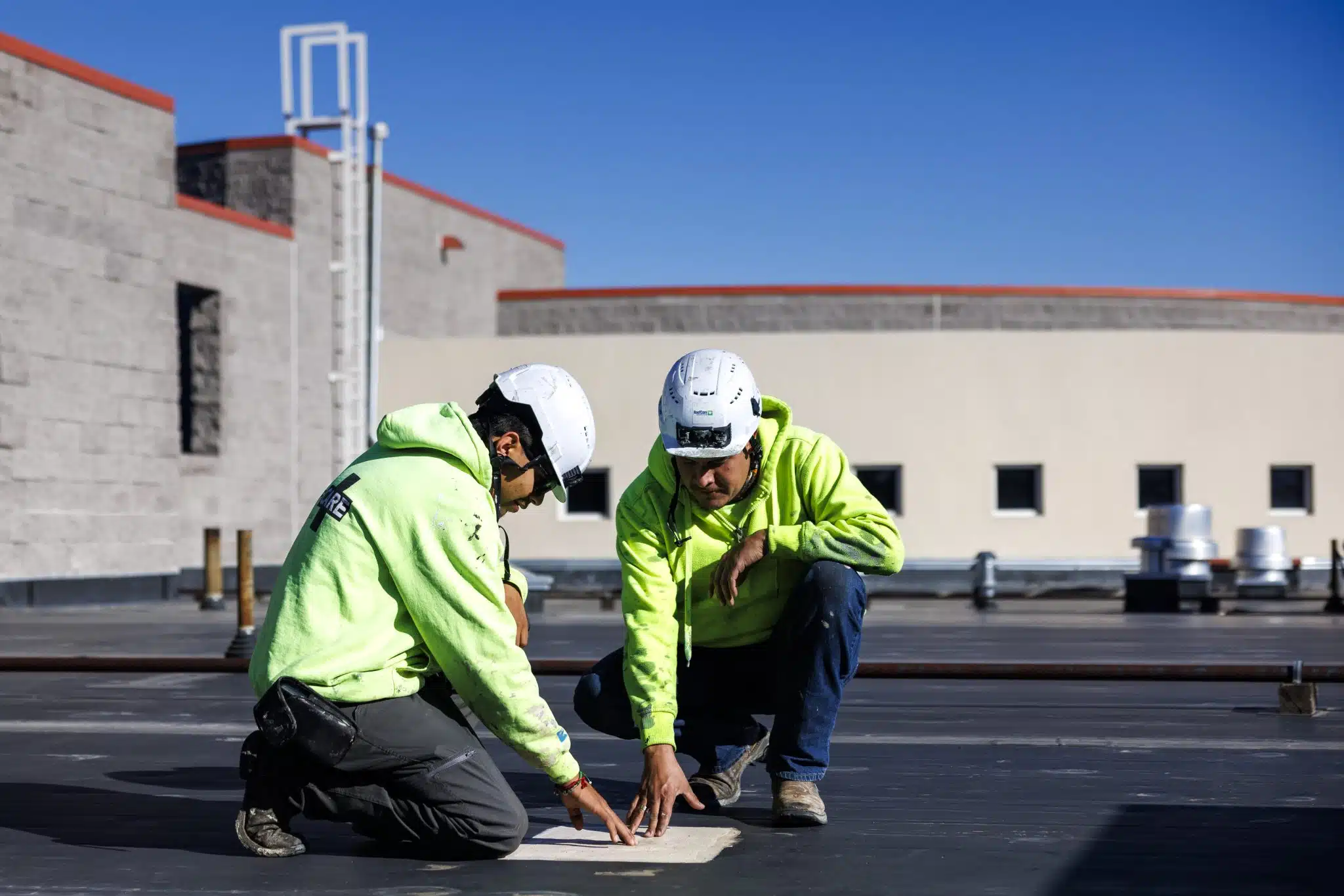
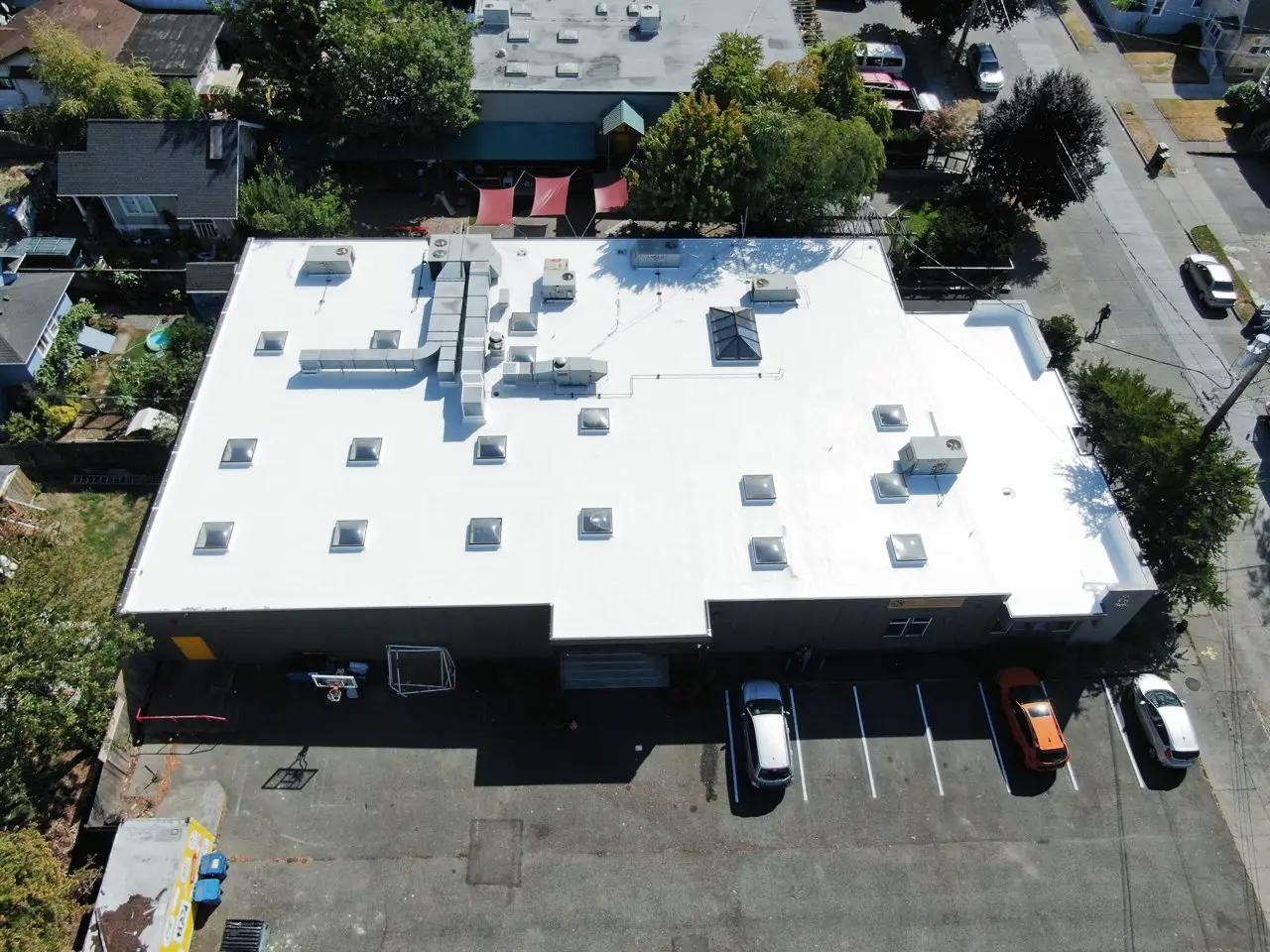
Commercial roofing for public and private schools, K-12 campuses, and educational facilities throughout Raleigh, NC.
Wake County Public School System, the largest school district in North Carolina and one of the twenty largest in the nation, serves over 160,000 students across more than 190 school buildings in one of the fastest-growing metro areas in the United States. Wake County's rapid population growth has produced a school construction program that consistently ranks among the most active in the country, with new school openings nearly every year alongside an ongoing capital program to maintain and upgrade the district's existing building inventory. Commercial roofing contractors in Raleigh who seek work with Wake County must demonstrate both the technical capability to serve institutional clients and the organizational capacity to manage procurement, compliance, and quality documentation requirements that North Carolina public school work demands.
North Carolina's climate creates a genuine multi-stressor environment for Wake County school roofs. Hot, humid summers with frequent afternoon thunderstorms test drainage capacity and storm resilience. Periodic tropical storm systems from the Atlantic coast bring multi-inch rainfall events that stress every drain, scupper, and overflow detail on the district's flat-roof buildings. Winter brings occasional ice storms that, while infrequent, can deposit heavy ice loads on roof structures and create freeze-thaw failures at parapet flashings and seams. A roofing system specified for Wake County schools must perform through all of these conditions across a 20-plus-year service life.
North Carolina does not have a state prevailing wage law, and Wake County public school projects are not subject to Davis-Bacon requirements unless federal funding is specifically involved. This means school roofing projects in Raleigh are priced in a competitive open market without wage floor obligations, which generally translates to lower installed costs than comparable California or Northeast projects. However, the district's procurement requirements - competitive bidding above defined thresholds, performance and payment bonds, certificate of insurance requirements - apply regardless of the wage environment, and contractors must be prepared to meet all applicable public procurement standards.
Summer scheduling provides a 10 to 12 week construction window for Wake County school roofing that aligns with the district's calendar. The window is tight but manageable with proper pre-construction planning. Contractors who are selected Wake County summer roofing projects should plan to have all permits secured, materials ordered, and crew schedules confirmed by no later than late April - six to eight weeks before school buildings become available - to ensure the project can begin on day one of the unoccupied period and maintain the pace needed to complete before students return.
Wake County's rapid growth means the district's facilities team manages new construction alongside active maintenance and replacement projects across a large and growing portfolio. Roofing contractors who demonstrate the organizational capacity to manage multiple concurrent projects, submit timely invoices and pay applications, and maintain consistent quality control across multiple crews and jobsites will be more attractive partners to a district of this scale than contractors whose project management capacity is limited to one or two jobsites at a time.
Institutional roofing specifications for Wake County projects typically call for 60-mil TPO or PVC single-ply membrane systems on low-slope sections, with specifications developed either by the district's facilities department or by the project architect. Contractors should review these specifications carefully before bidding and identify any scope elements that may be ambiguous - wet insulation removal provisions, deck repair unit pricing, equipment curb responsibilities - and seek clarification before submitting a bid rather than discovering ambiguity after contract selection when the leverage to resolve it reasonably has largely passed.
Wake County's geography encompasses a wide range of soil conditions, many of which are relevant to drainage design. The red clay soils common in the Raleigh area have low permeability, which means that improperly designed site drainage can create conditions where stormwater from the surrounding landscape drains toward the building rather than away from it, creating hydrostatic pressure conditions that affect below-grade waterproofing and drain flow patterns on low-slope roofs. A roofing contractor who understands the interaction between site drainage and roof drainage design will produce better results on Wake County school projects than one who considers only the membrane and ignores the hydraulic context.
Hurricane and tropical storm risk remains relevant even for this inland county. Raleigh is approximately 150 miles from the coast, but tropical systems regularly maintain significant wind speeds and produce extraordinary rainfall as they track across the Piedmont. Hurricane Matthew in 2016 caused major flooding and building damage across the Triangle region, and multiple Wake County schools experienced roof-related water intrusion during that event. Edge metal profiles, perimeter attachment patterns, and drain overflow capacity are the details that determine whether a school roof survives a tropical storm passage or generates an insurance claim.
Long-term partnership with Wake County Public School System is a strategic opportunity for commercial roofing contractors with the capacity and commitment to serve a large institutional client. The district's combination of ongoing new construction, active replacement program across 190-plus buildings, and steady growth trajectory means that a contractor who establishes a track record of quality work and reliable service will have access to a consistent, multi-year stream of institutional roofing opportunities that provides meaningful business stability.
- How does Wake County Public School System procure roofing services?
- Wake County follows North Carolina's public school procurement statutes, which require formal competitive bidding above defined thresholds. Bid solicitations are published through the district's procurement portal and NC IPS (Interactive Purchasing System). Bidders must be properly licensed in North Carolina, submit bid bonds with their proposals, and be prepared to provide performance and payment bonds upon selection. The district evaluates bids based on the specified criteria, which typically prioritize price among responsive, responsible bidders meeting all qualification requirements.
- What roofing systems are typically specified for Wake County schools?
- 60-mil TPO single-ply membranes dominate Wake County school specifications for low-slope sections due to their balance of thermal performance, seam strength, and installed cost. Some specifications call for PVC membranes on sections over chemical exposure areas or where grease resistance is required. Steep-slope sections are typically specified with standing seam metal or architectural shingle systems depending on the visible roofing context. Specification documents for each project define the required system, and substitution requests must be formally submitted and approved.
- How do Wake County schools handle tropical storm and hurricane preparedness for roofing?
- Pre-season inspections each May should confirm drain capacity, edge metal integrity, and flashing condition. The district's risk management and facilities teams coordinate emergency response protocols that include pre-qualified emergency roofing contractors for rapid tarping and temporary protection after significant storm events. Insurance documentation of current roof conditions - photographs maintained annually - supports damage assessment and claim processing when storm damage occurs.
- What are the typical lead times for Wake County school roofing projects?
- Allow 8 to 12 weeks from contract selection to material delivery for single-ply membrane systems. For projects with June start dates, contractor selection should be complete and purchase orders placed no later than April to ensure material delivery before the construction window opens. Permitting in Wake County typically takes 2 to 4 weeks for commercial roofing projects, and permit applications should be submitted immediately upon contract execution.
- Does Wake County require special inspections on school roofing projects?
- North Carolina Building Code requires special inspections for certain commercial construction activities, and Wake County's permit process may require special inspection reports for roofing projects above defined size or complexity thresholds. The project architect or the district's project manager can confirm inspection requirements for each specific project. Allow inspection scheduling time in the project schedule rather than treating inspections as instantaneous events.
Frequently asked questions
Is built-up roofing still installed on new commercial buildings in Raleigh?
Rarely, and effectively not at all for new construction. The hot-mopping logistics, equipment requirements, and fume management make new BUR installation noncompetitive against TPO, modified bitumen, and EPDM for comparable service life. The entire BUR market in the Triangle is assessment, repair, and replacement of the existing inventory - primarily the 1960s through 1980s commercial building stock that predates the single-ply era.
How do I know if my Raleigh building's BUR system needs replacement versus repair?
Core pull data is the only honest answer. A BUR surface that looks marginal may have dry insulation and be a legitimate recover candidate. A surface that looks serviceable may have 40 percent saturation and need full replacement. Visual assessment of BUR by any contractor cannot substitute for core pulls. We pull cores, show you the data, and make a recommendation based on what we find - not based on the project size we want to close.
My building has had multiple BUR patches applied over the years. Does that affect the replacement decision?
Patch history often complicates the recover option more than it affects the replace decision. Repeated patches with incompatible materials - asphalt over coal tar, cold-process over hot BUR - create adhesion problems for any recover system. If the patch history is complex and the new system cannot achieve adequate adhesion to the existing substrate, full tear-off is the only path to a warranted installation. We document patch history during inspection and flag incompatibility risks before any recover scope is proposed.
Do you handle BUR replacement on large industrial buildings along the I-40 and US-1 corridors?
Yes. Large-footprint BUR replacement on industrial buildings in the southwest Wake County and Johnston County markets - buildings of 100,000 to 400,000 square feet - is a significant part of our work. These projects require detailed pre-construction staging plans, sequenced tear-off and daily dry-in to protect active operations below, and sometimes multi-season project scheduling for facilities that cannot absorb a full roof disruption in a single mobilization.