
Not every wet roof is leaking from the sky
Ask most building owners what a roof leak is and they will describe rain finding a hole. A large share of the moisture damage we get called to repair in Raleigh works the other direction. The water never came from a storm - it rose up into the roof assembly as vapor from inside the building, reached a cold surface, and condensed where nobody can see it. In a region where the outdoor air stays heavy with moisture for half the year and interiors run conditioned against it, that upward vapor drive is constant. The buildings that pay for it hardest are the ones generating humidity indoors: the kitchens behind the downtown mixed-use corridor and Fayetteville Street restaurants, the pools and locker rooms in campus and hotel recreation wings, the food-processing and manufacturing floors out toward the Garner and I-40 industrial belt, and any building running a humidification system against a damp Carolina winter.
This is a fundamentally different failure than wear or storm damage, and it has to be diagnosed differently or you will chase it forever. By the time it surfaces as a blister you can feel underfoot or a soft spot near a drain, the assembly is almost always wet across a much larger area than the symptom suggests. We find the true extent, work out why the vapor is getting trapped in the first place, and correct the cause - not just the one spot that finally gave you a warning.
What humidity damage actually looks like on the roof
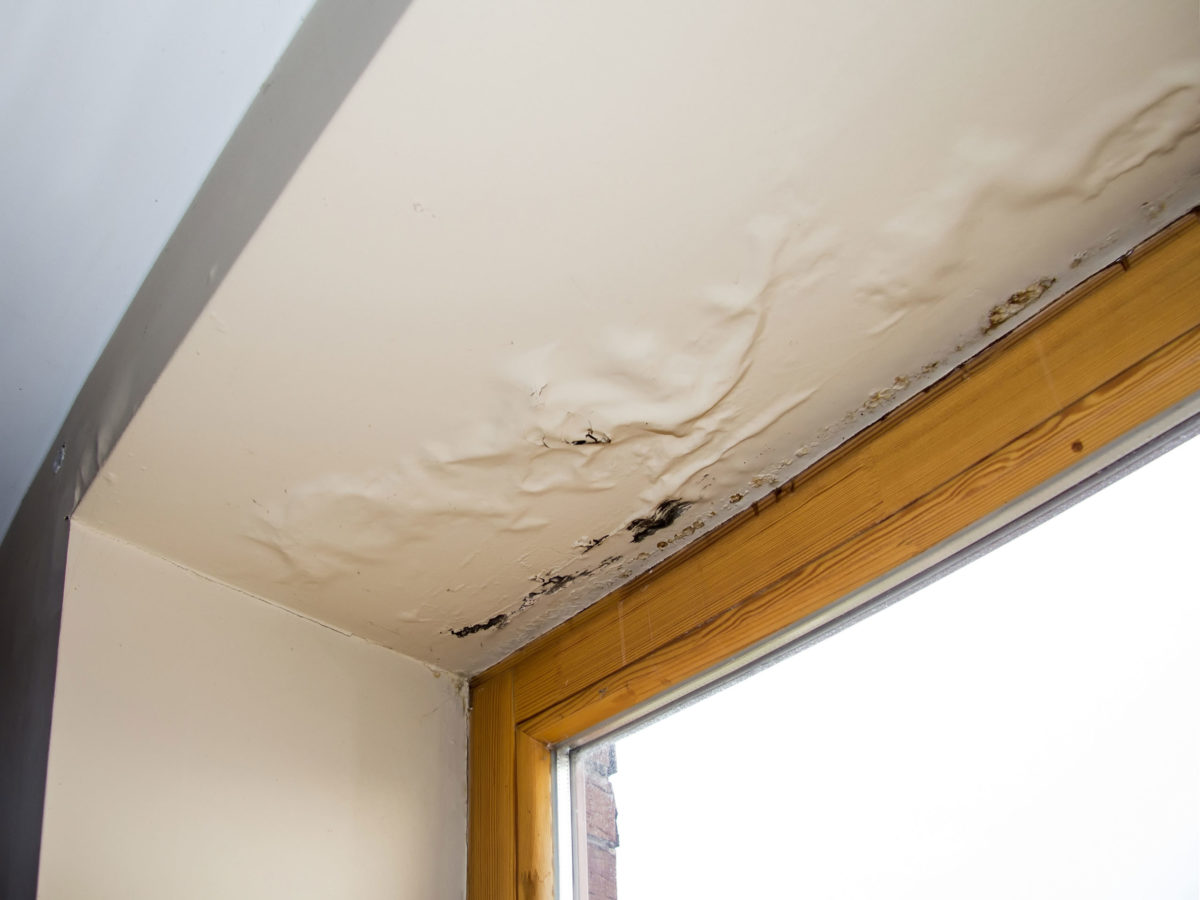
The signs are specific once you know how to read them. Blistering is the classic one: vapor pressure builds in the space between the membrane and its substrate, finds nowhere to vent, and lifts the sheet into a dome that flexes and works-hardens until it splits. Ridging shows up as long raised lines telegraphing through the membrane along the insulation board joints, the signature of moisture that has crept into the insulation, swollen and shifted the boards, and forced the seams upward. Underfoot you feel the rest: insulation gone spongy, stripped of its compressive strength, slumped out of the slope-to-drain profile it was cut to hold - so now water ponds in the very low spots the wet board created.
Under all of that sits the part an owner never sees until teardown, which is the deck. On a steel-deck building, insulation that has held water through several seasons drives corrosion along the flutes, and on a building that has run wet through more than one roof cycle we have opened assemblies to find the deck rusted clean through. That is the line between a roof problem and a structural one, and it is why we do not wait for humidity damage to fully declare itself before acting.
The vapor barrier is usually the real story
When trapped moisture keeps coming back after a repair, the cause is nearly always the vapor retarder - missing, breached, or installed on the wrong side of the assembly for this climate. The building physics here are not subtle. North Carolina's humid air and conditioned interiors push vapor upward through the roof for most of the year, which means the retarder belongs low in the assembly, just above the deck, where it stops that vapor before it can reach the cold underside of the membrane. Put it in the wrong place, or leave it open where pipes, drains, and curbs pass through, and you have built a trap that draws moisture in and holds it - fighting the building physics instead of working with them.
This is the mistake that turns a single repair into a recurring one. Recovering a fresh membrane over an assembly whose vapor management is backwards fixes nothing; it seals the existing moisture in and recreates the same blistering and saturation in the new roof a few years on. So before we scope any humidity repair, we establish where the vapor retarder sits, whether it is intact, and whether it is even on the correct side for the climate. If it is wrong, correcting it is part of the fix, because anything less is money spent to reproduce the problem you called us about.
Finding the wet without guessing
You cannot repair what you have not mapped, and humidity damage hides beneath a membrane that often looks perfectly sound from above. Infrared moisture surveys are how we find its real boundaries. After a day of solar gain, wet insulation holds heat longer than the dry material around it and reads warm in the thermal image as the roof cools at dusk - the warm zones trace the saturated areas. We confirm those readings with physical roof cores that show us, firsthand, the insulation's condition, the vapor retarder's placement, and any deck corrosion underneath. On any Triangle building without a documented moisture survey in the last few years, that scan is the honest starting point: wet insulation caught early is a contained repair, while the same moisture left to spread and eat the deck becomes a full replacement.
Repair where the roof allows it, replace where the numbers say so
If the survey shows moisture confined to discrete zones with sound, dry insulation around them, we cut out the wet material, replace it with new insulation built back to the original slope, weld the membrane back in, and re-detail any flashings or edge metal the moisture has worked loose. Where the vapor retarder failed locally, we tie the new retarder back into the surrounding assembly so the repair actually holds. That targeted approach restores the roof without paying to replace what is still doing its job.
When the wet area runs past roughly a quarter to a third of the roof, or when cores reveal the deck has corroded to where its integrity is genuinely in question, replacement is the responsible call and patching is just deferring it at a premium. In those cases we lay the replacement out with vapor management corrected from the deck up, so the new roof does not inherit the failure mode that killed the old one. Either way you get the survey findings and a clear side-by-side of repair versus replacement before any work is committed - no surprise waiting for you at teardown.
Frequently asked questions
How do you find moisture damage that isn't visible from the roof?
An infrared survey run after sunset reads the temperature difference between wet and dry insulation - the saturated zones hold the day's heat and show up warm. We then pull physical cores at the flagged spots to confirm the insulation condition, the vapor retarder, and any deck corrosion. The thermal map shows where the water is; the cores prove what is actually happening under the membrane.
Why does moisture get trapped inside the roof in a humid climate?
Conditioned interiors in Raleigh's humid climate push water vapor upward through the assembly for most of the year. If the vapor retarder is missing, breached, or installed above the insulation instead of low near the deck, that vapor condenses when it reaches the cold underside of the membrane. Over time it saturates the insulation, corrodes a steel deck, and blisters the membrane - no rain required.
Can a humidity-damaged roof be repaired instead of replaced?
Yes, when the wet area is confined to discrete zones with dry insulation around them. We remove the saturated insulation, rebuild the slope, weld the membrane back, and correct the vapor retarder locally. Replacement becomes the right answer when wet insulation covers roughly a quarter to a third of the roof or when deck corrosion has compromised the structure. The survey tells us which case you are in.
How fast does this get worse if we leave it?
Faster than most owners expect. Wet insulation has almost no thermal value, so your HVAC works harder and your energy costs climb. Steel-deck corrosion accelerates wherever moisture sits against it. A roof reading fifteen percent wet today can present at forty to fifty percent two seasons on - turning a contained repair into a full replacement, often with deck work attached.
Will fixing the membrane stop it from happening again?
Only if the vapor management is corrected too. A new membrane over an assembly whose vapor retarder is wrong simply seals the existing moisture in and reproduces the blistering within a few years. That is why we evaluate and correct the vapor retarder as part of the repair rather than just resurfacing the symptom.
Get the moisture mapped before it reaches the deck
If you are seeing blisters, soft spots, or ponding that keeps coming back on a building anywhere from downtown Raleigh to the campus and industrial corridors, the starting point is an infrared survey and a few cores. Reach out and we will find the full extent of the moisture, tell you why it is getting trapped, and give you a repair-versus-replace decision grounded in what we actually find.